
Dashboard builder who enters lots of figures
Regularly enters sales figures or corrections manually, and weighs the convenience of an integrated number pad against having more space for the mouse.


If you regularly enter figures manually, a keyboard with an integrated number pad is likely to suit you better. If mouse space matters more and you enter fewer figures, a compact model may be a better fit. A separate numpad is a compromise, but it means another device and may use up a USB port. Before buying, check the exact layout and connection; ‘quiet’ is not an independent noise measurement.
Regularly enters sales figures or corrections manually, and weighs the convenience of an integrated number pad against having more space for the mouse.
Works close to other people and is mindful of typing noise. A manufacturer’s description such as ‘quiet’ is not an independent noise measurement.
Uses the mouse a lot and wants a compact layout that leaves more room beside the keyboard.
First decide whether you want a dedicated number pad or more space for your mouse. Then compare the connection and exact key layout with your computer and the keyboard you use at work.
A good fit if: you often enter figures while building your dashboard and want the keys close at hand.
The trade-off: the number pad takes up space beside the letter keys, where your mouse could otherwise sit.
A good fit if: you mainly enter text and formulas, and want to position your mouse closer to the keyboard.
The trade-off: there’s no integrated number pad for entering figures; a separate numpad is an extra device and may require a USB port.
| What to consider | What should you check? | Who should prioritise this? |
|---|---|---|
| Typing noise | Check the exact model and, if possible, try the keys in your own working environment. | If colleagues sit nearby, I want keys that are as unobtrusive as possible; around 29% of consumers give typing noise top priority. |
| Entering figures | Check whether the version has a number pad and how many figures you enter manually. | If I enter lots of dashboard figures manually, I want the number keys close at hand; around 29% of consumers prioritise direct access to them. |
| Mouse space and set-up | Measure the available space and check whether you can use your mouse comfortably with the layout you choose. | If I use my mouse a lot, I want space beside the keyboard and a set-up that suits my work; around 24% of consumers prioritise having that space. |
| Connection and layout | Compare the physical key layout with the one you’re used to, and check which ports and connections are available and permitted. | On a shared office computer, I want a keyboard that works with the available connection and has the layout I’m used to; around 18% of consumers check this first. |
The KB216 name doesn’t tell you the physical layout. A product page for a Belgian version lists AZERTY in the title but QWERTY in the specifications.
Compare the full version details and an image of the keys with the layout you use. Don’t treat conflicting information as confirmation that it’s a Dutch QWERTY version.
An unsuitable layout may take time to get used to or need to be exchanged.
A compact model such as the Logitech MX Keys Mini doesn’t have an integrated numpad. A separate numpad may help, but it takes up space as an additional device.
First decide whether you often enter figures manually or need more space for your mouse.
Trust and CHERRY describe certain keyboards as quiet, but these manufacturers’ descriptions aren’t comparable noise measurements.
Consider the layout and feel of the keys too. If possible, assess the noise in the office environment where you plan to use the keyboard.
The Ody II is a wireless office keyboard; Trust also offers the separate Xalas USB numpad.
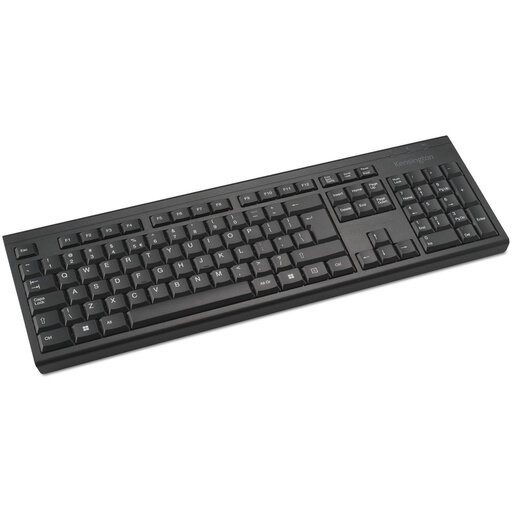
The KB216 is a wired keyboard with a number pad, designed for a fixed office workstation.
The MX Keys Mini is compact; the K120 is a wired, full-size version with a number pad.
The STREAM KEYBOARD is a wired office model with an SX scissor mechanism.
According to R-Go, the Split Break comes in two parts; the Break range has a software-controlled break indicator.
These keyboards are suited to dashboard work where you may want to consider number entry, layout and wired or wireless connectivity.
 No image available
Suitable for entering figures manually if you want a wired connection and an integrated number pad.
QWERTY layout, full-size, wired and plug-and-play; the title lists the colour as black.
 No image available
The 75% layout may suit you if you’re considering a more compact model; check that the keys available meet the needs of your dashboard work.
The title lists QWERTY US and three connection modes: wired, Bluetooth and 2.4G. The version is described as Gradient Grey, with side-engraved keycaps.
 No image available
This version may suit you if you’re considering a mechanical keyboard with multiple connection modes; check that the layout works for the way you enter data.
The title lists 98% QWERTY, hot-swappable switches, a volume knob, TFT display, RGB lighting and a 10,000 mAh battery. Connection modes: wired, Bluetooth and 2.4G. Colour variant: Starry Night Gray.
 No image available
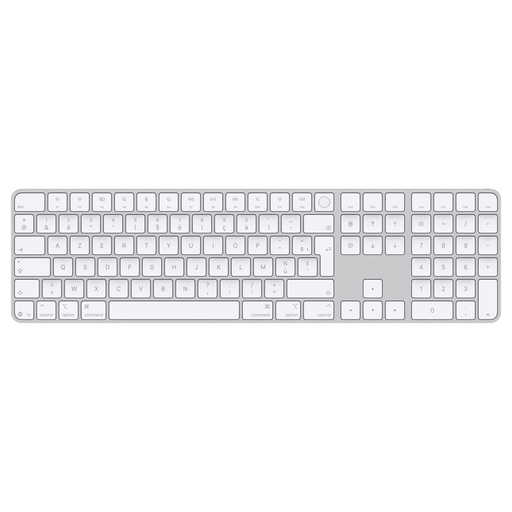
The numeric keypad may suit you if you enter lots of figures manually; bear in mind that this version is designed for Mac.
The product description lists Bluetooth, a rechargeable battery and a USB-C port.
 No image available
The full-size layout with number pad may suit you if you enter figures at a wireless workstation.
The product description lists a 2.4 GHz connection via USB receiver and a QWERTY US International layout. Check that it matches the keys you’re used to.
Not always. A full-size keyboard gives you direct access to the number keys if you enter lots of data manually; if you enter fewer figures, extra space for your mouse may matter more. A separate numpad is an alternative if you only enter figures occasionally.
For Logitech keyboards, the manufacturer recommends unplugging a wired model or switching off a wireless one, then gently wiping the keys with a slightly damp, lint-free cloth. Don’t spray liquid directly onto the device or immerse it. For other brands, follow their own care instructions.
When you buy from a business at a distance, you’re often entitled to a 14-day cooling-off period; the Dutch government advises checking whether the purchase is covered by this scheme. Your statutory guarantee is separate from any manufacturer’s warranty. ACM ConsuWijzer says that the retailer is your point of contact for an appropriate solution if a product develops a fault sooner than you could reasonably expect under normal use.
Arboportaal’s guidance doesn’t specify a brand, switch or number pad. However, for employees who work at a screen for more than 2 hours a day, Arboportaal states that the screen and keyboard must not be attached to each other. Whether this time limit applies to your work depends on your circumstances.