
Workshop host with lots of slicing to do
If you’ll be slicing salami repeatedly, look for a stable set-up, a model suited to the amount of slicing required and parts that the manual says you can access for cleaning.


For a single, supervised workshop, a compact domestic slicer may be sufficient. If you’re slicing repeatedly or working with hard salami, a machine specified for that purpose is a better fit. HENDI describes the Profi Line 220 as suitable for hard cured meats, while ritterwerk states that the E 16 is for domestic use and can be operated for five minutes at a time. Check the blade, operating time, safety features and cleaning instructions for each model.
If you’ll be slicing salami repeatedly, look for a stable set-up, a model suited to the amount of slicing required and parts that the manual says you can access for cleaning.
If your participants are new to using a slicer, key considerations include safety features, a food holder, clear controls and supervision. Arboportaal notes that inattention and poor maintenance can increase the risk of cuts; safety features are no substitute for instruction.
For a one-off workshop at home, size, storage, the right blade and ease of cleaning may matter more than extended use.
Suitable for: occasional, supervised salami slicing, provided the model is suitable for slicing cured meats and the pieces fit on the carriage.
Consider: a serrated universal blade is versatile, but isn’t necessarily suitable for finely slicing cured meats. ritterwerk states that the E 16 is for domestic use only and can be operated for five minutes at a time.
Suitable for: anyone looking to cut thin slices or needing different slice thicknesses. Compare models with a smooth blade or a ham blade.
Consider: a replaceable blade needs extra care when changing and cleaning it. Check which blades are included with the specific version on offer.
Suitable for: repeated slicing or hard salami; HENDI describes the Profi Line 220 as a machine for hard cured meats.
Consider: this model is larger and heavier than the domestic slicers mentioned above. HENDI specifies a separate non-stick blade for cheese; check that the space available and your cleaning routine are suitable for the workshop.
Start by choosing a blade and machine suited to your workshop. Then compare the controls and safety features, operating time and cleaning requirements of the exact model.
| What to consider | What should you check? | Who should pay particular attention? |
|---|---|---|
| Slicing salami | Check the blade, included accessories and thickness range for the exact version on offer. | If I want fine or thin salami slices, I look beyond the thickness setting alone. Around 31% of consumers prioritise the slicing result. |
| Use by participants | Check the food holder, finger or blade guard, switch and instructions for the exact model. | When participants are helping, I want to know how the appliance is guarded and operated. Around 25% of consumers prioritise safe operation. |
| Repeated slicing | Read the permitted operating time and compare the maximum cutting diameter with the salami you use. | When slicing over several rounds, I pay attention to the operating time and the space available on the worktop. Around 25% of consumers want to slice a lot of salami in one go. |
| Cleaning and storage | Check which parts the manual says can be removed and how much space the appliance takes up. | After a workshop, I want to be able to clean the parts safely and store the machine conveniently. Around 19% of consumers prioritise cleaning and storage. |
An adjustable thickness setting doesn’t tell you by itself which blade is suitable for finely slicing cured meats or which blades are included with a particular version.
Before buying, check the blade, thickness range and contents of the specific version.
Operating times and permitted uses vary by model. ritterwerk states that the E 16 can be operated for five minutes at a time and is for domestic, non-commercial use; this restriction doesn’t automatically apply to other models.
Check the manual against the length and nature of your workshop.
For the HENDI Profi Line 220, the manufacturer specifies a separate non-stick blade for cheese.
Check the instructions and required accessories for each ingredient and the exact model.
If cheese is also on the menu, you may need a separate blade.
These points apply to the product lines mentioned; featuring a brand here doesn’t amount to a recommendation of the brand as a whole.
According to HENDI, the Profi Line 220 is designed for repeatedly slicing hard cured meats in a professional setting.
According to the manufacturer, the AS 3915 combines an adjustable slice thickness with removable blades, including a ham blade.
Magimix presents the T250 as a cured-meat slicer with a double meat clamp and removable parts.
Clatronic describes the MA 3585 as a metal all-purpose slicer with a serrated universal blade, suitable for foods including sausage.
According to ritterwerk, the E 16 is a compact domestic all-purpose slicer with a serrated blade and removable carriage.
These Joybuy products are electric slicers for cured meats or general kitchen use. When slicing salami, pay attention to the blade and check that the specific model is suitable for the slices you want and the way you’ll use it during the workshop.
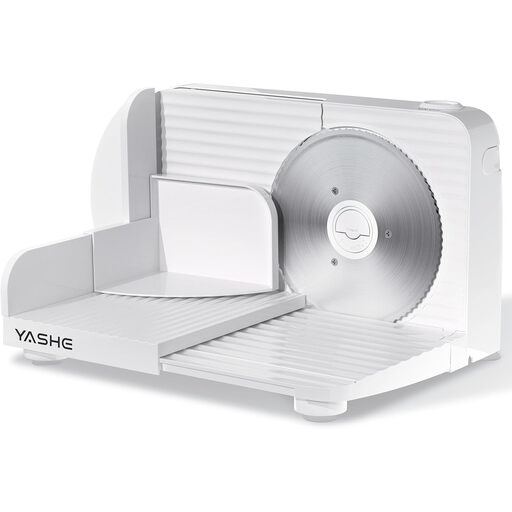 Image unavailable
The product name lists meat as a suitable use and describes a foldable design; bear in mind that the blade is serrated if you want fine slices.
Adjustable thickness: 0–15 mm. Blade: 17 cm stainless steel. Power: 180 W.
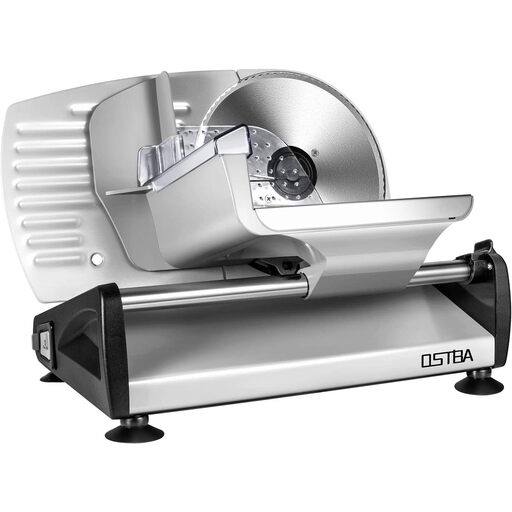 Image unavailable
This listing describes a meat slicer with a serrated blade; check whether it’s suitable for the fine salami slices you want.
Blade: 19 cm. Adjustable thickness: 0–15 mm. Power: 150 W. The product information lists a child lock and non-slip feet.
 Image unavailable
The product information lists meat and bread as suitable uses. The serrated blade is worth bearing in mind if you want to cut fine salami slices.
Adjustable thickness: 0–15 mm. Blade diameter: 17 cm. Power: 100 W. The information lists a food holder, safety switch and removable parts.
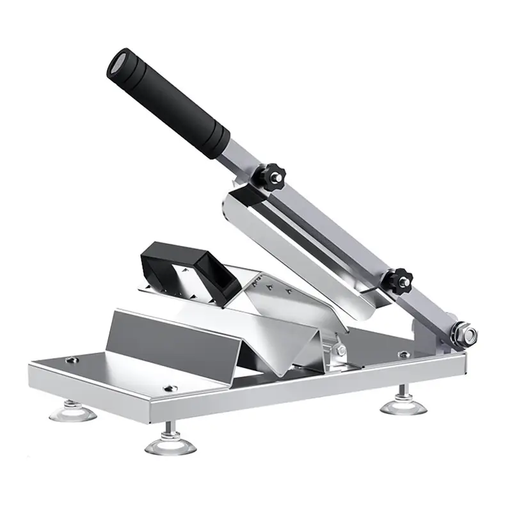 Image unavailable
The product information describes this model as a meat slicer; check the cutting method and suitability for salami for the exact version on offer.
The name includes Stainless SS304.
 Image unavailable
The product description lists a smooth blade for meat and a collection tray; check which blades are included with this version.
The description also lists a serrated blade, removable carriage, safety switch and continuous operation.
If you prepare, process or sell food as a business, the NVWA requires you to follow a food safety plan based on HACCP or an applicable hygiene code. Whether this applies depends on the commercial nature of the workshop; don’t assume the requirement automatically applies to a private gathering.
Follow the storage temperature on the label. According to the NVWA, pre-packed food with no storage temperature stated should be kept at 7 °C or below. Once opened, also check the storage instructions for the opened pack.
If you serve unpackaged food in a situation covered by NVWA rules, you must make allergen information available in the prescribed way. Check the ingredients of the salami and other products you’ll use at the workshop; don’t assume all salami contains the same allergens.
Follow the instructions for the specific model on switching it off, unplugging it and taking it apart. For commercial food preparation, the NVWA requires a clean and safe preparation area. Removable parts can make surfaces easier to reach, but they don’t replace a cleaning routine.
Not automatically. According to the Dutch government, consumer purchases in the Netherlands come with a legal guarantee that has no fixed statutory time limit; if a product is faulty, contact the seller. If you’re considering an extended warranty, check what additional cover it provides and assess business purchases separately.