What should you look for when choosing?
Start with the slice of salami you want and the blade supplied with the machine. Then decide whether slicing bread, safe cleaning or compact storage should also influence your choice.
| What to consider |
What to look for |
Who is this most relevant to? |
| Thin slices of salami |
Check which blade is included, whether the thickness is adjustable and whether another blade is compatible with this exact model. |
If I mainly want to serve thin slices, I’ll start by checking the blade and the thickness I want. Around 36% of consumers put fine slices of delicatessen meat first. |
| Salami and bread |
Check whether a universal blade or two compatible blades are actually included. |
If I want to use the machine for salami and bread, I need to know which blade is designed for both. Around 29% of consumers prioritise versatility. |
| Operation and cleaning |
Check the food holder and finger guard; follow the model-specific instructions for switching off, dismantling and cleaning the machine. |
If I also want to slice smaller pieces, I’ll look at how they are guided and how easy the parts are to reach for cleaning. Around 21% of consumers prioritise safe operation and cleaning. |
| Storage |
Check the dimensions in use and when stored, the maximum cutting height, and where the cord and parts can be kept. |
If I want to put the machine away again after a meal together, the space available in my cupboard matters. Around 14% of consumers give compact storage top priority. |
Joybuy products
Below are Joybuy slicers for meat and deli meats. For each model, check that the blade, cutting thickness and product documentation suit the way you plan to use it for salami.
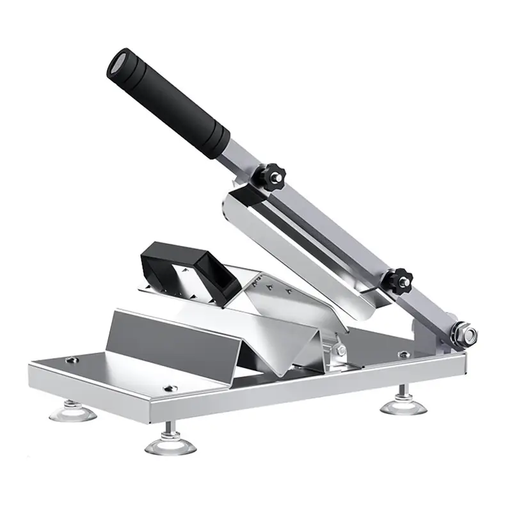 Image unavailable
BJ 304 Stainless SS304 meat slicer
The product name describes this as a meat slicer; compare its blade options and adjustability with the slice thickness you want for salami.
View at Joybuy
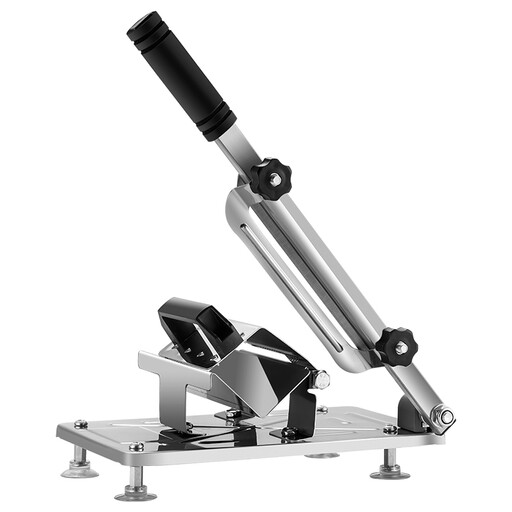 Image unavailable
Maxcook Stainless Steel meat slicer, extended version
The product name describes an extended version of a meat slicer; check that its size and blade adjustment suit your needs.
View at Joybuy
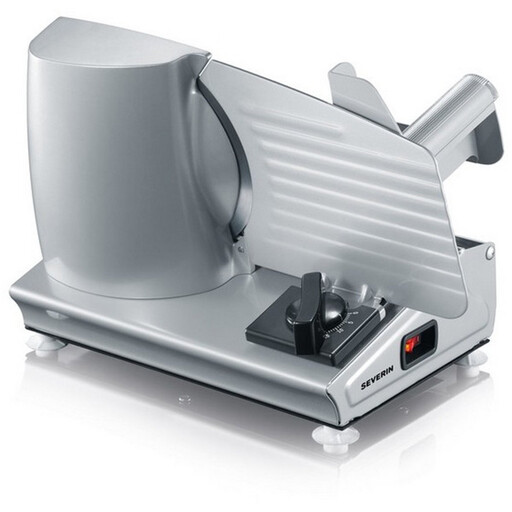 Image unavailable
Severin AS 3915
With a smooth blade for delicatessen meats and a serrated blade for bread, this model is worth considering if you want one machine for both uses.
Severin lists two blades and an adjustable cutting thickness of 0–15 mm.
The product information mentions a sliding plate to protect your fingers; check the instructions for operation and cleaning.
Check the relevant conformity information for the specific item on offer.
View at Joybuy
 Image unavailable
Fritel SL 3710
The universal blade makes this model worth considering if you want to slice bread as well as salami; a specialist smooth blade may be a better choice for delicatessen meats.
Fritel specifies a cutting thickness of 0–20 mm, a blade diameter of 190 mm and a carriage angled at 15°.
The product information mentions a food holder and a removable carriage. Check the instructions for operation and cleaning.
Check the relevant conformity information for the specific item on offer.
View at Joybuy
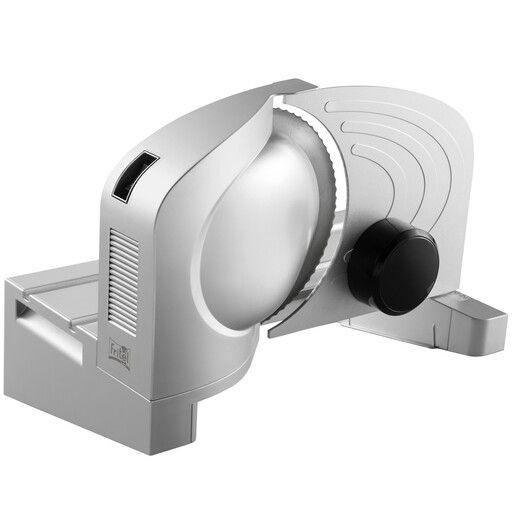 Image unavailable
Fritel SL 3655
This model is worth considering if you want one machine for bread and deli meats; Coolblue says a serrated blade is less suitable for delicatessen meats.
The product name lists a cutting thickness of 0–20 mm, a blade diameter of 17 cm and a serrated blade.
Check the relevant conformity information for the specific item on offer.
View at Joybuy
Frequently asked questions
Which blade should you choose if salami is your main priority?
Start with the slice thickness you want and the blade supplied with the machine. Coolblue and GRAEF recommend a smooth blade for fine, thin slices of deli meat; with a universal or serrated blade, the option to slice bread too may be more important.
How should you use and clean the slicer after slicing?
Use the food holder and follow the instructions for your exact model when switching off, dismantling and cleaning the machine. The Voedingscentrum recommends using clean kitchen utensils and thoroughly cleaning anything that has come into contact with raw meat; this general food hygiene advice does not replace the model-specific instructions.
Is CE marking required for an electric slicer sold on the Dutch market?
For electrical appliances that meet the applicable requirements, Ondernemersplein refers to CE marking and an EU declaration of conformity. Check the documentation for the specific product: a claim on a sales page alone does not prove that the item on offer meets the requirements.
What rights do you have when you buy a slicer online?
According to ACM ConsuWijzer, for a standard online purchase you generally have 14 days to change your mind after delivery. Your statutory rights are separate from any shorter manufacturer’s warranty; if a product does not meet what you could reasonably expect under normal use, the seller must offer a solution.
How should you store leftover salami from your meal?
If the packaging is unopened, follow the label. If the salami needs to be kept chilled, put it back in the fridge promptly. The Voedingscentrum recommends keeping your fridge at 4 °C; it gives separate advice for opened salami in its storage guide, and shorter storage times apply to vulnerable groups.


