
Vandaag of morgen in huis

Kwaliteit gegarandeerd

Welkomstaanbiedingen ontgrendelen: GRATIS bezorging | Tot 80% korting | Gratis 30 dagen JoyPlus-proefperiode
Download de app
A salad bowl may seem like a simple kitchen product, but the differences between models can be significant. A lightweight plastic bowl is handy outdoors, while a ceramic salad bowl is better suited to a laid table. A large salad bowl can be practical for a family, but it also takes up more cupboard space.
The product description does not always tell the whole story either. Before buying, always check the dimensions, material and care instructions. This helps you avoid finding out after a few uses that a bowl is too small, cannot go in the dishwasher or is difficult to store.
A serving bowl with a wooden base, textured finish or hand-finished design may look appealing, but that does not automatically make it suitable for intensive daily use. Some glass salad bowls, for example, are not suitable for the microwave, dishwasher or oven. This matters when you want to clean up quickly or keep a dish warm.
Also check whether a decorative element, such as a wooden stand, needs to be cleaned separately. A combination of glass and wood often requires hand washing.
The diameter does not tell you everything about the usable capacity. A low, wide bowl works well for pasta or a mixed salad, while a deep serving bowl is less likely to spill when tossing ingredients. So pay attention to the combination of diameter, height and capacity.
A bowl measuring around 21 to 23 cm is suitable for smaller portions, fruit or side dishes. For several people, a large salad bowl measuring around 25 cm or more may be more practical. If you are buying a bowl set, also check the measurements of each piece; product dimensions are sometimes given in inches.
Terms such as ‘oven-safe’, ‘BPA-free’ and ‘dishwasher-safe’ should be checked for each product. A ceramic bowl may be suitable for use in the oven, while a similar model may be intended for microwave use only. The YumiPLUS ceramic bowl with lid, for example, states that certain features have been included as assumptions. This is not a substitute for a clear product specification.
You should also never use a metal bowl in the microwave. Take extra care when handling any bowl containing hot food and avoid sudden changes in temperature, particularly with ceramic and glass.
First decide how you intend to use the salad bowl:
Capacity is more useful than diameter alone. The 5five Estiva salad bowl, for example, has a diameter of approximately 25 cm, a height of 13 cm and a stated capacity of 2.6 litres.
Each material has different practical qualities:
A dishwasher-safe bowl saves time, but you should also consider its components. A bowl with a non-slip base may be dishwasher-safe, while hand washing may be recommended to keep the base looking its best for longer. Abrasive sponges can damage glaze, plastic and stainless steel.
For small kitchens, stackable bowls are a practical choice. A salad bowl set with nestable sizes takes up less cupboard space than separate bowls. When storing your bowls, pay attention to height, particularly if a bowl has a fixed base or lid.
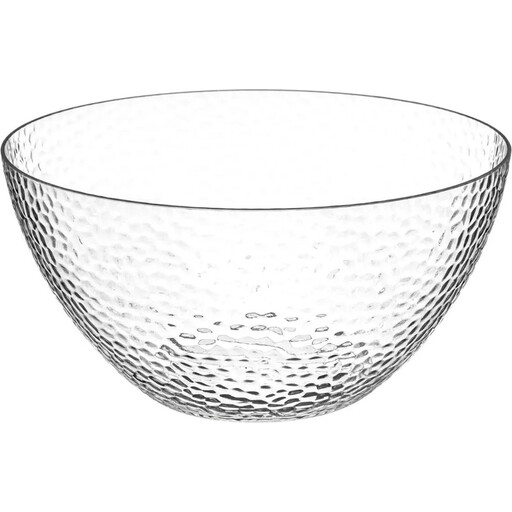
Why it suits this profile: The lightweight transparent bowl is suitable for salads, fruit and snacks, indoors or outdoors. Its stated 2.6-litre capacity provides room for several portions.
The diameter, height and capacity are clearly stated. This makes it easier to judge the size than from a product photo alone.
2.6-litre capacity; dishwasher-safe according to the product description; weight of approximately 230 grams.
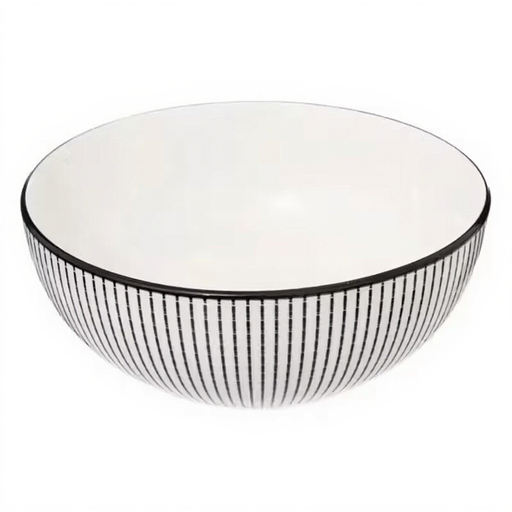
Why it suits this profile: This 22 cm black porcelain salad bowl, with a height of 8.8 cm, is designed for serving at a modern table setting.
The fixed dimensions and stated porcelain construction make it clear that this is primarily a serving bowl, rather than a general-purpose mixing bowl.
Porcelain; one compartment; 22 cm diameter; minimum two-year statutory guarantee according to the product information.
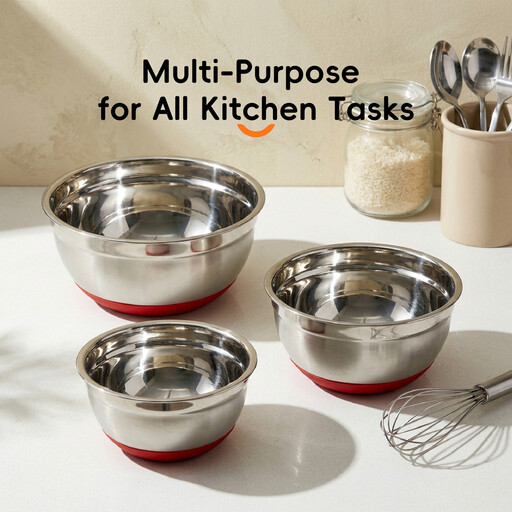
Why it suits this profile: The three bowls, measuring 18, 20 and 22 cm, are designed for mixing, whisking, kneading, marinating and serving. The silicone base helps prevent slipping while stirring.
This set is not just about looks: its sizes, nestable design and non-slip base are clearly specified. The model is not suitable for microwave use.
304 stainless steel according to the product description; three nestable sizes; dishwasher-safe; silicone non-slip base.
We have put together a complete, up-to-date list of products that fully meet these strict selection criteria and the applicable European safety regulations.
For one or two people, a bowl measuring around 21 to 23 cm is often sufficient. For a family or a meal with several side dishes, a model measuring around 25 cm or more is more practical. Do not look only at the diameter; also consider the height and stated capacity.
That depends on how you intend to use it. Stainless steel is practical for mixing and preparation. Ceramic and porcelain work well for serving at the table. Glass is suitable when you want to see the contents. Plastic is lightweight for outdoor use. Always check the care and heating instructions for the specific model.
Some models are dishwasher-safe, while others are not. According to the product information, the Nora porcelain bowl is not suitable for the dishwasher, whereas the 5five Estiva and PURECOOK stainless steel set are described as dishwasher-safe. For wood, glass with a stand and silicone components, hand washing is often the safer care option.
