
Livraison le jour même et le lendemain

Qualité garantie

Débloquez vos offres de bienvenue: Livraison GRATUITE | Jusqu'à -80 % | 30 jours d'essai gratuits à JoyPlus
Téléchargez l'application
A salad bowl might seem like a simple kitchen item, but choosing the wrong one can quickly become frustrating. A bowl that slides around when you're mixing, turns out too small for a main-meal salad, or can't go in the dishwasher will soon end up gathering dust. If you're looking to buy a salad bowl, it pays to look beyond colour and shape.
The three most common pitfalls:
Don't just look at the diameter – consider the height and shape too. A large salad bowl with plenty of depth stops ingredients from spilling over the edge while you're mixing. For a one- or two-person household, a bowl around 21 to 24 cm should be sufficient. For families, parties, or a salad as a main course, a roomier bowl is more practical.
A wide, shallow bowl works well for serving straight to the table. A deeper mixing bowl gives you more room for dressing, pasta, dough or washed vegetables. If you want to cover several tasks, a mixing bowl set is worth considering.
Claims such as "durable", "extra sturdy" or "food-safe" should be assessed against the product specifications. According to a brand's or supplier's product information, an item may be BPA-free or suitable for food contact – use that information as a starting point, and always check the specific care instructions too.
A salad bowl with a non-slip base is handy when you need to stir, whisk or knead vigorously. Pay attention to the base material. Silicone can protect your worktop and reduce the noise of metal on the surface, but some manufacturers recommend hand washing to keep the base looking its best for longer.
For smaller British kitchens, stackable bowls are a practical choice. A salad bowl set or mixing bowl set can offer multiple sizes without each bowl taking up a whole shelf. Just check which items are actually included – a "four-piece set" might contain bowls and accessories.
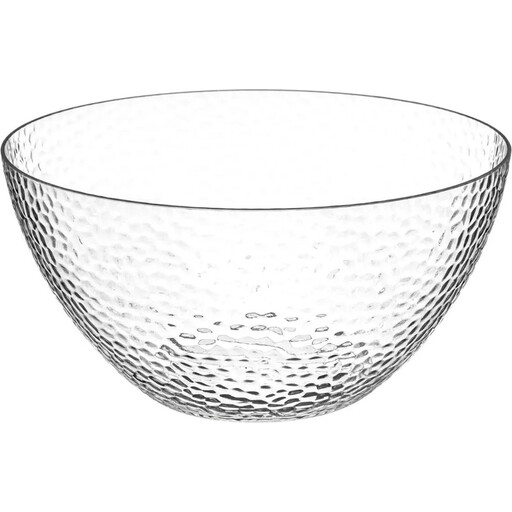
Why this fits the profile: According to the product information, this lightweight plastic bowl has a capacity of 2.6 litres and is suitable for salads, fruit and snacks, both indoors and outdoors.
The capacity and dimensions are clearly stated, so you can better judge whether the bowl is large enough for your household. The product information also indicates whether it is dishwasher-safe.
Lightweight at around 230 g, 2.6 litre capacity, transparent plastic and dishwasher-safe.
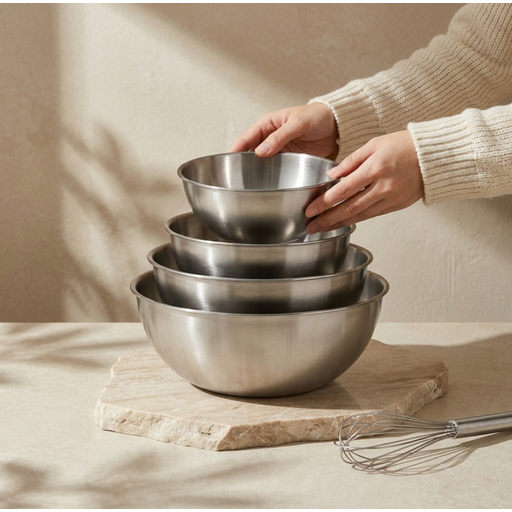
Why this fits the profile: For anyone who wants one bowl for multiple kitchen tasks, this set offers four stackable bowls in 19, 22, 25 and 28 cm according to the stated specifications.
The set means you don't need a separate bowl for every task. The nesting design makes storage predictable, and according to the product description, the rolled rim is designed for comfortable use.
304 stainless steel, four sizes, stackable and, according to the product information, suitable for the dishwasher, mixing, marinating and serving.
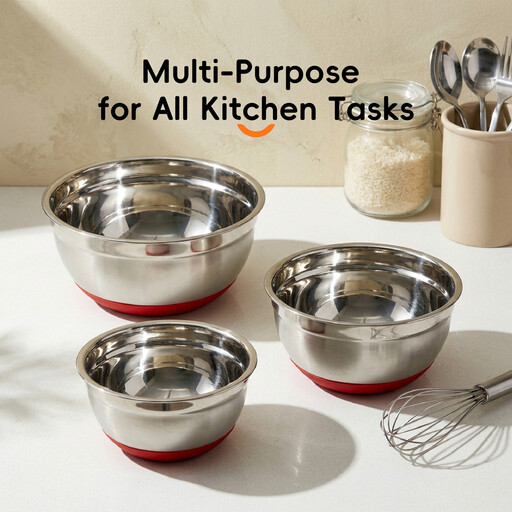
Why this fits the profile: This set is designed for mixing, whisking eggs, kneading dough, washing vegetables and marinating. According to the product information, the three bowls are stackable and feature a red silicone base.
The non-slip base is designed to reduce sliding and noise while stirring. The care instructions recommend hand washing to protect the silicone base, so be prepared for a bit of extra cleaning.
Food-contact-safe stainless steel, three sizes, non-slip base, nestable design and, according to the product information, dishwasher-safe.
We've put together a full, up-to-date list of products that fully meet these strict selection criteria and comply with current European safety regulations.
Always check the symbols and text on the product before you buy. A dishwasher-safe salad bowl is handy for everyday use, but dishwasher-safe doesn't automatically mean every part is suitable. Silicone bases, wooden stands and decorative finishes may have different care instructions.
Also keep these points in mind:
For small portions or two people, around 21 to 24 cm is usually practical. For a family, a festive meal or a large pasta salad, a model from about 25 cm upwards is more convenient. Also look at the height and capacity, because two bowls with the same diameter can still hold different amounts.
Yes, stainless steel is practical for mixing, whisking, marinating and meal prep. According to standard product specifications, the material should not be used in the microwave. Also check whether the bowl is dishwasher-safe and whether hand washing is recommended for any silicone base.
The lifespan depends on the material, usage and care. Stainless steel and sturdy plastic are generally suitable for regular use, while glass, ceramic and porcelain need more care due to the risk of breakage. Follow the care instructions and check the bowl for cracks, sharp edges or loose parts before each use.
