
Vandaag of morgen in huis

Kwaliteit gegarandeerd

Welkomstaanbiedingen ontgrendelen: GRATIS bezorging | Tot 80% korting | Gratis 30 dagen JoyPlus-proefperiode
Download de app
Educational toys for babies and toddlers can make play more varied. However, a long list of features says little about how practical a toy is day to day. A musical toy with lots of buttons can quickly become overwhelming, for example, while a large activity centre may prove awkward in a smaller Dutch home.
As a Joybuy Product Recommendation Officer, I therefore look first at the child’s age, how the toy will be used and the product information that can be verified. Pay particular attention to these three common pitfalls:
Start by choosing toys that suit the child’s age and motor skills. For babies, large parts that are easy to grip and gentle sensory stimulation are often more practical. A baby activity table with removable legs, for example, can first be used on the floor and later as a table.
For children aged 1 and over, pushing and pulling movements, simple shape sorters and large building blocks are suitable for independent discovery. A baby walker or wooden push-along walker only makes sense when the child can already stand and walk with support. It is not a substitute for supervision during those first steps.
From the age of 3, toddlers can do more with role play, simple rules and building sets containing multiple accessories. Take extra care with small parts when choosing toys for children aged 4 and over. A set with 104 pieces can be great for building together, but is not suitable for children below the stated minimum age.
Check whether the product has rounded edges and whether the base remains firmly in place during use. With a push-along walker, the wheel construction, grip and any speed-control feature are all relevant. For a wooden push-along walker, the finish and rubber wheel rims are also practical considerations, particularly on wooden or PVC flooring.
With electronic baby toys, check:
If a product page mentions CE or EN71 compliance, treat this as product information provided by the seller or manufacturer and also check the warnings, age limit and instructions for use. No safety mark makes supervision during play unnecessary.
Measure the area where the toy will be placed. A large play table or soft climbing set may be appealing, but can quickly take up a considerable amount of floor space in a flat. Also consider storage space and whether the parts can be cleaned easily.
For trips or visits to grandparents, compact options such as an activity cube or a separate play board are often more convenient. For everyday use, a stable activity table or wooden push-along walker may provide greater variety.
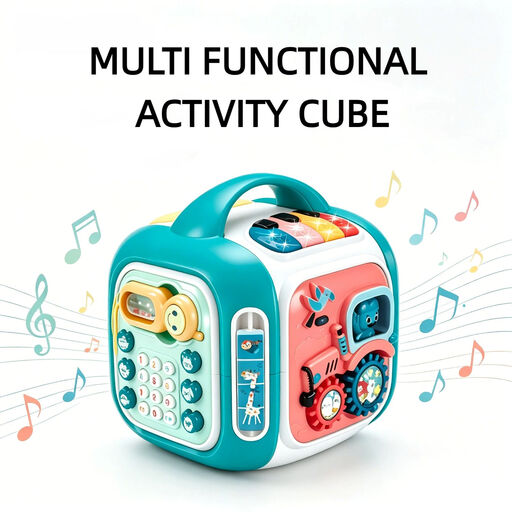
Why it suits this profile: This compact cube combines several activities in one portable product, making it suitable for small play areas, visits and travel.
The product information lists eight play modes, rounded edges and an age indication of 1 to 3 years. Before buying, check the battery requirements and the latest safety information.
Approx. 23 × 23 × 24 cm; musical, spinning and telephone elements; batteries not included.
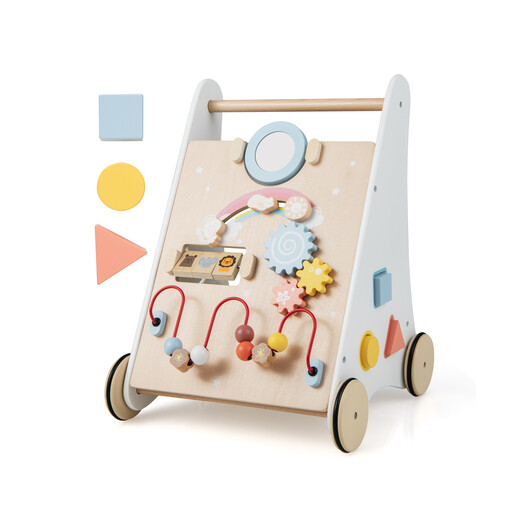
Why it suits this profile: This wooden push-along walker is ideal for families looking for a sturdy, screen-free product for standing, pushing and simple activities.
The specifications mention rubber, non-slip wheels, rounded corners and a handle. Only use the walker when your child is ready to pull themselves up, and supervise them at all times.
Wooden construction; multiple activities; suitable from 12 months; storage basket at the rear.
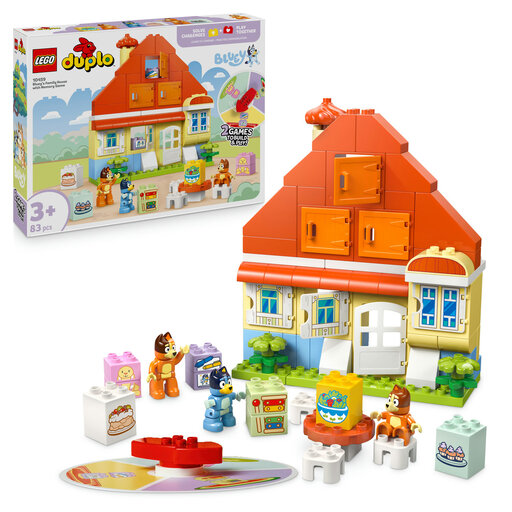
Why it suits this profile: A great choice for toddlers aged 3 and over who enjoy playing together, making up stories and learning a simple memory game.
The product combines building with role play and a memory game. The manufacturer mentions small parts, so follow the minimum age recommendation and supervise your child during play.
83 pieces; three figures; opening windows; suitable for playing together and imaginative building.
We have put together a complete, up-to-date list of products that fully meet these strict selection criteria and the applicable European safety regulations.
Look for large parts, simple cause-and-effect functions and toys that are not easily knocked over. An activity table, shape sorter or wooden push-along walker may be suitable, depending on the child’s motor development. Always check the age indication and stay nearby during play.
How long a toy remains useful depends on its age range, construction and the child’s interest in playing with it. A product with several play modes may remain engaging for longer, but only if its features match the child’s development. Check regularly for loose parts, cracks and damaged wheels.
Electronic toys may require batteries, and some features are mainly intended for indoor use. Before buying, check whether batteries are included, whether the volume can be adjusted and how the toy should be cleaned. Non-electronic building toys and wooden toys generally do not need power, but they still need to be checked for wear and small parts.
