
Vandaag of morgen in huis

Kwaliteit gegarandeerd

Welkomstaanbiedingen ontgrendelen: GRATIS bezorging | Tot 80% korting | Gratis 30 dagen JoyPlus-proefperiode
Download de app
A dog doesn’t need just one toy for every situation. A puppy often wants to chew, an active dog needs exercise, and a clever dog quickly gets bored with the same old ball. Yet a bigger selection doesn’t automatically mean a better purchase. The real difference lies in size, material, play style and supervision.
As Joybuy Product Recommendation Officer, I filter the most important product information so you can compare marketing claims against verifiable specifications.
A tough nylon toy can be right for a strong chewer, but a soft latex toy isn’t designed for that. Product descriptions sometimes use terms like “durable” or “bite-resistant”. That doesn’t mean a toy can withstand every dog. So look at the recommended dog type and check the material regularly.
Squeaky dog toys often grab attention, but a squeaker or crinkly part can come loose if your dog bites the toy open. Pay particular attention to seams, squeakers and loose rope ends. For dogs that swallow parts, supervision is especially important.
A small ball can get stuck in the mouth of a medium or large dog. Conversely, large toys can be difficult for a small dog to pick up. Measure your dog’s mouth and compare the product dimensions with your dog’s weight and play style. The stated size is a practical starting point, not a substitute for supervision.
For dog chew toys you’ll come across nylon, natural rubber, latex, TPR, fabric and rope, among others.
A manufacturer may state that a product helps with dental care or reducing plaque. Treat this as a product claim from the brand, not a guaranteed effect. Dog toys do not replace regular dental care or advice from a vet.
Always check:
The Petgravity Smart Bouncing Ball is available in versions for smaller and medium-sized dogs. The product description mentions a rubber core, a replaceable polyester plush cover, two play modes and USB-C charging. According to the manufacturer, the toy is not intended for aggressive chewers.
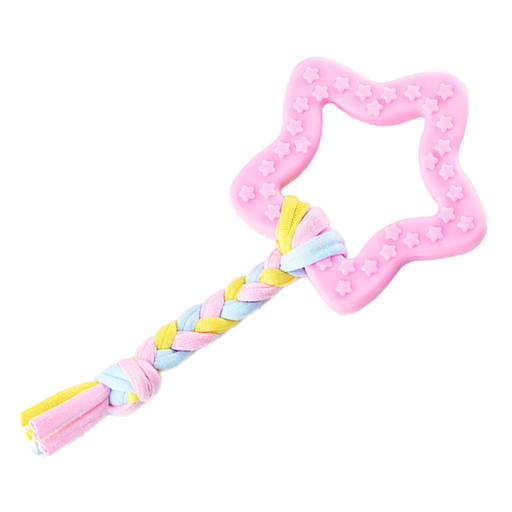
Why this fits: A compact choice for puppies and small dogs that want to chew and tug. The size is 16.5 × 8 cm.
The recommended target group is clearly described. It is not intended for aggressive chewers or medium and large breeds.
TPR and fabric combine chewing with tug and fetch play. Cleaning can be done with a damp cloth.

Why this fits: For owners who want mental stimulation alongside exercise for small and medium dogs up to around 15 kg.
The product specification states the material: natural rubber. Still check for cracks and stop using if damaged.
According to the product description, the toy can be filled with treats or xylitol-free peanut butter and rolls unpredictably.
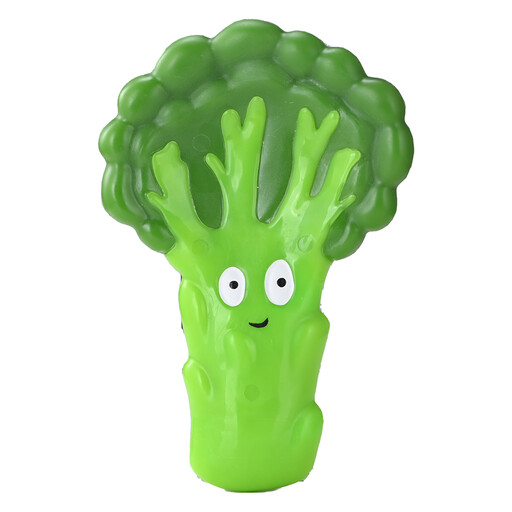
Why this fits: The product information targets dogs with a moderate to strong need to chew. The dimensions are 11 × 3.5 × 16.5 cm.
The nylon construction is more concrete than a general claim like “strong”. With intensive chewing, regular inspection remains necessary.
According to the brand description, the toy is intended for chewing and throwing. It can be rinsed with water.
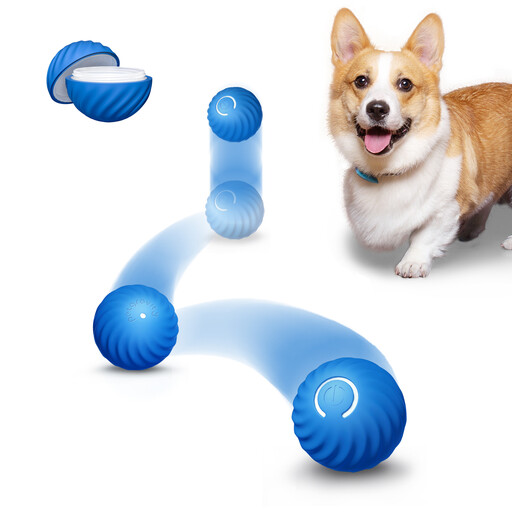
Why this fits: According to the product description, the ball is designed for smaller dogs and moves independently on two play modes.
The size is specifically linked to smaller dogs. According to the warning, the model is not suitable for aggressive chewers.
USB-C charging, a removable plush cover and two play modes. Use indoors and outdoors only under supervision.
Browse a current selection of dog toys sorted by play type, size and use case.
Don’t use dog toys indefinitely without checking them. Look out for:
Follow the cleaning instructions for each product. Some toys can be rinsed, while electronic balls should only be cleaned with a damp cloth. Allow wet toys to dry completely and store them in a cool, dry place. Replace the product immediately if damaged. If your dog swallows a large or sharp part, contact a vet.
Choose a size that the puppy can hold easily and avoid toys with parts that come off easily. Soft latex, TPR or a compact dog rope can suit light chewing and tugging activities. Always supervise a puppy, especially with squeaky dog toys.
That depends on the chewing strength, play duration, surface and material. There is no fixed lifespan. A nylon toy can last longer than plush with a strong chewer, but must still be replaced as soon as cracks or sharp parts appear.
Mechanical toys don’t use any power. Electronic models, such as a rechargeable bouncing ball, do need to be charged. The running costs are usually limited to electricity and any replacement covers or parts. Check the cable before use and keep it out of your dog’s reach.
