What should you look for when choosing?
First, choose the type of bread that suits your morning: crunchy crispbread, pre-portioned rye bread or fresh wheat and rye sourdough bread. Then compare the ingredients and nutritional information of the products you’re still considering.
Rye sourdough crispbread
Choose this if: you want to take a crunchy rye product with you without having to slice it; Wasa Zuurdesem Rogge is one example made with wholegrain rye and rye sourdough.
Bear in mind: crispbread isn’t soft rye bread. Follow the storage instructions and check the allergens if they’re relevant to your choice.
Pre-portioned rye bread
Choose this if: you’d rather eat bread than crackers and want to be able to grab a portion without slicing it yourself.
Bear in mind: wholegrain rye bread doesn’t automatically contain sourdough. Compare the ingredients and fibre per 100 g of the product you choose.
Fresh wheat and rye sourdough bread
Choose this if: you’re looking for fresh sourdough bread with some rye in it, but don’t necessarily want rye bread.
Bear in mind: the proportions of wheat and rye vary from loaf to loaf. Sourdough bread may also contain baker’s yeast, and a whole loaf may need slicing.
| What to consider |
What to check |
Who it matters to |
| Rye and sourdough |
Check which grains and type of sourdough are listed in the ingredients; also see whether baker’s yeast is mentioned. |
If I’m specifically looking for both rye and sourdough, I don’t want to rely on just one word in the product name. This ingredient profile is a top priority for around 33% of consumers. |
| Easy to take with you |
Compare the type and packaging: crispbread, pre-portioned rye bread or a whole fresh loaf. |
On a morning when I don’t have much time to prepare, I want to be able to grab a portion without having to slice bread first. Around 27% of consumers give portability top priority. |
| Wholegrain and fibre |
Check the ingredients and compare fibre in the nutritional information per 100 g; also look at the portion size. |
If you’re comparing wholegrain and fibre, the label is more useful than the colour of the bread. This is the main consideration for around 20% of consumers. |
| Shop availability |
Check whether the specific product is available to order online or only in store. |
If I’m doing some shopping while I’m out, I want to know whether I can find the type of bread I’m after in the shop I plan to visit. Availability matters most to around 20% of consumers. |
Brands and shops to consider
The range mentioned includes different types of rye bread, crispbread and fresh sourdough bread. Check the specific product rather than choosing based only on the shop or bread range.
Albert Heijn
Albert Heijn’s Liefde & Passie range includes fresh wheat and rye sourdough bread.
- According to its product description, AH Liefde & Passie OerDesem zonne rogge is a brown wheat and rye sourdough bread.
- It isn’t pure rye bread. Check the ingredients if the proportion of rye, type of sourdough or yeast used matters to you.
Jumbo
Jumbo describes freshly baked sourdough loaves available to buy in store.
- Jumbo says its sourdough loaves are baked in store.
- Jumbo says these loaves can’t be ordered online. Check whether rye is among the ingredients of the variety you choose.
Lidl
Lidl lists rye bread in both wholegrain and Westphalian varieties.
- The product page lists both varieties in 500 g packs.
- Lidl lists these products as available in store only. Read the label if you’re specifically looking for sourdough.
ALDI
ALDI offers both rye bread and separate rye crackers.
- Finest Bakery Roggebrood is listed in a 500 g pack.
- Rye bread and rye crackers are different types of product. If sourdough is a must, check the ingredients of the variety you choose.
PLUS
PLUS offers several types of rye products, including crispbread with rye sourdough and various rye breads.
- The product information for Wasa Zuurdesem Rogge lists 100% wholegrain rye and rye sourdough.
- Other rye products in the range have different ingredients. Check the grains and sourdough in each bread separately.
Dirk
Dirk offers several rye breads and also lists sourdough as part of its bread range.
- The range includes products such as Van Dijk's Roggebrood Fries and Soma Oberlander roggebrood.
- Having rye bread and sourdough bread as separate categories doesn’t mean that a particular product has both characteristics; check the product label to be sure.
Rye products for a quick breakfast
These two Joybuy products suit different ways of taking rye with you: crunchy sourdough crispbread or pre-portioned rye bread. Choose the type of bread you want, and check the current label for specific ingredients and nutritional values.
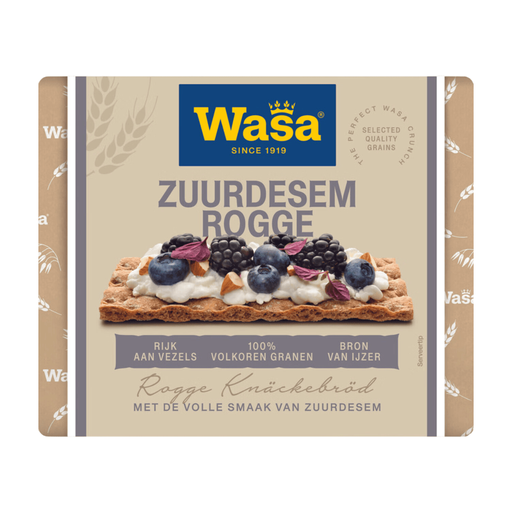 Image unavailable
Wasa Sourdough Rye Crackers, 235 g
A crunchy choice if you’re looking for rye and sourdough without having to slice bread at home. The pack contains 235 g; this is crispbread, not soft rye bread.
Check the ingredients, allergens and storage instructions on the packaging if they’re relevant to your choice.
View at Joybuy
 Image unavailable
TastyBasics Rye Bread, 9 pieces
An option if you’d rather take rye bread than crunchy crackers for breakfast. The product name lists nine pieces.
If you specifically want sourdough or wholegrain rye, check the ingredients of this variety before choosing it.
View at Joybuy
Frequently asked questions
Is rye bread with sourdough gluten-free?
No. Rye is a grain that contains gluten, and sourdough doesn’t automatically make a product gluten-free. If you need a gluten-free product, check that it is explicitly labelled as such and read the allergen information on the packaging.
How can I tell if rye bread is wholegrain?
Look for the word wholegrain and read the ingredients for the specific bread. According to the Netherlands Nutrition Centre, wholemeal bread is made from 100% wholemeal flour; a dark colour or the word brown alone isn’t enough to tell you that it’s wholegrain.
Does all rye or sourdough bread contain iodised salt?
No. According to the Netherlands Nutrition Centre, not all bread is made with baker’s salt. If the type of salt matters to you, check the label for baker’s salt or iodised salt, and ask about the ingredients if the bread is unpackaged.
How should I store bread for several breakfasts on the go?
Follow the storage instructions for the product you choose. The Netherlands Nutrition Centre suggests freezing bread in portions as soon as you buy it; crispbread may have different instructions, such as keeping it somewhere cool and dry.
Do I need to visit a particular supermarket to find rye sourdough?
It’s better to choose based on the specific product rather than the shop alone: rye bread, crispbread and sourdough bread may all be available in the same range. Before setting off, check that the variety you want is in stock, then read the ingredients to make sure it contains both rye and sourdough.


