What should you look for when choosing?
First, check that the product suits your diet and any allergies. Then choose between a soft slice and a crunchy crispbread, and only then compare the nutritional information for the portion you plan to eat.
| What to consider |
What to check when buying |
Who it matters to |
| Wholegrain and fibre |
Read the wholegrain statement and ingredients list; compare fibre per 100 g and per slice or crispbread. |
If fibre is my main reason for choosing rye, I want to know what I’ll get from my own portion. Around 37% of consumers put wholegrain status and fibre first. |
| Gluten and allergens |
Check the allergen information for the exact variety, including wheat, sesame and possible traces. |
If I need to avoid certain ingredients, suitability for my diet matters more than texture or nutritional values. This is the top priority for around 36% of consumers. |
| Portion and texture |
Check the weight per slice or piece and the salt per portion; decide whether you’d prefer compact bread or crunchy crispbread. |
For a small, crunchy snack, I don’t just want to see values per 100 g; I also want to work out how many pieces I’ll eat. Portion and texture are the deciding factors for around 27% of consumers. |
Rye bread and rye crispbreads at Joybuy
Here you’ll find sliced rye bread alongside a range of crunchy rye products. With crispbreads, note the difference between an unfilled snack base and a filled sandwich; compare nutritional values only for the exact variety and portion.
 Image unavailable
TastyBasics Rye Bread – 9 pieces
For anyone who wants a single slice of rye bread to top. Joybuy’s product information lists a 56 g slice and 9.6 g of fibre per 100 g. Check the allergen information on the packaging if you need to avoid certain ingredients.
View at Joybuy
 Image unavailable
Bolletje Rye Bread Round – 500 g
For anyone looking for sliced rye bread rather than a crispbread. Joybuy’s product information lists 9.1 g of fibre per 100 g and includes rye and wheat bran in the ingredients. Check the weight of the slice you eat before comparing portions.
View at Joybuy
 Image unavailable
Wasa High-Fiber Crackers – 300 g
A crispbread option for anyone who’d rather top something crunchy than a slice of rye bread. Check the ingredients, allergens and nutritional information for this variety; don’t use the values for Wasa Thin Rye Wholegrain.
View at Joybuy
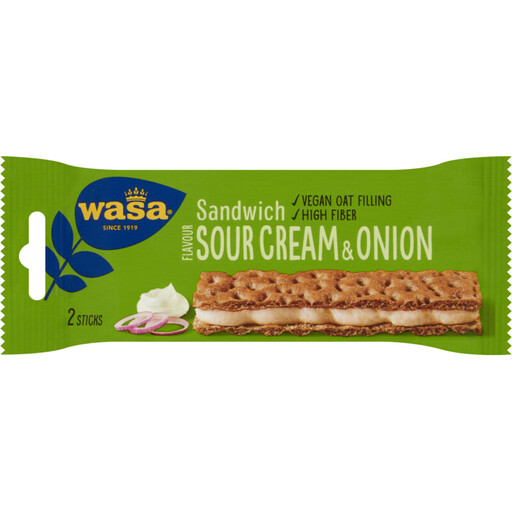 Image unavailable
Wasa Sandwich Sour Cream & Onion – 99 g
A filled sandwich option for anyone who doesn’t want to top an individual crispbread. For this product, compare the nutritional information and allergens for the complete sandwich, not those of an unfilled rye crispbread.
View at Joybuy
 Image unavailable
Wasa Sourdough Rye Crackers – 235 g
A sourdough rye crispbread for anyone looking for a crunchy snack base. Check the weight per crispbread and the nutritional information on the packaging to compare this portion with a slice of rye bread.
View at Joybuy
Frequently asked questions
Is dark rye bread automatically wholegrain?
No, colour alone doesn’t prove that rye bread is wholegrain. Read the wholegrain statement and ingredients list for the exact variety. In 2024, the Netherlands Food and Consumer Product Safety Authority warned about incorrect wholegrain claims on supermarket products it had examined, although bread wasn’t included in the study.
Is regular rye bread suitable if I need to eat gluten-free?
No, don’t assume regular rye bread is gluten-free: rye contains gluten. The Netherlands Nutrition Centre advises people who need to follow a gluten-free diet to check the labelling and allergen information for the specific product.
Which other allergens can vary between rye products?
Check the exact packaging for wheat, sesame and any statements about possible traces. Bolletje lists wheat in its Frisian Rye Bread; Wasa lists sesame and possible traces of milk in its Thin Rye Wholegrain; TastyBasics’ product information notes that traces of nuts, milk and sesame may be present.
How should I store rye bread once opened?
Follow the storage instructions on the packaging you choose. Albert Heijn’s product information for the Hollandia, TastyBasics and Bolletje varieties described notes that they have a limited shelf life once opened and gives instructions for storing them sealed or refrigerated.
Does baker’s salt mean every rye bread contains iodine?
No, the name rye bread doesn’t tell you which salt was used for that variety. The Dutch Commodities Act Decree defines baker’s salt as iodised table salt for bread and other baked goods; check the ingredients information or, if you’re buying unpackaged bread, ask which salt was used.


