No, rye bread is not gluten-free and is therefore not suitable for people with coeliac disease: rye contains gluten. For lunch in the canteen, choose bread or a roll clearly labelled gluten-free. If it’s unpackaged or made up on site, ask how cross-contamination is prevented. If you eat gluten-free bread regularly, check whether it contains baker’s salt too; according to the Netherlands Nutrition Centre, bread made with iodised baker’s salt is an important source of iodine in the Netherlands.
Who needs to make this choice?
Anyone with coeliac disease eating in the canteen
For this lunch, it’s not enough to check what the bread is labelled. It must also be kept separate from crumbs from gluten-containing bread when it’s filled, sliced and served. The Netherlands Nutrition Centre points out that even a stray breadcrumb can cause symptoms for someone with coeliac disease.
Anyone bringing lunch to campus
A pre-packed gluten-free product or a lunch prepared at home gives you the chance to check the label before you leave. If the product is opened or filled in the canteen, you’ll still need to ask how it’s handled.
Anyone who often eats gluten-free bread
If you eat it regularly, it’s also worth comparing ingredients and nutritional information. Check each loaf’s label for baker’s salt: according to the Netherlands Nutrition Centre, it isn’t used in every loaf.
What should you look for?
First, rule out rye bread if you have coeliac disease. Then choose a gluten-free lunch option that you can take with you or eat on site, and check how the canteen handles unpackaged products.
| What to consider |
What to check when buying |
Most relevant for |
| Gluten and cross-contamination |
Look for the ‘gluten-free’ label on the packaging. If the bread is unpackaged or filled on site, ask about allergens and whether separate utensils and equipment are used. |
With coeliac disease, I want to know what bread I’m getting and whether it comes into contact with other bread during preparation; this check is the top priority for around 46% of consumers. |
| Lunch format |
Choose between pre-filled sandwiches, rolls to bake at home or a compact, individually packed option to keep as a backup. Check what the shop or canteen actually has available. |
On a day on campus, I want to take my lunch with me or eat it without any unexpected preparation; around 36% of consumers say this practical consideration matters most. |
| Ingredients for regular use |
Compare the ingredients and fibre on the current packaging, and check whether baker’s salt is listed. |
If I eat gluten-free bread often, I want to compare its ingredients and check for baker’s salt; for around 18% of consumers, this is their main consideration. |
Under European rules, the term ‘gluten-free’ can only be used if the finished product contains no more than 20 mg/kg of gluten. The label doesn’t tell you how a roll will be filled or served in the canteen.
Common mistakes
-
Assuming dark bread is gluten-free
Rye contains gluten, according to Thuisarts. The colour of another bread, or a label such as ‘multi-seed’, doesn’t tell you whether it contains gluten.
If you have coeliac disease, choose a product labelled ‘gluten-free’ and check the current packaging.
-
Checking only the bread
Crumbs or shared equipment can still be an issue when lunch is made up on site. The Netherlands Food and Consumer Product Safety Authority says allergen information must be available for unpackaged foods.
Before buying, ask about allergens as well as how the food is sliced, filled and served. If the process isn’t clear, you can bring your own pre-packed product.
-
Assuming all gluten-free bread contains baker’s salt
According to the Netherlands Nutrition Centre, bread made with iodised baker’s salt is an important source of iodine in the Netherlands, but using baker’s salt isn’t compulsory.
Check the label of the bread you actually eat, and consider its iodine content as part of your overall diet.
-
Relying on an online product description as the current label
Ingredients and allergen information can change, as retailers including Albert Heijn and PLUS point out in their product information.
Check the packaging of the specific product before eating it, even if you’ve bought it before.
Brands and shops to explore
Albert Heijn
Albert Heijn lists its own gluten-free dark multi-seed bread, which could be a good choice for making sandwiches at home.
- The half loaf shown weighs 480 g; according to Albert Heijn, it’s baked in a dedicated gluten-free bakery.
- Check the current packaging. A supermarket product listing tells you nothing about how food is prepared or what’s available in a university canteen.
Jumbo
Jumbo lists a range of gluten-free bread formats from Schär.
- The range shown includes bread, mini baguettes, ciabatta and flatbread, so you can choose a format for a packed lunch.
- Check the product label and availability where you shop; the online range doesn’t tell you how food is handled in the canteen.
PLUS
PLUS lists gluten-free own-brand loaves and rolls, alongside products from Schär.
- The formats shown include white, brown and multi-seed bread, as well as bread rolls.
- Check the current ingredients and allergen information for each product; the qualities of one loaf don’t automatically apply to other formats.
Schär
Schär features in the ranges shown by Jumbo and PLUS, with a variety of gluten-free lunch formats.
- Loaves and individual rolls offer different options for a lunch prepared at home.
- Check the packaging of the variety you choose; the ingredients and preparation method of one product don’t apply to the whole range.
Dirk
Dirk lists Schär Meisterbackers Classic gluten-free bread.
- The 300 g variety shown gives you a specific loaf size to compare.
- Check the packaging and availability when you buy; one product listing doesn’t tell you what the full range includes.
Joybuy products for a packed lunch
These products suit a gluten-free bread lunch prepared at home: mini baguettes to bake or a bread mix to make your own loaf. If your lunch will be filled in the canteen later, ask how they handle gluten-containing bread too.
 Image unavailable
Gv Baguette Mini 7 Pieces
These mini baguettes are described as gluten-free and are a handy option for a lunch you prepare before leaving home. Bake them first and check the packaging and preparation instructions: product listings differ on their shape and quantity.
View on Joybuy
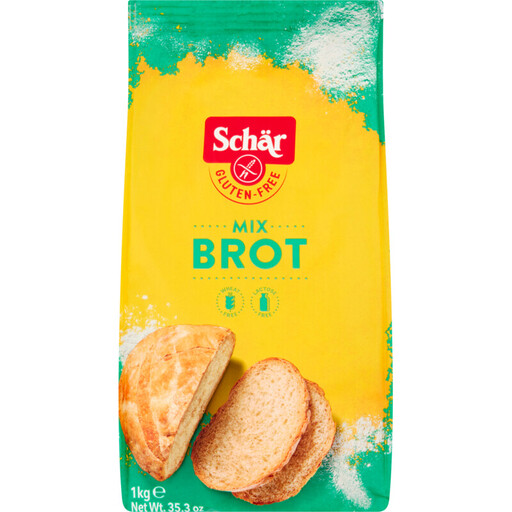 Image unavailable
Schär Bread Mix-Mix B Gluten Free, 1 kg
This 1 kg bread mix is described as gluten-free and is a good option if you’d like to make bread at home for your campus lunch. It isn’t a ready-to-eat lunch loaf: make the bread before you leave, and check the current label if baker’s salt matters to you.
View on Joybuy
Frequently asked questions
Is rye bread gluten-free?
No. Rye contains gluten, so rye bread isn’t suitable for people with coeliac disease, according to Thuisarts. Choose an alternative labelled ‘gluten-free’ and check the label of the product you buy.
What does ‘gluten-free’ mean on packaging?
Under European Commission Implementing Regulation (EU) No 828/2014, the term ‘gluten-free’ can be used if the finished product contains no more than 20 mg/kg of gluten. The label doesn’t describe how the product is later prepared or served in a canteen.
What should I ask about a gluten-free roll in the canteen?
Ask for the allergen information and whether the roll is sliced, filled and served separately. The Netherlands Food and Consumer Product Safety Authority says allergen information must be available for unpackaged foods; however, that information alone doesn’t rule out contact with gluten-containing crumbs during preparation.
Why should I check for baker’s salt in gluten-free bread?
According to the Netherlands Nutrition Centre, bread made with iodised baker’s salt is an important source of iodine in the Netherlands, but baker’s salt isn’t used in every loaf. So check the label of the specific gluten-free bread, especially if you regularly use it as a substitute.


