
If you want to compare wholemeal options and fibre
You’re choosing rusk as your grain accompaniment to soup, so check the pack for a wholemeal label and the fibre content per 100 g.


Choose plain rusk if you want a simple, crunchy accompaniment to pea soup; opt for wholemeal if the type of grain and fibre content matter more to you. A larger seeded rusk is worth considering if you want to top it separately, but be sure to check the ingredients and allergen information too. To compare sizes, look at the number of pieces and the weight per piece rather than relying on the search term ‘medium sliced’.
You’re choosing rusk as your grain accompaniment to soup, so check the pack for a wholemeal label and the fibre content per 100 g.
You want to serve pea soup with a simple, crunchy rusk, without specifically looking for a wholemeal or seeded variety.
You’re looking for a variety with kernels or seeds that you can top and serve alongside the soup. The ingredients and allergen information matter too.
First, decide what you want the rusk to add to your pea soup: a simple accompaniment, a wholemeal option or a larger piece to top. Then check the information on the pack that matters for your choice.
| What to consider | What to check when buying | Who it matters to |
|---|---|---|
| Wholemeal and fibre | Check for a wholemeal label and compare fibre per 100 g, rather than comparing portions of different sizes. | If rusk is also my grain accompaniment, I want to know what grain it contains and how much fibre the product provides. Around 33% of consumers prioritise wholemeal options and fibre. |
| Size and suitability for topping | Check the number of pieces and the net weight, and, if stated, the weight per piece; look for a larger variety or one with seeds. | If I want a rusk I can top and serve separately alongside the soup, I’m mainly looking for the right size and texture. For around 27% of consumers, how well it can be topped is the priority. |
| Plain rusk | Check whether you’re choosing a plain variety, and compare the number of pieces and the ingredients with other varieties. | I mainly want a simple, crunchy addition that lets the pea soup remain the star of the meal. Around 20% of consumers give this preference for plain rusk the highest priority. |
| Ingredients and allergens | Read the ingredients and allergen information for the exact variety you’ve chosen on the current packaging. | If I need to avoid an ingredient, the product’s composition determines whether I can choose a particular rusk. For around 20% of consumers, checking this comes first. |
When choosing rusk, the product type, size and pack information are more useful than a description of slice thickness.
First choose between plain, wholemeal and seeded rusk. Then compare the net weight, number of pieces and, where available, the weight per piece.
The PLUS spelt rusk described here lists, among other ingredients, wheat, barley, egg and sesame; other varieties of rusk may also contain allergens.
If you have an allergy or coeliac disease, check the ingredients and allergen information on the pack of the exact variety. Don’t assume a product is suitable based only on its grain or name.
A 125 g pack and a larger 230 g pack don’t, on their own, tell you how much each piece of rusk weighs. The size of each individual piece matters if you want to top it.
Check the number of pieces and, where stated, the weight per piece before comparing packs.
According to the Netherlands Nutrition Centre, bakers aren’t required to use baker’s salt. The word ‘salt’ on its own doesn’t tell you whether a product contains baker’s salt.
If this distinction matters to you when buying, check the ingredients list or ask the manufacturer.
Bolletje offers plain, wholemeal and multiseed rusk, among other varieties. Ingredients vary from one variety to another.
Its own-label range includes plain and wholemeal rusk.
Jumbo’s range includes wholemeal, multigrain and spelt rusk, among other varieties.
PLUS offers larger seeded rusk and a spelt variety with kernels and seeds, among other options.
These products offer three options to serve with pea soup: a larger wholemeal rusk with seeds, a wholemeal rusk and a plain variety. Check the packaging to confirm the size and ingredients of the one you choose.
 Image unavailable
Worth considering if you want to top wholemeal rusk with seeds and serve it alongside the soup. The pack contains 10 pieces; check the dimensions if size is a deciding factor.
If you have an allergy, check the current ingredients and allergen information for this variety.
 Image unavailable
A wholemeal option if the type of grain matters more to you than a seeded variety. The pack contains 13 pieces; compare the weight per piece if you’re looking for a particular size.
If you have an allergy, read the current ingredients and allergen information on the pack.
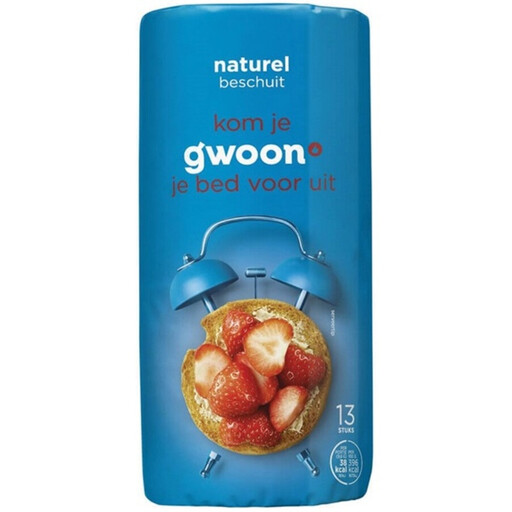 Image unavailable
A plain option if you want to serve rusk alongside your soup. The pack weighs 125 g; check the number of pieces if the size of each rusk matters to your choice.
Check the current ingredients and allergen information if you avoid certain ingredients.
It’s better to compare rusk by product type and size than by ‘medium sliced’. For rusk to serve with pea soup, check the number of pieces, the net weight and, if stated, the weight per piece.
Yes. Check the allergen information for the exact variety you’re buying. The Netherlands Food and Consumer Product Safety Authority explains the mandatory allergen labelling for pre-packed foods; ingredients can vary between rusk varieties.
Don’t assume it is: the PLUS spelt rusk described here lists spelt, wheat and barley, among other ingredients. Check the ingredients and any gluten-free claim on each individual pack.
No, you can’t tell from the word ‘salt’ on its own. According to the Netherlands Nutrition Centre, bakers aren’t required to use baker’s salt. Check the ingredients or ask the manufacturer which salt was used in the rusk you’ve chosen.
Keep rusk in a dry place and seal the pack or storage container tightly after opening. Also follow the storage advice on the packaging of the variety you’ve bought.