
Canteen manager with changing demand
Wants to avoid an opened pack being left unused for too long. The number of pieces and a dry, sealable storage space therefore matter more than a search term such as ‘half loaf’.


Choose rusks for a small or irregularly attended lunch facility based on how many pieces are used, rather than searching for ‘half loaf’. A pack of 10 or 13 is a manageable quantity if you can keep it dry and sealed once opened. For a high-fibre option, compare the nutritional information and allergens too. Individually wrapped rusks may suit single-item serving, but check whether the whole pack will be used.
Wants to avoid an opened pack being left unused for too long. The number of pieces and a dry, sealable storage space therefore matter more than a search term such as ‘half loaf’.
Wants to offer a variety with a different fibre content alongside standard rusks. To do so, they compare the nutritional information on the exact pack and check ingredients such as wheat and sesame.
Needs to organise serving efficiently and keep allergen information for the chosen rusks available. According to the Netherlands Food and Consumer Product Safety Authority, information requirements apply to food offered unpackaged.
First, work out how many rusks are usually used once a pack is opened. Then compare the variety you want with how staff will be served. A smaller pack only helps prevent waste if the storage conditions also suit how quickly it will be used.
| What to consider | What should you check? | Who is this most important for? |
|---|---|---|
| Pack size and storage | Compare the number of pieces with expected demand, and make sure you have a dry place where the pack can be sealed properly. | When lots of staff come for lunch one day and only a few the next, I don’t want an opened pack to go soft or remain unused. For around 46% of consumers, choosing a suitable quantity comes first. |
| Nutritional information | Compare fibre on the same basis, for example per 100 g, and read the ingredients for the exact variety. | If you want to offer a wholegrain or multiseed variety alongside plain rusks, you need the information to distinguish between them. For around 27% of consumers, nutritional profile is the top priority. |
| Allergens and serving | Check the current label and, when serving unpackaged, make allergen information easy to access. | With self-service, I want to be able to say which allergens are in the rusks on offer, even if the range changes. For around 27% of consumers, being able to check what is served is their main concern. |
For rusks, the number of pieces and the weight per pack help you match your purchase to lunch demand. ‘Half loaf’ doesn’t refer to the pack format you need to compare.
Search for rusks by the number of pieces you need, or for individually wrapped rusks, then check the pack details.
A pack of Bolletje rusks listed by Albert Heijn contained 40 individually wrapped pieces and was shown as unavailable in its range. Individual serving also doesn’t tell you whether the whole quantity will be used.
Compare expected demand with the full pack size before choosing individually wrapped rusks.
Individual packs use more packaging; with low demand, some stock may also be left over.
The Bolletje multiseed rusks reviewed contain wheat and sesame. A fibre claim doesn’t mean they are suitable for someone who needs to avoid these allergens.
Compare the nutritional information and check the allergens separately on the current pack.
According to the Netherlands Nutrition Centre, bakers aren’t required to use baker’s salt. The word ‘salt’ on an ingredients list doesn’t, by itself, confirm which type of salt was used.
Don’t make a product-specific claim about iodine unless it’s confirmed on the label or by the supplier.
Worth comparing standard rusks with a multiseed variety, as long as you check the exact pack.
Its own-label range offers a useful starting point for comparing plain and wholegrain rusks.
Its own-label plain rusks provide a clear point of comparison for a standard pack.
Its own-label plain pack is worth comparing if pack weight and ingredients are important.
A wholegrain option to consider if an in-store visit suits your purchasing arrangements.
These four Bolletje packs offer a choice of multiseed, wholegrain and original rusks, with 10 or 13 pieces per pack. Match the number of pieces to demand, and always check the pack for nutritional information and allergens for the variety you choose.
 Image unavailable
A pack of 10 to compare with expected demand if you want to offer multiseed rusks.
Check the current ingredients, nutritional information and allergens before serving the pack in the canteen.
 Image unavailable
A 10-piece wholegrain option for anyone choosing not just the pack size but also the type of rusk.
Compare the nutritional information on the pack and check the allergens when serving.
 Image unavailable
A 13-piece wholegrain pack to consider if that quantity suits how quickly you’ll use it between lunches.
Seal the pack properly once opened and check the current allergen information on the packaging.
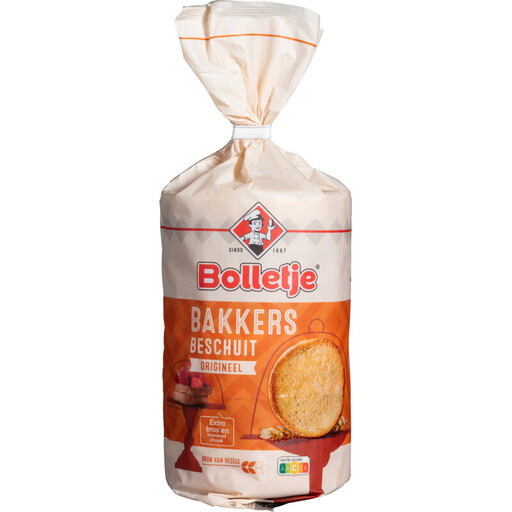 Image unavailable
A 10-piece pack of original rusks for a lunch facility that wants to plan quantities per opened pack.
Seal the pack properly after use and check the label for ingredients and allergens.
The Netherlands Nutrition Centre recommends keeping opened rusks in a kitchen cupboard for about one month. Store them in a cool, dry, dark place and seal the pack well. For an unopened pack, follow the date and instructions on the label.
According to the Netherlands Food and Consumer Product Safety Authority, food providers must be able to give information about 14 allergens for unpackaged foods. Written or verbal information may be provided under certain conditions, so keep details from the current pack available where the food is served.
You can’t assume this for every rusk: according to the Netherlands Nutrition Centre, bakers aren’t required to use baker’s salt. Check the label or ask the supplier for product-specific information if the type of salt used matters for your canteen.