What should you look for when choosing?
First decide whether you need a base for toppings or a sweet treat to serve on its own. Then compare the ingredients of the varieties that suit the occasion.
| What to consider |
What to check when buying |
Who is this most important for? |
| Serving and flavour |
Choose between a base for your own toppings and a sweet treat that’s ready to serve; consider the size. |
For a platter of topped bites, I want a base that works with my toppings. For a sweet treat with coffee, I’d rather have something ready to hand round. Around 50% of consumers prioritise how the rusks will be served. |
| Grains and fibre |
Check whether the variety is wholegrain and compare the stated fibre per 100 g. |
If rusks are part of a meal, I’m mainly looking for a variety made with wholegrains or seeds. For around 30% of consumers, grains and fibre are the deciding factors. |
| Ingredients and allergens |
Read the current label; if you’re checking for iodine, look specifically for baker’s salt or iodised salt. |
When serving someone with a food allergy, I need to be able to check the ingredients of the exact variety. For around 20% of consumers, this check comes first. |
Rusks at Joybuy
These Bolletje products are rusks for your choice of toppings: two wholegrain varieties, a seeded variety and Bolletje Real Rusk. Choose from this selection according to the type of rusk you want to serve, and check the current packaging for ingredients and allergens.
 Image unavailable
Bolletje Multi-Seed Rusk, 10 stuks
A seeded rusk for making your own topped bites.
Pack: 10 pieces. If you have a food allergy, check the ingredients and allergens on the current packaging.
View at Joybuy
 Image unavailable
Bolletje Dark Whole Wheat Rusk, 10 stuks
A dark wholegrain rusk for anyone looking for a base for their choice of toppings.
Pack: 10 pieces. If you have a food allergy, read the current ingredients and allergen information.
View at Joybuy
 Image unavailable
Bolletje Wholegrain Rusk, 13 stuks
A wholegrain rusk to use as a base for topped bites.
Pack: 13 pieces. Compare the nutritional information and check the allergens on the packaging if they’re relevant to your choice.
View at Joybuy
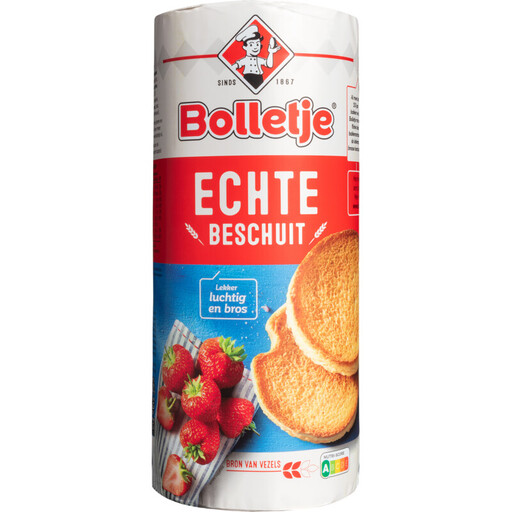 Image unavailable
Bolletje Real Rusk, 13 stuks
A rusk base for choosing your own sweet or savoury toppings.
Pack: 13 pieces. Check the current packaging if the ingredients or allergens are important to your purchase.
View at Joybuy
Frequently asked questions
Should I choose classic, wholegrain or seeded rusks for toppings?
Choose a plain rusk if you want the toppings to take centre stage; opt for wholegrain or seeded rusks if grains or seeds are important to you. Compare the ingredients and fibre per 100 g for the specific varieties: PLUS lists 10 g of fibre per 100 g for both Bolletje Donker Volkoren and Bolletje Vezelrijk Meerzaden.
Which allergens should I check when serving rusks to guests?
Check the current packaging of every rusk you plan to serve. Listed allergens vary by variety: product information from Bolletje and PLUS includes wheat, egg, sesame, milk and soya, as well as statements about possible traces.
Do rusks always contain iodised baker’s salt?
No, don’t assume they do. According to the Netherlands Nutrition Centre, bakers aren’t required to use baker’s salt. If you have a specific question about iodine, look for baker’s salt or iodised salt in the ingredients list and contact the manufacturer if necessary.
When should I add toppings to rusks for St Nicholas’ Eve?
Ideally, add moist toppings shortly before serving so the rusks have less time to soften. In the meantime, keep any unused rusks dry and in an airtight container.


