Choose ordinary rusks if you want a light, round base for your camping breakfast and can transport the pack somewhere dry and protected. If you specifically want sourdough, look for a cracker or crispbread that states this for the exact variety you’re buying. It’s a different type of product, and the label alone says nothing about whether it was made using traditional methods. Whichever you choose, check the best-before date, ingredients, allergens and nutritional information on the pack you’re taking with you.
Who might find this choice useful?
Camper with limited storage space
You want to take a dry base for breakfast or lunch without relying on chilled storage. It’s important to choose a pack that fits in your luggage and can be sealed properly after opening. The Netherlands Nutrition Centre recommends choosing foods with a longer shelf life when camping.
Shopper specifically looking for sourdough
You don’t want to mistake ordinary rusks for a product that explicitly states it contains sourdough. For crackers and crispbread, check that the description applies to the exact variety you’ve chosen; the product type alone doesn’t tell you.
Label-conscious breakfast planner
You compare ingredients, fibre and salt as part of your camping menu, and check the allergens and any mention of baker’s salt on the exact pack. Wholegrain and sourdough answer different questions.
What should you look for when choosing?
Ordinary rusks
Choose these if: you want a light, round base for breakfast or lunch.
Bear in mind: their brittle texture means they need protection from breakage and moisture; rusks aren’t automatically made with sourdough.
Sourdough cracker or crispbread
Choose these if: you want sourdough to be stated for the exact variety, and would prefer to take a different type of product instead of round rusks.
Bear in mind: sourdough alone tells you nothing about whether the ingredients are wholegrain or whether the product was made using traditional methods.
| What to consider |
What to check when buying |
Who should consider this? |
| Keeping them dry and crisp |
Check the best-before date before your trip and make sure you can seal an opened pack properly. The Netherlands Nutrition Centre recommends storing dry toast products in a cool, dry, dark place. |
I have limited storage space and don’t want my breakfast to go soft in a damp bag. Around 36% of consumers prioritise protection during transport and storage. |
| Sourdough and product type |
Look for an explicit sourdough statement for the exact variety, and choose carefully between round rusks, crackers and crispbread. |
If I want to take sourdough with me, it needs to be clearly stated on the product I choose; ordinary rusks won’t necessarily fit the bill. Around 29% of consumers give this choice priority. |
| Nutritional information |
Compare fibre and salt in the nutritional information, preferably per 100 g. Check the ingredients list for baker’s salt or iodised salt; don’t assume either from the words ‘wholegrain’ or ‘sourdough’. |
I want to assess the dry bread base alongside my toppings and other meals, rather than choosing by name alone. This is the main consideration for around 21% of consumers. |
| Allergens |
Read the allergen information and any warnings on the pack for the exact variety. |
When planning my camping breakfast, I want to know what’s in the product before I pack it. This check comes first for around 14% of consumers. |
Common mistakes
-
Assuming the word ‘rusk’ means sourdough
Rusks, crackers and crispbread are different types of product. The rusk category doesn’t confirm that a particular variety is made with sourdough.
Check the product name, ingredients or manufacturer’s description for the exact pack you want to buy.
-
Putting an opened pack loose in your luggage
Moisture can make dry products less crisp. The Netherlands Nutrition Centre recommends storing toast products in a cool, dry, dark place and keeping them sealed properly.
Take a sealed container or sturdy resealable bag with you, and close it again after use.
-
Assuming a product contains iodine or wholegrain ingredients based on another claim
A sourdough statement doesn’t confirm that the product contains wholegrain ingredients or added iodine. The rusk category doesn’t tell you either.
Check the ingredients and nutritional information for the exact variety, and consider them alongside the rest of your camping menu.
-
Relying on the ingredients listed for a different pack
Ingredients and allergens vary by product and variety. For example, Joybuy’s product information for Bolletje Echte Beschuit lists wheat, egg and rye, and states that sesame may be present.
Before buying, read the current label on the pack you’ll actually be taking with you.
Brands to consider
Bolletje
Worth considering if you’re looking at ordinary rusks or a wholegrain variety.
- Bolletje describes Echte Beschuit as crisp and also offers a wholegrain rusk variety.
- Don’t assume Echte Beschuit is made with sourdough unless this is explicitly stated for the exact variety.
Wasa
Worth considering if you’re looking for a cracker as an alternative to round rusks.
- Albert Heijn states that sourdough is part of the baking process for Wasa Original Crisp.
- This description applies to the variety named and doesn’t confirm that every Wasa product contains sourdough.
Leksands
Worth considering if you’re looking at rye crispbread with an explicit sourdough statement.
- Albert Heijn lists a variety called Leksands Swedish Rye Crispbread Point Sourdough.
- Check the current ingredients and allergens on the pack for that variety.
Products to help you choose
These products illustrate two choices for a camping breakfast: a sourdough rye cracker and two varieties of rusk, including a wholegrain option. First choose the type of product you want to take, then check the pack for your chosen variety.
 No image available
Wasa Sourdough Rye Crackers, 235 g
For anyone specifically looking for sourdough who wants to take crackers rather than round rusks.
The product name states rye and sourdough; the pack contains 235 g. Before you set off, check the best-before date and the current ingredients and allergen information.
View at Joybuy
 No image available
Bolletje Wholegrain Rusk, 13 pieces
For anyone who wants to take rusks and is looking for a wholegrain variety, without assuming that this means it’s made with sourdough.
The pack contains 13 pieces. Protect the rusks from breakage and moisture during transport, and check the current nutritional and allergen information on the pack.
View at Joybuy
 No image available
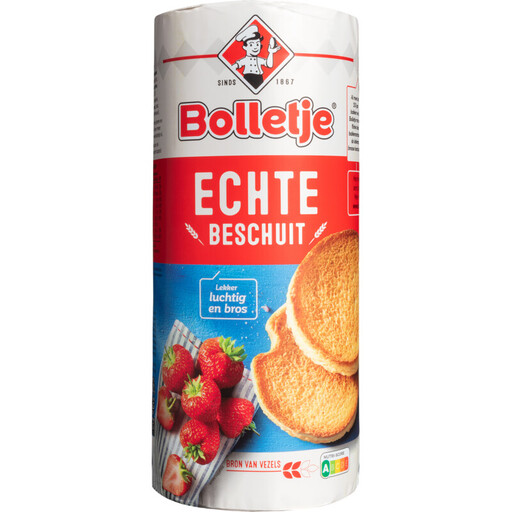
Bolletje Echte Beschuit, 13 pieces
For anyone who prefers ordinary rusks for a camping breakfast and can transport the pack safely.
The pack contains 13 pieces. Joybuy’s product information lists wheat, egg and rye, and says sesame may be present; check the ingredients and allergens again on the pack you buy.
View at Joybuy
Frequently asked questions
Are ordinary rusks automatically made with sourdough?
No. Only choose rusks as a sourdough product if this is explicitly stated for the exact variety in the product name, ingredients or manufacturer’s description. Albert Heijn mentions sourdough for Wasa Original Crisp and a Leksands crispbread; you can’t infer it from the category for Bolletje Echte Beschuit.
How should I store an opened pack when camping?
Keep it in a cool, dry, dark place and seal it properly. The Netherlands Nutrition Centre says crackers can become less crisp after opening; a sealed container or sturdy resealable bag can help protect the pack from moisture during your trip.
Can I tell from ‘rusk’ or ‘sourdough’ whether a product contains iodine?
No. Neither word confirms that the exact variety contains added iodine. The Netherlands Nutrition Centre identifies bread made with iodised baker’s salt as an important source of iodine in the Netherlands; for rusks or crackers, check the ingredients of the product you’re buying.
Where can I check for allergens in rusks and crackers?
Read the allergen information on the current pack for the exact variety. The Netherlands Food and Consumer Product Safety Authority says allergens must be listed on the labels of prepacked foods; information for a different product from the same brand is no substitute for checking that label.


