
Holidaymakers on a tight grocery budget
You’re looking for rusks for several breakfasts or lunches and want to know how much you get in each pack.


For everyday use in a holiday home, plain own-brand rusks are a sensible place to start if you want to keep an eye on your grocery budget. Choose a wholemeal or seeded variety if that is more important to you. Compare the net contents and check the ingredients, allergens and storage instructions before buying.
You’re looking for rusks for several breakfasts or lunches and want to know how much you get in each pack.
You want to compare plain and wholemeal rusks by looking at the ingredients and fibre per 100 g.
You want to check the allergen information before setting off and find out how to keep an opened roll dry and sealed.
First decide whether you want the roll as an everyday staple or are specifically looking for a wholemeal or seeded variety. Then check the packaging for everyone who’ll be eating them.
| What to consider | What to check when buying | Who is this most important for? |
|---|---|---|
| Everyday staple | Compare the net contents and number of rusks in plain varieties. | If I’m taking rusks for several breakfasts, I want to know how many rolls I’ll need. For around 40% of consumers, this practical choice comes first. |
| Wholemeal and fibre | Read the ingredients and compare the stated fibre per 100 g. | I make a conscious choice between plain and wholemeal for breakfast, even if the ingredients are different. This is the main consideration for around 30% of consumers. |
| Allergens and storage | Check the current allergen information and storage advice for after opening. | If someone in my party has a food allergy, or an opened roll needs to last longer, I want to be able to check this before setting off. This suitability is the most important factor for around 30% of consumers. |
A pack of 13 rusks and a 125 g roll don’t give you the same information about how many rusks you’re getting.
Check the net weight and number of rusks before working out how many rolls you’ll need for your stay.
The name of a variety doesn’t tell you how much fibre it contains per 100 g or what other ingredients have been used.
Use the ingredients list and nutrition table to compare varieties on a like-for-like basis.
Ingredients and warnings can vary between rusk varieties. For example, Bolletje Echte Beschuit lists wheat, rye and egg, and may contain sesame.
If you have a food allergy, check the current packaging every time, even if you already know the brand.
The Voedingscentrum states that rusks do not contain iodine. So assuming they contain baker’s salt isn’t a reliable reason to count rusks as a source of this nutrient.
Choose rusks based on the ingredients and nutritional information that matter to you.
Bolletje offers classic, wholemeal and multiseed rusks, among other varieties. The right option for you depends on the ingredients you’re looking for.
The Albert Heijn range includes a 125 g roll of plain rusks and a 140 g roll of wholemeal rusks.
PLUS sells plain rusks and a wholemeal variety with seeds.
ALDI lists plain and wholemeal Goud Gebakken rusks, each with 13 rusks per pack.
Lidl lists a 140 g pack of wholemeal rusks as an in-store product.
This Joybuy selection includes Bolletje rusks for anyone looking for a multiseed, wholemeal or classic variety. Choose the variety you want, then check the packaging for ingredients, allergens and contents.
 Image unavailable
For anyone who wants to take a seeded variety of rusks for breakfast or a snack.
Check the current ingredients and allergens on the packaging, and seal the roll well after opening.
 Image unavailable
For anyone specifically looking for dark wholemeal rusks for breakfast or a snack.
Compare the fibre per 100 g on the label and check the allergens for this variety.
 Image unavailable
A wholemeal option for anyone who wants to take a roll of 13 rusks.
To compare fibre, use the per-100 g value on the current packaging; check the allergens too.
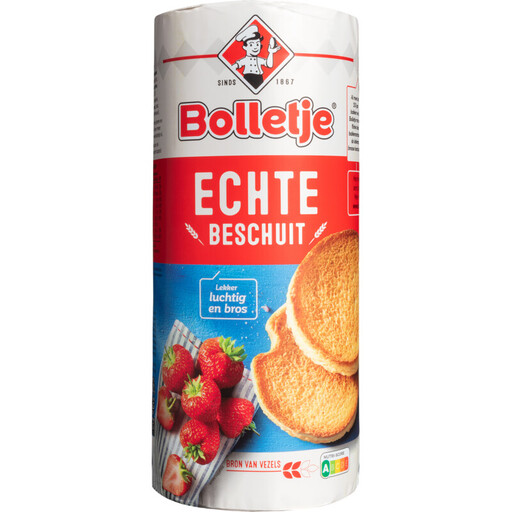 Image unavailable
A classic rusk variety for anyone who isn’t specifically looking for wholemeal or seeded rusks.
If you have allergies, check the current information for wheat, rye and egg, as well as the warning about the possible presence of sesame.
Choose plain rusks if you’re looking for a simple everyday staple; choose wholemeal if the ingredients or stated fibre content matter to you. The Voedingscentrum lists 0.8 g of fibre per 10 g piece of wholemeal rusk. For a specific roll, compare the nutritional information per 100 g.
Keep the roll dry and tightly sealed, and follow the advice on the packaging. PLUS recommends protecting its plain rusks from moisture and heat; Bolletje advises storing its rusks in a dark, dry and sealed place after opening.
Before buying, read the ingredients and allergen information for the exact variety. The Netherlands Food and Consumer Product Safety Authority says allergens must be clearly stated on the labels of prepacked foods. For Bolletje Echte Beschuit, wheat, rye and egg are among the relevant allergens, along with a warning about the possible presence of sesame.
No, don’t assume that when choosing rusks. The Voedingscentrum states that rusks do not contain iodine; assuming that baker’s salt is used doesn’t change the nutritional information.