Choose rusks for chocolate sprinkles with your coffee based on the texture, ingredients and specific information about their size. ‘Crisp’ or ‘extra large’ doesn’t confirm that a rusk will be sturdier under toppings. Compare the number of pieces and net weight, but also check the dimensions or weight per piece if a thicker rusk is essential. Assess the amount of chocolate sprinkles you use and check the allergens in the rusk and topping separately.
Who is this choice important for?
Coffee drinkers looking for a sturdier rusk
If you like to add plenty of toppings, look beyond words such as ‘crisp’ or ‘extra large’. Bolletje describes Bakkers Beschuit Origineel as light and crisp, but that doesn’t tell you how thick it is or how much topping it can hold.
Shoppers comparing the rusk base
If wholemeal flour, fibre or ingredients are key to your choice, compare the labels of specific varieties. Albert Heijn lists wholemeal wheat flour and 9 g of fibre per 100 g for AH Volkoren beschuit. Check the allergens for the product you choose, too.
Chocolate sprinkle fans keeping an eye on portions
When you’re having a sweet topping with your coffee, the amount of chocolate sprinkles you use matters. The Voedingscentrum highlights the sugar and saturated fat in chocolate sprinkles, so compare the nutritional values per 100 g as well as how much you sprinkle on each rusk.
What should you look for when choosing?
Start with what you want from your rusk with chocolate sprinkles during a coffee break: a particular size or texture, a specific type of rusk, or more control over your topping portion.
| What to consider |
What to check before buying |
Who it matters to |
| Size and sturdiness |
Check the number of pieces, net weight and any listed dimensions. A photo or description of the texture doesn’t show how thick the rusk is or how much it can hold. |
If I want to use plenty of chocolate sprinkles, I want to know whether the rusk will be easy to eat. Sturdiness would be the main consideration for around 50% of consumers. |
| Rusk type and ingredients |
Check the flour listed, the fibre per 100 g and the allergens on the packaging of the variety you choose. |
I want to know what’s in the rusk before adding a sweet topping. The type of rusk and its ingredients would be the priority for around 30% of consumers. |
| Amount of chocolate sprinkles |
Compare the sugars and saturated fat per 100 g, and consider how much you actually use on each rusk. |
For my coffee break, I want to choose how much chocolate sprinkles to use without focusing only on the rusk. The topping portion would be the main consideration for around 20% of consumers. |
Common mistakes
-
Assuming ‘light’ means thick or sturdy
A description of crispness tells you how the supplier says a rusk feels, not whether it’s thicker or can hold more topping.
Look for specific size information on the current packaging. Use the number of pieces and net weight as extra details, not as a substitute for a thickness measurement.
-
Judging the rusk on its own
Choosing a wholemeal rusk doesn’t change the ingredients in the chocolate sprinkles. According to the Voedingscentrum, chocolate sprinkles contain a lot of sugar and saturated fat.
Check the topping’s nutritional information per 100 g and decide how much you want to use on one rusk.
-
Treating an old product listing as a current option
Albert Heijn marks the page consulted for Venz Hagelslag Puur 30% minder suiker as ‘Discontinued’. The nutritional information on that page doesn’t tell you whether it’s available from a shop where you’re buying now.
If you’re looking for this specific variety, check the current store listing and packaging.
-
Assuming ingredients based on the product category
Allergens vary between rusks and chocolate sprinkles. The word ‘rusk’ or a listing that simply says ‘salt’ also doesn’t confirm whether a particular pack contains iodised baker’s salt.
Read the current ingredients and allergen information for both products. If an ingredient is important to you, ask the manufacturer for product-specific information.
Brands compared
Bolletje
Bolletje offers several types of rusk for comparing texture and ingredients.
- Bolletje says that adding egg makes Bakkers Beschuit Origineel extra crisp and light.
- That description doesn’t confirm its thickness or how sturdy it is under chocolate sprinkles. The ingredients information for this variety lists wheat and egg.
Albert Heijn
AH Volkoren beschuit is a specific variety for anyone who wants to compare a wholemeal base on the label.
- Albert Heijn lists wholemeal wheat flour and 9 g of fibre per 100 g for AH Volkoren beschuit.
- This nutritional information doesn’t confirm that it’s extra thick. Check the ingredients and allergens on the packaging you choose, too.
De Ruijter
De Ruijter Puur is a chocolate sprinkle topping to assess separately from the rusk base.
- The product information from Albert Heijn lists ingredients and nutritional values, so you can compare this topping per 100 g.
- Albert Heijn lists milk and soya as allergens for De Ruijter Puur. Check the current packaging before using the topping.
Venz
Venz Hagelslag Puur 30% minder suiker is a worthwhile option only if you can find it at your chosen shop.
- Albert Heijn’s product page lists 46 g of sugars per 100 g for this variety.
- Albert Heijn marks the same page as ‘Discontinued’. Check availability, nutritional information and allergens on the current packaging.
Rusks as a base for chocolate sprinkles
These Bolletje rusks are options for a coffee-break base for chocolate sprinkles; choose your topping separately. If you’re choosing mainly because you want a thicker or sturdier rusk, check the size on the current packaging.
 Image unavailable
Bolletje Dark Whole Wheat Rusk, 10 pieces
For anyone looking for a wholemeal rusk as a base for chocolate sprinkles. The pack contains 10 pieces; check the dimensions if extra thickness or sturdiness matters to you.
View at Joybuy
 Image unavailable
Bolletje Multi-Seed Rusk, 10 pieces
For anyone who wants to use a seeded rusk variety as a base for chocolate sprinkles. The pack contains 10 pieces; the name doesn’t tell you anything about its thickness or how much it can hold.
View at Joybuy
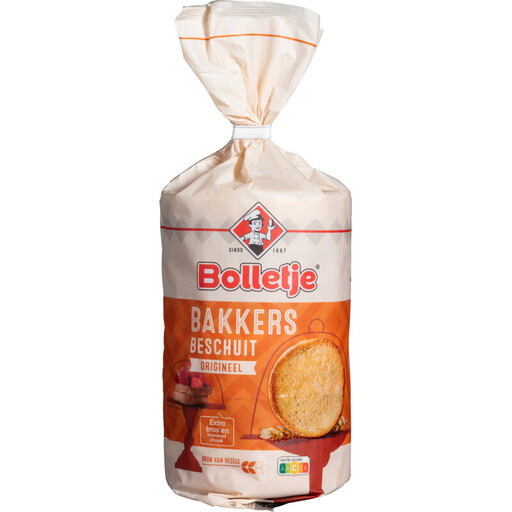 Image unavailable
Bolletje Original Rusks, 10 pieces
A rusk base for anyone who wants to add their own chocolate sprinkles during a coffee break. The pack contains 10 pieces; check the size separately if sturdiness is essential.
View at Joybuy
 Image unavailable
Bolletje Wholegrain Rusk, 13 pieces
For anyone comparing wholemeal rusks as a base for sweet toppings. The pack contains 13 pieces; check the current packaging if you’re also looking for a particular size.
View at Joybuy
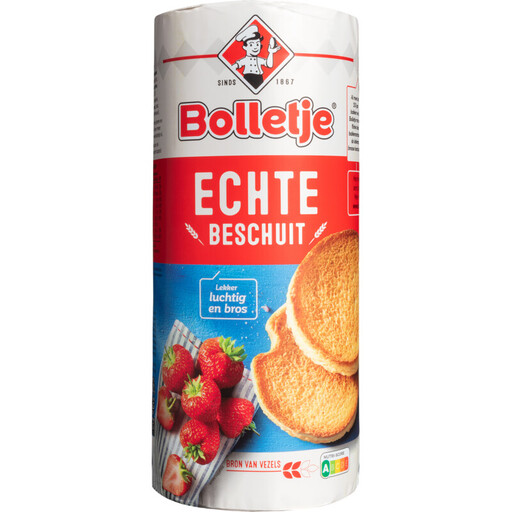 Image unavailable
Bolletje Real Rusk, 13 pieces
A rusk base for chocolate sprinkles with your coffee. The pack contains 13 pieces; compare the dimensions if you’re specifically looking for a thicker or sturdier variety.
View at Joybuy
Frequently asked questions
Does ‘thick cut’ mean a rusk will be sturdier under chocolate sprinkles?
No, the label alone doesn’t confirm how much it can hold. Check the dimensions or weight per piece on the current packaging if a larger size matters; words such as ‘crisp’ and ‘light’ describe something different from thickness.
Which allergens should I check in rusks with chocolate sprinkles?
Check the labels for both the rusk and the chocolate sprinkles, as ingredients vary between varieties. The product information for Bolletje Bakkers Beschuit Origineel lists wheat and egg; Albert Heijn lists milk and soya for De Ruijter Puur.
Do rusks always contain iodine?
You can’t tell from the product name or a listing that simply says ‘salt’. Read the ingredients on the specific packaging or ask the manufacturer which salt is used if iodine is relevant to you.
What should I look out for if I often eat chocolate sprinkles on rusks?
Pay attention to how much chocolate sprinkles you use, not just the type of rusk. The Voedingscentrum describes chocolate sprinkles as a topping high in sugar and saturated fat; compare the nutritional information per 100 g and the portion you use.


