
Breakfast shoppers comparing prices
If you regularly buy rusks for weekdays, you’ll want to know how many are in a roll. So compare not just the packs, but also the price per kilogram at the shop where you do your food shopping.


For an affordable weekday breakfast, plain rusks are a sensible place to start if you don’t have a preference for wholemeal or seeds. If you’d prefer a wholemeal option or want more fibre, compare the nutritional information per 100 g and the price per kilogram before choosing. Check the ingredients and allergens on the packaging for every variety.
If you regularly buy rusks for weekdays, you’ll want to know how many are in a roll. So compare not just the packs, but also the price per kilogram at the shop where you do your food shopping.
If you want a wholemeal option or are keeping an eye on fibre, read the ingredients and nutritional information per 100 g. This will help you decide whether another variety suits what you’re looking for at breakfast.
If you need to avoid certain ingredients, don’t choose based only on labels such as plain, wholemeal or high-fibre. The varieties reviewed differ in their listed ingredients, including wheat, egg and sesame; check the packaging of the pack you buy.
First, decide what matters most for your breakfast: a comparable price, a wholemeal base, availability during your usual food shop or checking the ingredients. Then use the packaging to assess the variety you’ve chosen.
| What to consider | What to check when buying | Who it matters to |
|---|---|---|
| Comparable quantity | Check the net weight and compare the price per kilogram. | If rusks are often on the table, I want to be able to compare packs of different sizes fairly. For around 36% of consumers, comparable pricing is the top priority. |
| Wholemeal and fibre | Read the ingredients and compare the fibre content per 100 g. | I deliberately choose a wholemeal base or keep an eye on fibre, even when a simple plain variety is available. For around 29% of consumers, this type of product choice comes first. |
| Availability | Check whether your variety is available in store or online. | For weekday breakfasts, I want to be able to pick up rusks during my usual food shop. This convenience matters most to around 21% of consumers. |
| Ingredients and allergens | Read the current ingredients list and allergen information on the packaging. | If I need to avoid an ingredient, the packaging determines whether I can choose this variety. Around 14% of consumers put these checks ahead of the other considerations. |
A low price for a roll doesn’t tell you much if the rolls don’t weigh the same. Comparing the price per kilogram takes the net weight into account.
Check the weight on the packaging before comparing the price of two varieties.
The fibre content varies between varieties. Seeded varieties may also contain different allergens from the plain variety you’re used to.
Compare the nutritional information per 100 g and read the ingredients and allergen information for the rusks you’ve chosen.
A variety that suits your breakfast also needs to be available when you do your food shopping. For example, Lidl lists the wholemeal rusks reviewed as an in-store product.
Before buying, check the sales channel and what your shop has in stock.
Bolletje has plain, wholemeal and high-fibre rusk varieties. That makes it a relevant brand if you’re choosing between these types.
The own-label range includes plain and wholemeal rusks, so you can compare both within the same range.
Jumbo’s reviewed range includes its own plain rusks and other rusk varieties.
This ALDI own-label brand has wholemeal rusks for anyone looking specifically for a wholemeal variety.
The reviewed PLUS range includes both plain rusks and a seeded wholemeal variety.
Lidl is an option if you’re looking for a simple wholemeal rusk.
These products let you compare a plain variety with two wholemeal options. For an affordable breakfast, compare the current pack details and price per kilogram; the type of product alone doesn’t determine which is the better-value buy for you.
 Image unavailable
An option if you’re looking for wholemeal rusks for breakfast.
Check the ingredients and allergens on the packaging if they affect your choice.
 Image unavailable
A wholemeal option if you want this type of product for breakfast.
Joybuy lists 11 g of fibre per 100 g for this variety. If you have allergies, check the current packaging, particularly for information about wheat, egg and sesame.
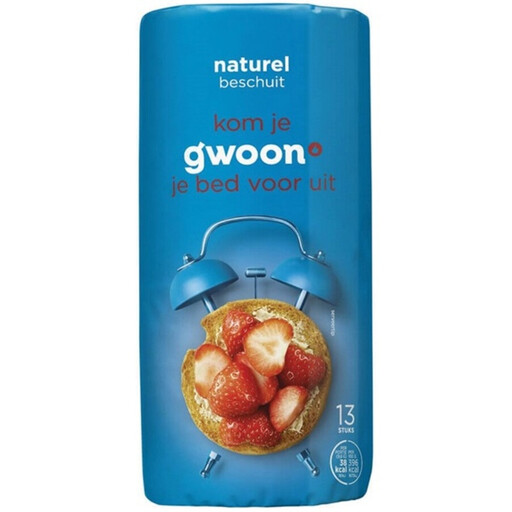 Image unavailable
A plain option if you don’t have a particular preference for wholemeal or seeded rusks at breakfast.
Before buying, read the allergen information on the packaging, especially if milk is a concern for you.
Compare the price per kilogram if the packs don’t weigh the same. Check the net weight too: Albert Heijn lists the plain and wholemeal rolls reviewed as 125 g and 140 g respectively.
Choose wholemeal rusks if you specifically want that type of grain at breakfast and the ingredients suit your preferences. To compare fibre, check the nutritional information per 100 g. The Voedingscentrum lists wholegrain cereal products as a source of fibre, but the amount varies from product to product.
Check the allergens on the packaging of the variety you’re buying. The product information reviewed mentions wheat, egg and sesame, among other allergens; PLUS also lists barley and oats in its seeded wholemeal rusks.
Follow the storage advice on the packaging and seal an opened roll securely. Jumbo recommends storing its plain rusks in a cool, dry and dark place.