
Office luncher who checks pack size
You’re looking for rusks as a simple lunch base and want to compare how many each pack contains, even when one pack gives the weight and another gives the number of rusks.


Choose plain rusks if you want a simple lunch base to top yourself. If you specifically want wholemeal flour or seeds, compare the ingredients and nutritional values per 100 g. Check the allergens for each variety too, and whether you can take the rusks with you without them getting damp.
You’re looking for rusks as a simple lunch base and want to compare how many each pack contains, even when one pack gives the weight and another gives the number of rusks.
You often have rusks for lunch and want to know whether a variety contains wholemeal flour and how much fibre is listed in its nutritional information.
You want to check the ingredients and allergens for the specific rusks before buying, perhaps because you need to avoid certain ingredients.
First decide whether you want plain rusks or a variety made with wholemeal flour or seeds. Then check the pack size, nutritional information and how practical they’ll be for lunch at the office.
| What to consider | What to check | Who it matters to |
|---|---|---|
| Pack size | Check the weight and the number of rusks, where stated. | If I keep rusks in the office, I want to know how many lunch portions I’ll get from a pack. Pack size comes first for around 36% of these shoppers. |
| Wholemeal and fibre | Read the ingredients and compare the fibre listed per 100 g; don’t rely on the name alone. | For a regular lunch, I want to choose a variety with wholemeal flour or a particular fibre content. This is the main consideration for around 29% of shoppers. |
| Taking them with you and storage | Check the storage instructions and consider whether you can carry the pack without it getting damp, keeping the topping separate. | I want my rusks to stay whole until lunchtime and not go soft in my bag or desk drawer. Around 21% of shoppers prioritise this practical aspect. |
| Ingredients and allergens | Read the current ingredients and allergen information for the exact variety you’re buying. | Before buying, I need to check whether the ingredients suit my diet. For around 14% of shoppers, checking the label is the most important consideration. |
Rusk packs aren’t always labelled in the same way: some show the number of rusks, while others give the weight. So at first glance, it may not be clear how many you get in each pack.
Compare the weight and, where stated, the number of rusks before choosing between packs.
These words describe different product characteristics. Ingredients and the stated fibre content per 100 g can vary between varieties.
Check which characteristic you’re looking for, then read the ingredients list and nutritional information for the specific pack.
The product category doesn’t tell you whether iodised baker’s salt has been used in a particular pack.
Check the current label or ask the manufacturer about the product if iodine is relevant to your choice.
Rusks are brittle and can go soft when they get damp. They can also break if carried loose in a bag.
Keep your rusks dry and take the topping separately, so you can add it just before lunch.
These brands and own-label ranges offer different types of rusks. Always compare the specific variety: a brand name alone doesn’t tell you about the ingredients or pack size.
Bolletje offers varieties including Original and Wholemeal Rusks.
Albert Heijn’s rusk range includes own-label varieties such as Plain and Wholemeal, as well as branded rusks.
Jumbo’s rusk range includes Bolletje Original and Wholemeal Rusks.
ALDI lists Goud Gebakken rusks in plain and wholemeal varieties, both in packs of 13.
PLUS offers plain rusks and a separate wholemeal variety with seeds.
Lidl lists a 140 g wholemeal rusk pack as an in-store purchase.
These two rusk packs suit different lunch preferences: a branded variety containing 13 rusks and a 125 g plain variety. As well as checking the pack size, read the latest ingredients information before you choose.
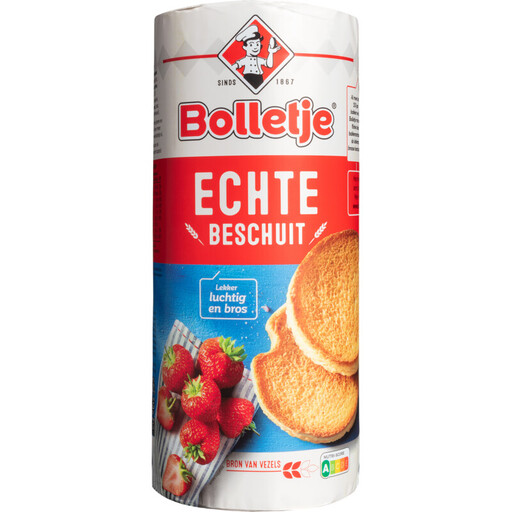 Image unavailable
An option if you’re looking for a Bolletje variety with a stated number of rusks for your office lunch.
If you have allergies, check the latest ingredients and allergen information on the pack.
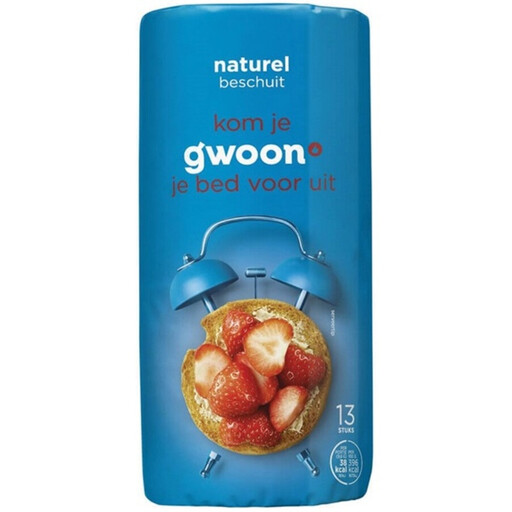 Image unavailable
Plain rusks make a simple base that you can top yourself at the office.
The pack contains 125 g. Check the number of rusks when planning your lunch, and read the current label if you have allergies.
Check both the weight and the number of rusks, where both are stated. You can’t directly compare a pack of 13 rusks with a 125 g pack based on those details alone if you want to know how many rusks you’ll get.
No, it depends on the ingredients and nutritional values you’re looking for. If you specifically want to compare wholemeal flour or fibre, read the label for each variety. PLUS lists 49% wholemeal wheat flour and 10.6 g of fibre per 100 g for its Wholemeal Rusks with Seeds.
No, you can’t tell from the product name. The Netherlands Food and Consumer Product Safety Authority explains the conditions under which iodine may be added to bakery products through baker’s salt; that doesn’t mean every pack of rusks is made with it. Check the label or ask the manufacturer about a specific product.
Always check the allergen information for the exact variety. PLUS lists wheat, gluten and egg, among other allergens, for its Plain Rusks. For PLUS Wholemeal Rusks with Seeds, it lists wheat, barley, oats, egg and sesame, among others.
Keep your rusks dry and take the topping separately until you’re ready to have lunch. Seal an opened pack tightly and protect the brittle rusks from breaking in your bag.