
Host catering for different preferences
If you don’t know which rusks your guests will prefer, serving plain and wholemeal rusks on separate plates gives them a clear choice. If any guests have allergies, compare the ingredients in both varieties.


If you’re expecting guests with different preferences, serve plain and wholemeal rusks side by side. They can choose between a classic option and one clearly labelled as wholemeal. Seeded rusks could offer a third choice if the seeds and texture work well with the toppings. Check the ingredients and allergen information on the packaging for every variety, especially when serving others.
If you don’t know which rusks your guests will prefer, serving plain and wholemeal rusks on separate plates gives them a clear choice. If any guests have allergies, compare the ingredients in both varieties.
You want rusks that are actually labelled as wholemeal, rather than judging by their dark colour. According to the Netherlands Nutrition Centre, a product can only be called wholemeal if it is made entirely from wholemeal flour.
You’d like to serve a variety with seeds alongside regular rusks, perhaps with savoury toppings. Check the exact packaging for sesame and other allergens before offering them to guests.
First decide whether you mainly want to give your guests a choice between plain and wholemeal rusks. Then compare the ingredients and nutritional information of any seeded variety you’re considering. Seeds in the name don’t automatically mean the rusks are wholemeal.
| What to consider | What to check when buying | Who it matters to |
|---|---|---|
| Choice at the table | Choose a plain variety and one labelled wholemeal; check how many rusks are in each pack. | If my guests don’t all want the same thing, I’d rather serve two clearly distinguishable varieties than just one for everyone. Around 43% of consumers prioritise having that choice. |
| Wholemeal and fibre | Check that the product is labelled wholemeal and compare the fibre per 100 g in the nutritional information of the varieties you’re considering. | If you’re consciously choosing wholemeal rusks to serve, you don’t want to have to rely on colour alone. Around 29% of consumers give this wholemeal choice the greatest importance. |
| Seeds and allergens | Check which seeds are used and read the allergen information on the exact pack. | I sometimes look for seeded rusks to serve with savoury toppings, but first I want to know whether my guests can eat the ingredients. Seeds, texture and checking the ingredients are the top priorities for around 28% of consumers. |
A dark colour or the presence of several grains doesn’t tell you whether the flour is entirely wholemeal. According to the Netherlands Nutrition Centre, only products made entirely from wholemeal flour can be labelled wholemeal.
Look for the wholemeal label on the packaging and read the ingredients list if you want to make that choice consciously.
The seeded varieties examined contain ingredients including wheat and sesame; ingredients vary from product to product. A plate of seeded rusks may therefore not be suitable for every guest.
Keep the packaging to hand and check the allergen information for every variety you serve.
The availability of a product you’ve chosen can change. For example, Jumbo said that its manufacturer was temporarily unable to supply its own-brand wholemeal rusks.
Check availability before you go shopping and, if necessary, choose another variety that meets the same requirements.
A general assumption about baker’s salt won’t tell you which ingredients are in the rusks you’re buying.
Read the ingredients list on the exact product if the presence of iodised baker’s salt is relevant to your choice.
Compare the exact varieties within each brand: plain, wholemeal and seeded options can differ in their ingredients, nutritional values and allergens.
A brand to consider if you want to serve classic Echte Beschuit alongside a wholemeal or seeded variety.
A good option if you want to compare plain, wholemeal and seeded rusks within AH’s own-brand range.
An own-brand option to compare with other wholemeal varieties.
Worth considering if you want to compare regular wholemeal rusks with a seeded wholemeal variety.
A brand to consider if you’re weighing up plain and wholemeal rusks.
These Joybuy products give you options for plain rusks, a wholemeal variety and a seeded variety. If you want to serve plain and wholemeal rusks together, you’ll need to buy two separate products. Check the packaging of each for ingredients and allergens.
 No image available
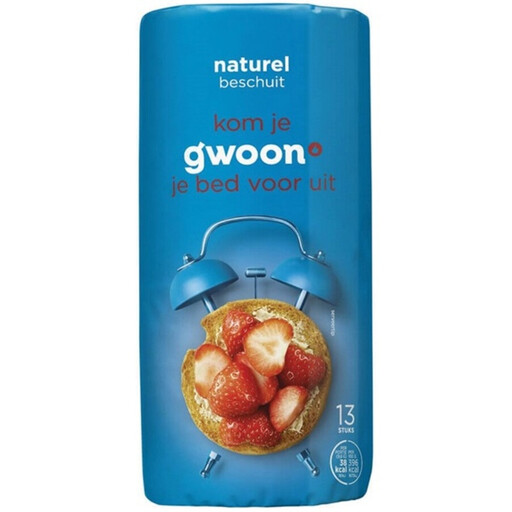
A wholemeal option to serve alongside plain rusks. This pack contains 13 pieces; if anyone has allergies, check the ingredients on the current packaging.
 No image available
A dark wholemeal variety for those who want to offer this option. The pack contains 10 pieces; read the allergen information before serving these to guests.
 No image available
A plain option to serve alongside wholemeal rusks. The pack weighs 125 g. If anyone has a milk allergy, check the current packaging especially carefully: the milk listed under allergens does not match the ingredients shown.
 No image available
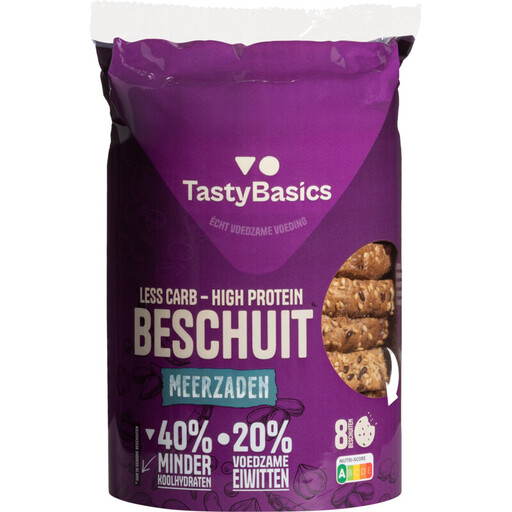
A seeded variety to serve as a separate option alongside plain or wholemeal rusks. The pack contains 10 pieces; check which seeds and allergens are listed on the packaging before serving.
 No image available
A seeded option in a 184 g pack. Check the product format if you’re specifically looking for Dutch-style rusks: the description also uses the term crispbread. Check the ingredients and allergens on the packaging too.
No. Colour alone doesn’t tell you whether rusks are wholemeal. According to the Netherlands Nutrition Centre, a product can only be called wholemeal if it is made entirely from wholemeal flour. So check the label and the ingredients list.
Yes, if you’re expecting guests with different preferences. Two clearly labelled plates let guests choose between plain and wholemeal. It’s a practical way to serve them, but it doesn’t mean one variety has to be the right choice for everyone.
Check the full allergen information on each exact pack. The rusks examined contain ingredients including cereals containing gluten and egg, and some seeded varieties also contain sesame. Don’t rely on the ingredients listed for another variety from the same brand.
No, don’t make that assumption about a specific product. The Netherlands Food and Consumer Product Safety Authority sets out a maximum level for iodine when it is added via baker’s salt; this doesn’t tell you which ingredients are in every type of rusk. If this is relevant to your choice, read the ingredients list on the packaging.