
Families with different breakfast preferences
If one person wants wholemeal rusks and someone else prefers plain ones, you can serve both. That way, everyone can choose the type of rusk they like.


Choose wholemeal rusks as your base if fibre is a priority; you can also serve plain rusks if not everyone at the table has the same preference. Then choose your chocolate sprinkles by taste, and check the portion, nutritional information and allergens on each pack. According to the Netherlands Nutrition Centre, wholegrain cereal products contain more fibre than products made with refined flour, while the nutritional value of chocolate sprinkles also depends on how much you use.
If one person wants wholemeal rusks and someone else prefers plain ones, you can serve both. That way, everyone can choose the type of rusk they like.
For anyone who cares about the fibre in their rusk base and chooses chocolate sprinkles mainly for their taste. The Netherlands Nutrition Centre says wholegrain cereal products contain more fibre than products made with refined flour.
If you need to avoid certain ingredients, check both the rusks and the chocolate sprinkles. Wheat and other gluten-containing cereals, milk, soya and egg may be relevant in these product types; always check the label on the pack you choose.
First decide whether you want to serve wholemeal rusks, plain rusks or both. Then choose your chocolate sprinkles, paying attention to how much you use and to the labels on each product.
| What to consider | What to check when buying | Who it matters to |
|---|---|---|
| Wholemeal base | Check whether the pack says wholemeal and compare the fibre per piece or per 100 g. | If fibre matters to me, I want to know which rusks I’m serving. Around 33% of consumers would choose a wholemeal base as their main purchasing preference. |
| Taste preference | Compare plain and wholemeal; if you like, serve both types. | If not everyone wants wholemeal rusks, I like to have a plain alternative to hand. For around 25% of consumers, that wider appeal would come first. |
| Chocolate sprinkles and portion size | Check the sugars and saturated fat per 100 g, as well as the suggested portion for the chocolate sprinkles you choose. | I want to decide for myself how much chocolate sprinkle to put on my rusk. Portion size and nutritional value would be the main consideration for around 25% of consumers. |
| Ingredients and allergens | Check the ingredients, allergen information and any cross-contamination warnings on both packs. | If I need to avoid an ingredient, the combination of rusks and chocolate sprinkles has to meet my requirements. Around 17% of consumers would make checking the labels their top priority. |
Colour alone doesn’t tell you whether the rusks are sold as wholemeal or how much fibre they contain.
Look for the word wholemeal on the pack, then compare the fibre content of the options you’re considering.
A thin layer and a generous portion don’t provide the same amount of sugars and saturated fat. The Netherlands Nutrition Centre gives figures of 9.1 g of sugars and 1.3 g of saturated fat for 15 g of dark chocolate sprinkles; these figures don’t apply to every variety.
Compare the nutritional information for the chocolate sprinkles you choose, and think about how much you actually use.
Rusks and chocolate sprinkles each have their own ingredients and allergens. For example, Albert Heijn lists milk and soya in De Ruijter Chocoladehagel Puur.
If you have an allergy, check the latest information on both packs, even if you already know the brand.
A product listing doesn’t necessarily tell you where you can buy it. Lidl says its wholemeal rusks are available in store only.
Before you shop, check how the specific pack is sold and whether it’s currently available.
These brands offer a starting point when choosing rusks or chocolate sprinkles. Always compare the individual products, rather than relying on the brand name alone.
An option for anyone who sees their choice of chocolate sprinkles as a way to add flavour to breakfast.
A chocolate sprinkle brand for anyone who wants to compare different flavours.
A place to look if you want to compare plain and wholemeal rusks.
A supermarket range where you can compare different types of rusks and chocolate sprinkles.
A place to shop if you’re looking for wholemeal rusks.
Here you’ll find wholemeal and plain rusks as possible bases, followed by two types of chocolate sprinkles for the topping. Rusks and chocolate sprinkles are separate products, so put together the combination that suits everyone’s preferences.
 Image unavailable
A wholemeal rusk base for anyone who wants to choose their chocolate sprinkles separately. The pack contains 13 pieces; if you have allergies, check the ingredients and allergens on the pack.
 Image unavailable
A dark wholemeal variety for anyone who wants to add this type of rusk to their Sunday breakfast. The pack contains 10 pieces; choose your chocolate sprinkles separately and check the label if you have allergies.
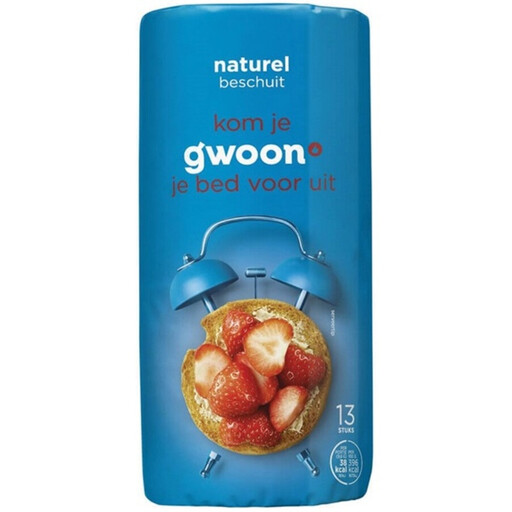 Image unavailable
A plain rusk base for anyone who wants another option alongside wholemeal rusks. Chocolate sprinkles are sold separately. If you have a milk allergy, check the allergen information on the packaging before choosing this product.
 Image unavailable
Dark chocolate sprinkles for anyone who wants to add this flavour to their choice of rusk. Albert Heijn lists 64 g of sugars and 8.8 g of saturated fat per 100 g for this variety, and identifies milk and soya as allergens. Choose your portion carefully and check the current label.
 Image unavailable
A chocolate sprinkle variety with chocolate and vanilla flavours for anyone who wants to include these tastes in their choice of rusks. The pack is 400 g; rusks are sold separately. If you have allergies, check the pack for milk, soya and wheat.
No, choose a rusk base to suit everyone’s preferences. Wholemeal is an option if fibre is a priority; plain rusks can also be an alternative for anyone who prefers their taste. The Netherlands Nutrition Centre says wholegrain cereal products contain more fibre than products made with refined flour.
Yes, the amount you use determines how much of the stated nutritional values you’re getting. As a guide, the Netherlands Nutrition Centre gives figures of 67 kcal, 9.1 g of sugars and 1.3 g of saturated fat for 15 g of dark chocolate sprinkles. For the variety you choose, check its specific label too.
Check both products for any allergens relevant to you, including gluten-containing cereals, milk, soya and egg. Albert Heijn lists milk and soya in De Ruijter Chocoladehagel Puur; the ingredients may differ in other chocolate sprinkles or rusks. Always check the latest packaging for both products.
Follow the storage instructions on both packs and seal them well after use. Albert Heijn says to store De Ruijter Chocoladehagel Puur in a cool, dry place; check the instructions for your rusks separately.