
Shoppers who pay attention to fibre
If you’re buying rusks for several breakfasts or lunches and fibre matters to you, start with the ‘wholemeal’ product description, then compare the fibre per 100 g.


Choose rusks for your weekly shop based on what matters most to you, rather than the word ‘premium’. Compare wholemeal status and fibre if those are your priorities; look at the seed mix for flavour and texture, the ingredients for a protein-focused choice, or classic baker’s rusks if you’re after a light, crisp texture. For every variety, check the current ingredients, allergen information and nutritional details on the packaging.
If you’re buying rusks for several breakfasts or lunches and fibre matters to you, start with the ‘wholemeal’ product description, then compare the fibre per 100 g.
If you’re mainly looking for a difference in the rusk itself, a seeded variety and a light, crisp baker’s rusk offer two distinct options.
If you’re specifically looking at protein, fibre or carbohydrates, portion size and allergen information are useful too, as these can vary between rusk varieties.
First decide whether fibre, seeds, a particular nutritional profile or classic crispness is your main reason for buying rusks. Then compare the nutritional information and ingredients for the exact variety, so an appealing product name doesn’t make the whole decision for you.
| What to consider | What to look for | Who it matters to |
|---|---|---|
| Wholemeal and fibre | Check the product description and ingredients, and compare fibre per 100 g. A dark colour alone doesn’t tell you whether rusks are wholemeal. | If fibre is my main reason for buying rusks for the week, I want to know whether the variety is genuinely wholemeal; this is the top priority for around 33% of shoppers. |
| Seeds | Check which seeds are included, and compare fat per 100 g and the allergen list too. | With a topped breakfast or lunch, the flavour and texture of seeds are what matter most to me; around 27% of shoppers prioritise this. |
| Protein and carbohydrates | Compare the values per 100 g as well as the size of one rusk; read the full ingredients and allergen information. | If I’m specifically choosing based on protein or carbohydrates, the nutritional profile needs to suit my preferences; this is the main reason for around 20% of shoppers. |
| Classic crispness | Consider whether you’re looking for a light baker’s rusk, and check the ingredients, including for egg if applicable. | For breakfast with sweet or savoury toppings, I’m mainly looking for a light, crisp rusk; this texture matters most to around 20% of shoppers. |
The colour, seeds and look of the packaging don’t prove that the grain ingredient is wholemeal. According to the Netherlands Food and Consumer Product Safety Authority, a food can only be described as wholemeal if its grain ingredient consists entirely of wholemeal flour.
Check the product description and ingredients list for the variety you’re buying.
The Bolletje multiseed rusks listed in PLUS’s product information contain 10 g of fibre, but also 16 g of fat per 100 g. Wheat and sesame are relevant allergens in this variety.
Compare the other nutritional information per 100 g and the allergen list with those of other varieties too.
Ingredients and allergen information can change. This is particularly important if you’re choosing a specific variety because of an allergy.
Check the current packaging when you buy, even if you’ve looked at the product online before.
Baker’s salt contains added iodine, but according to the Netherlands Nutrition Centre, bakers aren’t required to use it. So you can’t tell a product’s iodine content just from the fact that it’s a rusk.
If iodine is relevant to your choice, check the information for the specific product or ask the manufacturer.
Among the Bolletje varieties reviewed, you can choose from dark wholemeal, multiseed and classic Bakkers Beschuit, among others.
Albert Heijn offers several own-brand options in its rusk range, including wholemeal and multiseed varieties.
The sunflower seed rusks reviewed are worth considering if you’re mainly comparing nutritional content.
These products suit different choices for the week: wholemeal rusks, seeded varieties and rusks for anyone who wants to compare nutritional content more closely. The five products below appear in the order shown; choose based on the variety and its label, not its position in the list.
 Image unavailable
An option if you pay attention to wholemeal and fibre when doing your weekly shop. According to PLUS’s product information, this variety contains 100% wholegrain and 10 g of fibre per 100 g. If you have allergies, check the current packaging: wheat, oats, barley and sesame are among the ingredients listed.
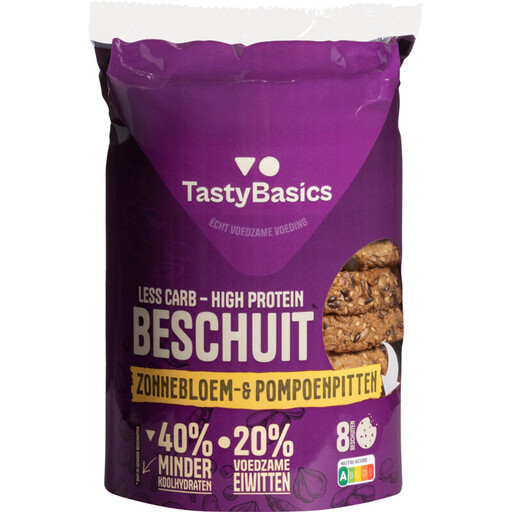 Image unavailable
If you’re specifically comparing protein and fibre, Joybuy’s product information lists 21 g of protein and 11 g of fibre per 100 g. The pack contains eight pieces, so compare the portion size with other rusks too. Before buying, read the current allergen information, including details of wheat, egg and sesame.
 Image unavailable
An option if you’re looking for rusks with seeds. According to PLUS’s product information, these multiseed rusks contain 10 g of fibre and 16 g of fat per 100 g. The listed ingredients include sunflower seeds, linseed, sesame and pumpkin seeds; check the packaging if you have allergies.
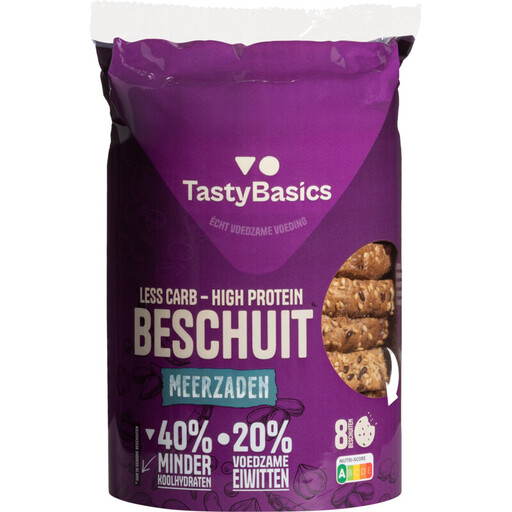 Image unavailable
This 184 g multiseed variety is an option if you want to consider both the seeds and the nutritional content. Compare the values on the packaging on the same basis as other rusks, and check the allergen information, including details of wheat, egg and sesame.
 Image unavailable
A pack of 13 for anyone looking for wholemeal rusks. Check the exact product description on the packaging, and only compare nutritional values with other varieties once you’ve confirmed whether they’re given per 100 g or per portion. The product information lists wheat and egg; check the current allergen details too.
Wholemeal rusks are a good starting point if fibre is your main reason for choosing them, but compare the fibre per 100 g for the exact variety too. According to the Netherlands Food and Consumer Product Safety Authority, a food can only be described as wholemeal if its grain ingredient consists entirely of wholemeal flour.
No, the number of seeds doesn’t tell you how much fibre the rusks contain. The Bolletje multiseed variety described by PLUS contains 10 g of fibre and 16 g of fat per 100 g; compare these values and the allergens with other varieties you’re considering.
Seal the packaging well after opening and store the rusks in a dry place. Also follow the storage instructions on the packaging for your variety.
No, you’ll need information about the specific product. The Netherlands Nutrition Centre explains that baker’s salt contains added iodine, but bakers aren’t required to use this salt. So check the label or ask the manufacturer if iodine is relevant to your choice.
It varies by variety. Wheat and egg are listed for the Bolletje Bakkers Beschuit reviewed, while wheat and sesame are relevant for the multiseed rusks reviewed. Always read the current allergen information on the packaging of the product you’re buying.