
Canteens looking to offer wholemeal options
For buyers considering wholemeal rusks as a regular option and wanting to compare the wholemeal labelling and fibre per 100 g, rather than relying on colour or the word ‘multigrain’.


Choose wholemeal rusks as the standard option if your canteen wants to focus on wholegrains and fibre. Add plain rusks as a separate choice if your employees have different preferences. Keep the two types clearly distinguishable when serving them, and check each product’s label for fibre, salt and allergens. A darker colour or the word ‘multigrain’ does not, by itself, mean that rusks are wholemeal.
For buyers considering wholemeal rusks as a regular option and wanting to compare the wholemeal labelling and fibre per 100 g, rather than relying on colour or the word ‘multigrain’.
For canteens that want to offer a clearly identifiable plain option alongside wholemeal rusks, so employees can choose between the two types.
For sites where the ingredients for the exact variant need to be clearly displayed at the serving point. For the wholemeal and seed variants described, allergens to look out for include egg, wheat, oats and sesame.
First decide whether wholemeal will be the standard option and whether you also need a plain variety. Then compare the labels of the specific products, especially if employees serve themselves.
| What to consider | What to check when buying | Who it matters to |
|---|---|---|
| Wholemeal and fibre | Look for the word ‘wholemeal’ on the packaging and compare the fibre per 100 g in the varieties you have chosen. | If wholemeal is to be the regular lunch option, I don’t want to rely on a dark colour. Around 40% of consumers give this wholemeal option priority. |
| Choosing between two types | Check that plain and wholemeal are genuinely separate products and remain easy to tell apart when served. | For a team with different preferences, I also want to be able to offer plain rusks. Around 30% of consumers prioritise having this choice. |
| Ingredients and allergens | Read the current label for the exact variant and make the ingredient information accessible when employees serve themselves. | If employees need to watch out for allergens, I want to be able to see clearly which rusks are on each plate. Around 20% of consumers prioritise this information. |
| Stock and salt | Compare pack size, salt per 100 g and storage instructions; adjust the quantity to suit how much the canteen uses. | If stock is not used quickly, I want to be able to store the rusks properly and compare labels. This matters most to around 10% of consumers. |
Colour and visible grains do not confirm that rusks are wholemeal. The Netherlands Nutrition Centre highlights the importance of wholemeal labelling on grain products.
Check for the word ‘wholemeal’ separately on the packaging; assess seeds and colour independently.
The Bolletje variant described, with oats and seeds, also contains sesame. When employees serve themselves, it should be clear which information relates to each plate.
Keep the packaging or current ingredient information with the product, and label different varieties separately.
A change to the recipe or packaging could affect the information the canteen displays alongside the rusks.
Before ordering and on delivery, check the current label, the variety you have chosen and its availability at your site.
Worth considering if your canteen is looking at both standard wholemeal rusks and an oat and seed variety from the same brand.
Worth considering for a canteen looking to buy plain and wholemeal varieties as separate options.
Worth considering when comparing different types of rusks, including plain and wholemeal.
These options include two wholemeal rusks and a separate plain variety. So if your canteen wants to offer both choices, you can place the products side by side and keep them clearly distinguishable.
 Image unavailable
A wholemeal option for a canteen that may also offer plain rusks.
Pack of 10. Check the current ingredients and allergen information for this variety, including details about oats and sesame.
 Image unavailable
A separate wholemeal option for the canteen’s regular rusk choice.
Pack of 13. Before comparing fibre with other products, check the value per 100 g on the label; also read the allergen information.
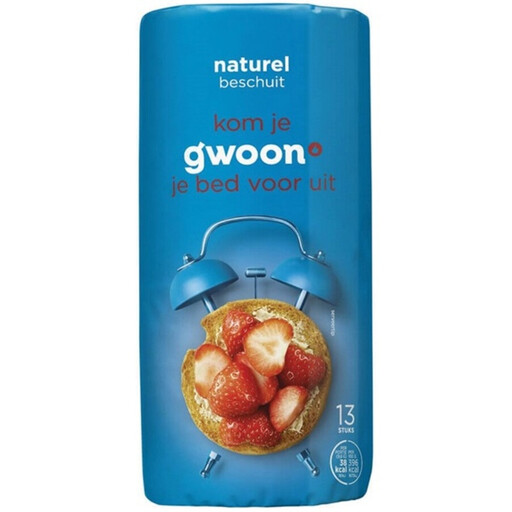 Image unavailable
A plain option for employees who do not choose the wholemeal variety; offer wholemeal separately if you want to provide both choices.
125 g pack. Check the current label before displaying nutritional values or allergen information at the serving point.
Not every canteen needs to. A separate plain option makes sense if employees have different preferences; keep the wholemeal variety clearly available if it is to remain the regular choice.
No. Check for the word ‘wholemeal’ on the packaging instead of relying on colour, seeds or the word ‘multigrain’.
Make sure the current ingredient and allergen information is clearly linked to each variety. Also check the pack actually being served, especially if you offer rusks containing oats or sesame alongside a simpler variety.
Follow the storage instructions on the packaging and seal opened rusks properly. Keeping them in a dry place helps them stay crisp.
No, don’t assume this without checking the product. Consult the ingredient information or ask the manufacturer about the exact variety if iodine is important for your menu planning.