
Lunch-goers looking to choose wholemeal more often
You want a quick lunch base and want to be able to tell whether your rusks are made with wholemeal flour.


Choose wholemeal rusks if you want to replace white grain products at lunchtime and prioritise a wholemeal option. For a fussy eater, plain, lighter rusks may better suit their preferred taste and crisp texture, but they are not an equivalent wholemeal choice. Rusks with seeds offer a different texture; check the ingredients and allergens for every variety.
You want a quick lunch base and want to be able to tell whether your rusks are made with wholemeal flour.
A mild taste and crisp texture determine whether rusks work for your lunch. You want to know what you’re giving up if you choose not to go wholemeal.
You’re considering a variety with seeds or kernels for a different texture and want to take the ingredients and allergens into account.
First decide whether wholemeal takes priority over a familiar, lighter taste. Then compare the texture and read the packaging of the variety you want to eat.
| What to consider | What to check when buying | Who it matters to |
|---|---|---|
| Wholemeal and fibre | Look for the wholemeal label and compare the fibre per 100 g. | If you want to replace white grain products at lunchtime, look for clear information about the grain base. Around 40% of consumers prioritise wholemeal and fibre. |
| Light taste and crispness | Check the product type and ingredients; wheat flour is not the same as wholemeal flour. | If a fussy eater mainly wants light, crisp rusks, a familiar taste may matter more than choosing wholemeal. Around 30% of consumers put this preference first. |
| Extra bite | Check which seeds or kernels are used and read the allergen information. | If you prefer rusks with a more pronounced texture, look for varieties with seeds and kernels. Around 30% of consumers prioritise this extra bite. |
Seeds, several types of grain or dark packaging don’t tell you whether the rusks are made entirely from wholemeal flour.
Look for the wholemeal label on the packaging. The Netherlands Nutrition Centre explains that a product cannot be called wholemeal unless it is made entirely from wholemeal flour.
You can’t tell which salt has been used in a specific variety just from the product type.
Check the ingredients list if iodised baker’s salt is important to your choice.
Ingredients vary by variety. For example, PLUS lists egg and cereals containing gluten in its wholemeal rusks; sesame is also listed for its seeded wholemeal variety.
Check the current ingredients and allergen information on the exact pack you’re buying.
A pack or individual rusk can vary in weight and size, so nutritional values per pack don’t mean the same as values per 100 g.
Compare nutritional information per 100 g, then consider which portion and texture suit your lunch.
Bolletje offers, among other options, plain, wholemeal and high-fibre rusks.
Albert Heijn’s rusk range includes AH Beschuit naturel and AH Beschuit volkoren.
PLUS offers wholemeal rusks and a separate wholemeal variety with seeds and kernels.
Lidl lists wholemeal rusks in a 140 g pack.
These options show three lunchtime choices: dark wholemeal rusks, another wholemeal variety and plain rusks for anyone looking for a lighter taste. Check the ingredients and allergens on the pack you choose.
 Image unavailable
An option if you’re looking for dark wholemeal rusks for lunch. Check the ingredients and allergens for this variety if seeds or grains are important to your choice.
 Image unavailable
A wholemeal option for anyone who prioritises that label at lunchtime. Check the current allergen information if ingredients such as egg or cereals are relevant to you.
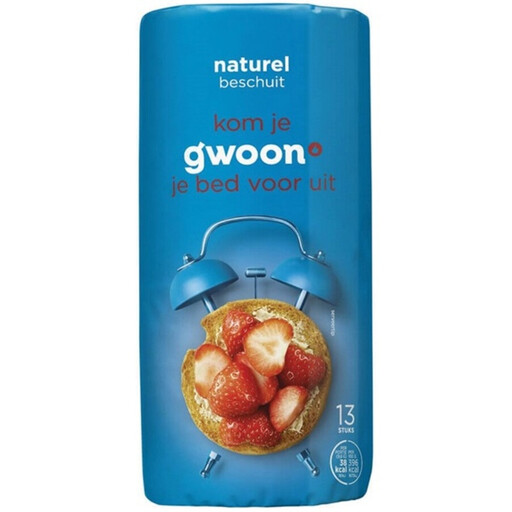 Image unavailable
A plain option when a familiar, lighter rusk is your priority. Check the pack for the wholemeal label if that matters to you, and read the allergen information.
No. Their colour and the presence of several grains don’t prove that they’re wholemeal. Look for the wholemeal label on the pack; according to the Netherlands Nutrition Centre, a product cannot be called wholemeal unless it is made entirely from wholemeal flour.
No. For example, PLUS lists egg and cereals containing gluten in its wholemeal rusks, and sesame in its seeded variety. Bolletje specifically describes its Vezelrijk Beschuit Meerzaden and Donker Volkoren as vegan; don’t assume this applies to other varieties, and always check the current packaging.
No, the product type alone doesn’t tell you which salt has been used. Check the ingredients list for the rusks you choose if iodised baker’s salt is important to you.
Store rusks in a dry place and pack your toppings separately if you want to keep them crisp. Add the toppings just before you eat.