Choose rusks for a weekend breakfast based on what you want to serve, rather than the word ‘premium’: compare wholemeal options if fibre is your priority, consider seeded or spelt rusks for different ingredients, and choose classic rusks for a light base for toppings. Compare nutritional values on the same per-100 g basis, and check the current packaging for ingredients and allergens. The word ‘salt’ alone doesn’t tell you whether iodised baker’s salt has been used.
Which rusks suit you?
If fibre is your first consideration
If you want more from your rusks than a light base for toppings, check whether they’re wholemeal and compare the fibre per 100 g. Albert Heijn lists 10 g of fibre per 100 g for Bolletje Vezelrijk boeren beschuit volkoren and 9 g per 100 g for AH Volkoren Beschuit. Also compare the ingredients on the packaging you buy.
If you want seeds or spelt on the table
For a more substantial breakfast, choose based on the grains and seeds you enjoy eating. According to Albert Heijn, AH Spelt Beschuit contains spelt, sunflower seeds, pumpkin seeds, linseed and sesame, among other ingredients. Check the allergens before buying too; the name ‘spelt’ or ‘multiseed’ doesn’t tell the whole story.
If you’re looking for classic rusks to serve with toppings
Light, crisp rusks let the toppings take centre stage. Jumbo lists free-range eggs and 4 g of fibre per 100 g for Bolletje Echte Beschuit. If fibre is your main consideration, compare this figure with the nutritional information for wholemeal options.
What should you look for when choosing?
First decide what matters most for your weekend breakfast: fibre content, the ingredients in a seeded option, or a light base for toppings. Then compare the packaging, especially if particular grains, egg or sesame matter to you.
| What to consider |
What to check before buying |
Who it matters to |
| Wholemeal and fibre |
Check the types of grain in the ingredients list and compare fibre per 100 g on the nutrition table. |
If I choose rusks mainly for their fibre, I want to compare their wholemeal status and fibre content side by side. Around 40% of consumers give this need top priority. |
| Seeds and spelt |
Check which kernels, seeds and grains are included; also look for sesame and any other relevant allergens. |
For a more substantial breakfast, I specifically want rusks with ingredients such as seeds or spelt, even if they’re not the option with the most fibre. This is the priority for around 30% of consumers. |
| Classic light texture |
Check the ingredients, including egg and cereals containing gluten, and compare nutritional values per 100 g. |
When toppings take centre stage, I’m looking for light, crisp rusks without seeds as a starting point. This is the most important preference for around 30% of consumers. |
Common mistakes when buying rusks
-
Assuming ‘premium’ or ‘spelt’ means more fibre
A product name doesn’t tell you how much fibre the rusks contain. Albert Heijn lists 5.8 g of fibre per 100 g for AH Spelt Beschuit, compared with 10 g per 100 g for Bolletje Vezelrijk boeren beschuit volkoren.
If fibre is your main criterion, compare the nutritional values per 100 g. Look separately at spelt and seeds if those are the ingredients you want.
-
Guessing allergens from the name
Seeded or spelt rusks may contain several allergens. For AH Spelt Beschuit, Albert Heijn lists egg, sesame, barley, spelt and wheat, among other ingredients.
Read the ingredients and allergen information on the current packaging instead of relying on the product name alone.
-
Assuming ‘salt’ means iodised baker’s salt
The word ‘salt’ doesn’t reveal which salt was used in a particular product. The Voedingscentrum points out that bread doesn’t have to be baked with baker’s salt; don’t assume that rusks contain iodised baker’s salt either, unless you have product-specific information.
Check the ingredients on the packaging or ask the manufacturer which salt was used if this is relevant to your choice.
-
Relying on out-of-date product information
Ingredients and nutritional information can change. This is especially important if you’re choosing based on allergens, fibre or salt.
When your order arrives, compare the online product information with the packaging. Check the packaging again before eating if the ingredients are important to you.
Brands to compare
These brands offer examples of different types of rusks. Always compare the specific product rather than assuming the same qualities apply to an entire range.
Bolletje
Bolletje offers classic, wholemeal and multiseed rusks to suit different breakfast preferences.
- Jumbo lists 4 g of fibre per 100 g for Bolletje Echte Beschuit; Albert Heijn lists 10 g per 100 g for Bolletje Vezelrijk boeren beschuit volkoren.
- Ingredients and allergens vary by product. Check the packaging of the one you choose.
AH
Albert Heijn’s own brand offers, among other options, wholemeal rusks and spelt rusks with kernels and seeds.
- Albert Heijn lists 9 g of fibre per 100 g for AH Volkoren Beschuit and 5.8 g per 100 g for AH Spelt Beschuit.
- According to Albert Heijn, the spelt option contains egg and sesame, among other ingredients. Check the current packaging if allergens are a concern.
Goud Gebakken
Goud Gebakken is a brand to consider when comparing plain rusks with other breakfast options.
- ALDI describes Goud Gebakken plain rusks as a pack of 13.
- Compare the nutritional values, ingredients and allergens on the packaging with those of the other options.
Rusks for different breakfast preferences at Joybuy
These products include wholemeal and seeded rusks for a weekend breakfast. Pack size, ingredients and available nutritional information can help you decide which option suits your preferences.
 Image unavailable
Bolletje dark wholemeal rusks – 10 pieces
For anyone looking to compare wholemeal rusks with oats and seeds for a weekend breakfast. The product information describes a topping of 8.8% oat flakes and 5.8% seeds. Check the current packaging if you have allergies.
View at Joybuy
 Image unavailable
Bolletje multiseed rusks – 10 pieces
For anyone looking for rusks with several types of seeds. Joybuy’s product information lists 12% sunflower seeds, 3.4% linseed, 2.7% sesame seeds and 1.5% pumpkin seeds. Check the packaging if sesame or wheat is an issue for you.
View at Joybuy
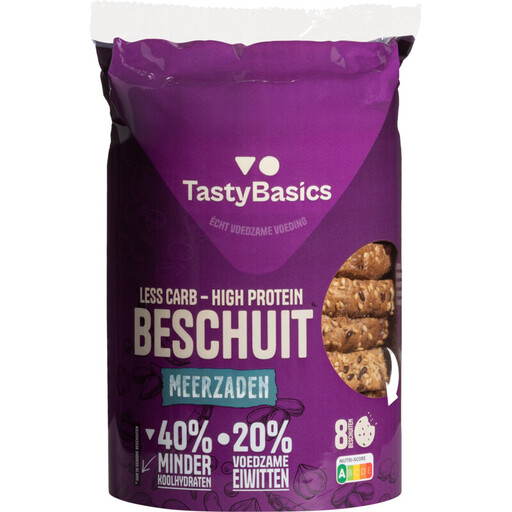 Image unavailable
TastyBasics multiseed rusks – 184 g
Multiseed rusks to consider if the ingredients in your breakfast are a priority. The pack contains 184 g; compare the fibre per 100 g on the label and check the allergens.
View at Joybuy
 Image unavailable
Bolletje wholemeal rusks – 13 pieces
For anyone looking for wholemeal rusks as a base for breakfast toppings. This pack contains 13 pieces. If fibre is your main buying criterion, compare the amount per 100 g on the label, and check the ingredients if you have allergies.
View at Joybuy
Frequently asked questions
Does ‘salt’ on the label mean the rusks contain iodised baker’s salt?
No, the word ‘salt’ alone doesn’t confirm this for a specific product. The Voedingscentrum points out that bread doesn’t have to be baked with baker’s salt. So, for rusks, check the ingredients on the packaging or ask the manufacturer which salt was used.
Which allergens should I look out for in spelt and seeded rusks?
For each product, check in particular for the listed cereals containing gluten, egg and sesame. For AH Spelt Beschuit, Albert Heijn lists egg, sesame, barley, spelt and wheat. Always read the current packaging, even if you’ve bought that option before.
How should I store rusks after opening?
Keep rusks dry and seal the pack or a storage tin tightly to help them stay crisp. Also follow the storage advice on the packaging for your particular product.


