
Buffet planners catering for different tastes
You want to offer guests both familiar plain rusks and a recognisable wholegrain alternative.


For a wedding buffet, serve plain and wholegrain rusks on separate, clearly labelled platters. This lets guests choose according to taste and type of grain, without making a brown or seed-rich variety the only option. Check the current label for each product and keep the allergen information for each platter close at hand.
You want to offer guests both familiar plain rusks and a recognisable wholegrain alternative.
You’re specifically looking for a wholegrain option and comparing the nutritional information of the products you’ll be serving.
You’re serving rusks loose and want to be able to say which allergens are in each product on every platter.
First decide which plain and wholegrain options you want to serve separately. Then compare the packaging for nutritional information, ingredients and allergens.
| What to consider | What to check when buying | Who it matters to |
|---|---|---|
| Choosing between plain and wholegrain | Choose two separate products and check how many rusks are in each pack. | I want guests who prefer familiar plain rusks to have that option, while others can choose wholegrain. Around 40% of consumers would put this freedom of choice first. |
| Wholegrains and fibre | Check the product name and compare the stated fibre per 100 g; also look at the size of each rusk. | If I specifically want wholegrain rusks, I want to be able to identify them from the label and see how much fibre is listed. This would be the main consideration for around 30% of consumers. |
| Allergens when serving | Read the current allergen information for each variety and keep the platters and serving utensils separate. | When serving loose rusks, I want to know which ingredients are relevant to each platter, even when toppings are served alongside them. An estimated 30% of consumers would make this their first priority. |
A brown colour or the term ‘multigrain’ doesn’t mean the same as ‘wholegrain’. According to the Netherlands Nutrition Centre, a product can only be called wholegrain if all the flour used is wholemeal.
Use the exact product name on the buffet and check the ingredients before labelling a platter as wholegrain.
A strongly flavoured grain or seed variety may contain different ingredients and allergens from the plain rusks alongside it. Jumbo lists wheat, oats, barley and sesame among the ingredients in Bolletje Vezelrijk Beschuit Donker Volkoren.
Keep the varieties separate, display the current allergen information and use separate serving utensils.
A product listing shows which variety a shop carries, but it doesn’t tell you whether you’ll be able to get the quantity you need when you plan to buy it.
Check that both varieties you’ve chosen are available before buying, and decide which suitable alternative you could use if needed.
The Dutch Commodities Act Decree defines baker’s salt as iodised table salt for bread and other bakery products. This doesn’t mean that every individual rusk variety contains it.
Check the specific product label if the presence of baker’s salt is important to your choice.
A brand to compare if you’re considering a darker variety with grains and seeds as well as standard wholegrain rusks.
The range includes separate plain and wholegrain AH varieties.
The range includes plain and wholegrain rusks, as well as varieties with more grains or seeds.
An option for picking up wholegrain rusks alongside the buffet’s other choices.
An option for picking up Goud Gebakken wholegrain rusks.
The range includes standard wholegrain rusks and a separate wholegrain variety with seeds.
These Joybuy products suit a set-up with separate plain and wholegrain options. Before buying, compare the current labels and check that you can get enough packs of both varieties.
 Image unavailable
A dark wholegrain option to serve on a platter alongside plain rusks.
The pack contains 10 pieces. Check the label for ingredients and allergens before labelling the platter.
 Image unavailable
A wholegrain option for guests who specifically choose this type of grain.
The pack contains 13 pieces. Keep this option separate from plain rusks and check the latest allergen information.
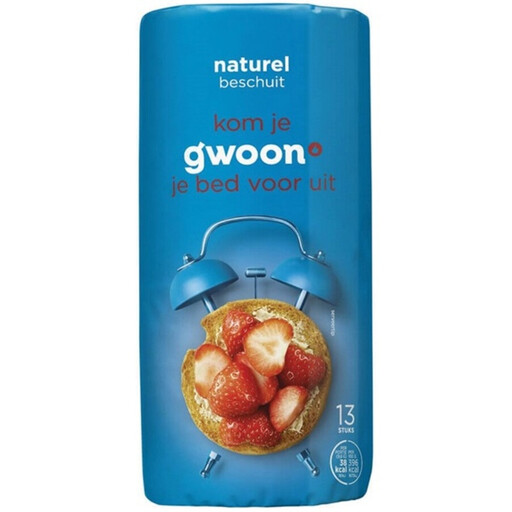 Image unavailable
The plain option to serve on its own platter alongside the wholegrain rusks.
The pack contains 125 g. Check the label for this variety too; plain doesn’t mean a product is allergen-free.
No, these terms aren’t interchangeable. According to the Netherlands Nutrition Centre, a product can only be called wholegrain if all the flour used is wholemeal. So check the product name and ingredients.
If the buffet is covered by the rules for serving unpackaged food, information about any allergens present must be available where the food is offered, according to the Netherlands Food and Consumer Product Safety Authority. The NVWA says this information can be provided in writing, electronically or, subject to certain conditions, verbally. Even at a private buffet, make sure guests can find the information for each product; whether the rules for food providers apply depends on how the buffet is set up.
Check the allergen information on each specific pack, as it varies between products. Albert Heijn lists egg and cereals containing gluten, including wheat, for AH Beschuit volkoren; Jumbo lists wheat, oats, barley and sesame among the ingredients in Bolletje Vezelrijk Beschuit Donker Volkoren.
That doesn’t follow from the definition of baker’s salt. The Dutch Commodities Act Decree describes baker’s salt as iodised table salt for bread and other bakery products, but that doesn’t establish whether every rusk variety contains it or how much iodine a product contains. Check the label on the specific pack if this is important to your choice.
Put out smaller quantities and top up the platters as needed. Keep the remaining rusks somewhere dry in a sealed container; the product information from Albert Heijn and Bolletje recommends storing the relevant varieties in a dry, sealed place.