
Organisers planning a buffet presentation
You’re looking for rusks to suit the toppings and occasion. Larger classic rusks and small chocolate rusks need different places on the table: serve the former with toppings and the latter as a sweet treat.


Classic rusks make a versatile base for toppings at a wedding buffet. Add a wholegrain or multiseed variety if you’d like to give guests more choice, and serve chocolate rusks as a separate sweet treat. Check the allergens and number of rusks on each pack, and store them in a dry, sealed place until you’re ready to serve.
You’re looking for rusks to suit the toppings and occasion. Larger classic rusks and small chocolate rusks need different places on the table: serve the former with toppings and the latter as a sweet treat.
You want to know in advance which varieties guests can enjoy and how to serve them separately. The products described list different allergens, including wheat, egg, sesame, milk and soya.
You want to buy enough rusks without ordering the same number of packs of every variety. The number in each pack, and the role of classic, wholegrain and sweet rusks on the menu, can help you decide how to divide them up.
First decide whether the rusks are for toppings or a separate sweet treat. Then choose varieties to suit your guest list and work out how many you’ll need for each part of the buffet.
| What to consider | What to check when buying | Most relevant for |
|---|---|---|
| Presentation and occasion | Check the size and number of rusks, and whether the variety suits the planned toppings or a sweet table. | If I’m serving both savoury toppings and something to enjoy with coffee, I don’t want to use the same rusks for both. Around 33% of consumers prioritise this. |
| Allergens and keeping varieties separate | Read the allergen information on every pack and plan separate serving plates and tongs where needed. | If guests avoid certain ingredients, I want to offer clearly labelled varieties separately. This is a priority for around 25% of consumers. |
| Wholegrain and seeds | Check the wholegrain label, any nutritional information per 100 g and the listed allergens. | Alongside plain rusks, I want to offer a clearly identifiable wholegrain or seeded option. This is the main consideration for around 25% of consumers. |
| Quantities and buying | Count the rusks in each pack and work out how many of each variety you’ll need alongside the other buffet dishes. | If rusks are just one part of a larger buffet, I mainly want to avoid buying too many packs of a less common variety. Around 17% of consumers prioritise this planning. |
PLUS lists wheat, rye and egg, among other allergens, for Bolletje Echte Beschuit. The multiseed variety described contains sesame, while the chocolate rusks include milk and soya, among other ingredients. A single general label for every serving plate therefore won’t give guests enough information.
Check the packs you receive for each variety, and keep rusks for guests with different needs separate while serving them too.
According to PLUS, Bolletje Verwenbeschuitjes have a milk chocolate coating. They serve a different purpose from rusks for savoury toppings; sesame is also an ingredient to consider in a seeded variety.
Set aside chocolate rusks for a separate sweet treat and choose a suitable base for the other toppings. Only offer alternatives once you’ve checked their ingredients and how they should be served.
A pack of 10 and a pack of 13 will provide different numbers of portions when you’re catering for several guests. The number of packs you need also depends on the other food and how you plan to serve everything.
Work out how many rusks you want of each variety before choosing packs for the buffet.
Baker’s salt is iodised, but according to the Voedingscentrum, bakers aren’t required to use it. The rusk category alone therefore won’t tell you which salt was used in a particular product.
Check the ingredients list or ask the manufacturer if this product detail is important to your choice.
Bolletje offers classic rusks, larger Bakkers Beschuit, multiseed rusks and small chocolate rusks. This gives you options for different occasions, without treating the varieties as interchangeable.
Albert Heijn’s range includes own-brand rusks alongside Bolletje products.
Jumbo lists its own-brand rusks and Bolletje products, including wholegrain and seeded varieties.
PLUS lists products including Bolletje Echte Beschuit, multiseed rusks and chocolate-coated Verwenbeschuitjes.
Lidl lists a 140 g wholegrain rusk as an in-store product.
ALDI lists Goud Gebakken plain rusks and a wholegrain option in its rusk range.
These Joybuy products include classic, wholegrain and seeded rusks for a wedding buffet. Choose based on the toppings you’re planning, the quantities you need and the ingredients listed on the pack.
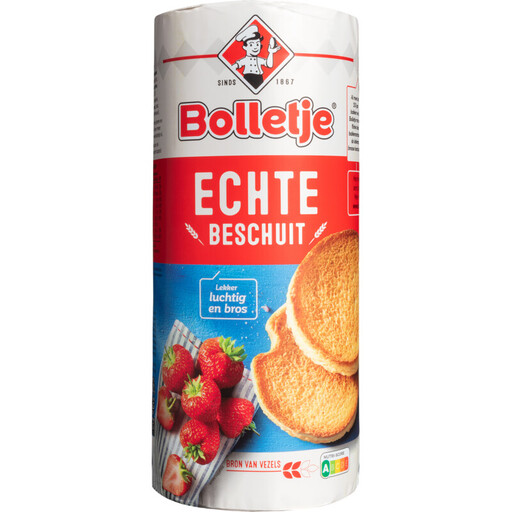 Image unavailable
A classic rusk to consider as a base for toppings on the buffet. The pack contains 13 rusks; check the allergens on the pack before serving it alongside other varieties.
 Image unavailable
A wholegrain rusk for anyone looking to offer a different grain option alongside classic rusks. The pack contains 13 rusks; check the ingredients and allergens on the pack.
 Image unavailable
A seeded rusk that gives guests a clearly distinct option on the buffet. The pack contains 10 rusks; check the pack to see which seeds and allergens are listed for this variety.
 Image unavailable
A dark wholegrain rusk for anyone who wants to offer this variety separately. The pack contains 10 rusks; check the grains and allergens on the pack before arranging the serving plates.
No. Choose varieties to suit the occasion: classic rusks with toppings, a wholegrain or seeded variety as an additional option, and chocolate rusks for a separate sweet treat. Check the ingredients, allergens and pack contents for each variety you choose.
Follow the storage instructions on the pack and only open packs when you need them. For Bolletje Echte Beschuit, PLUS advises storing the product in a dark, dry, sealed place after opening. Keep chocolate rusks away from heat too.
First, count how many guests you want to serve rusks to and consider the other dishes and toppings. Then divide the number you need between your chosen varieties. Check how many rusks are in each pack, as the products shown here contain either 10 or 13.
No, you can’t tell from the name alone. Baker’s salt is iodised, but according to the Voedingscentrum, bakers aren’t required to use it. Check the ingredients list or ask the manufacturer which salt is used in a specific product.