For a familiar new-baby treat, rusks with aniseed sprinkles remain the traditional choice. Multigrain sourdough bread is a good option if you’d also like to serve larger slices or rolls. Choose sliced bread if you want to add toppings straight away, or individual bake-at-home rolls if warm, smaller portions matter more. When choosing bread, check whether it’s labelled wholemeal and read the ingredients: ‘multigrain’ doesn’t tell you whether it’s wholemeal, and sourdough can still contain added yeast.
Who is each option best for?
If you want to keep the birth tradition
You want to serve aniseed sprinkles and are wondering whether bread can replace a rusk. Albert Heijn describes rusks with aniseed sprinkles as a birth tradition; bread is a different way to serve them, not the same traditional treat.
If you’d also like bread left over for everyday use
You’re looking for bread you can keep using after your visitors have left. Look beyond the word ‘multigrain’: according to the Netherlands Nutrition Centre, the term ‘wholemeal’ tells you something different about the grain used.
If you want to serve smaller portions
You’d rather bake rolls as needed than slice a whole loaf. Multigrain sourdough rolls and demi-baguettes come in handy sizes, but they need preparing and you should check the product instructions.
What should you look for when choosing?
First decide whether you want to serve traditional rusks or offer bread. If you choose bread, compare its wholemeal status, size and preparation requirements.
| What to consider |
What to check before buying |
Who it matters to |
| Tradition or bread |
Choose whether to use a rusk, a slice of bread or a roll as the base for the aniseed sprinkles. |
If I want to serve the familiar new-baby treat, rusks are the right choice for me; for around 40% of consumers, that traditional presentation is the deciding factor. |
| Wholemeal and fibre |
Look for the term ‘wholemeal’ and compare the fibre per 100 g on the label. |
If I also want to use the bread for sandwiches after the visit, I want to know what kind of bread I’m buying. Around 30% of consumers prioritise this wholemeal and fibre information. |
| Portions and preparation |
Compare the number of pieces and the weight; for bake-at-home bread, read the preparation and storage instructions too. |
For a small gathering, I don’t want to bake more than I’ll serve. For around 30% of consumers, portion size and baking fresh are the most important factors. |
Common mistakes
-
Assuming multigrain means wholemeal
According to the Netherlands Nutrition Centre, multigrain bread contains at least three types of grain. The word alone doesn’t tell you whether the bread is wholemeal.
If wholemeal matters to you, look for that term and then compare the ingredients and fibre per 100 g.
-
Assuming sourdough contains no yeast
The multigrain sourdough products described by Albert Heijn, Jumbo and PLUS list yeast or baker’s yeast as well as sourdough.
If you want bread made to rise using sourdough alone, check the ingredients list for the exact product rather than relying on its name.
-
Not checking allergens for each type of bread
Ingredients vary by product; the breads described here include ingredients such as gluten-containing cereals and sesame.
Read the label on packaged bread. For unpackaged bread, ask about allergen information before buying.
-
Buying bake-at-home bread without planning when to prepare it
Par-baked rolls still need to be finished in the oven, so they’re less ready to serve than sliced bread.
Choose a quantity that suits your visitors, bake in smaller batches if needed, and follow the storage and preparation instructions on the packaging.
Defrosting and baking take time when you’re ready to serve.
Brands and types of bread to consider
Albert Heijn
AH OerDesem dark multigrain whole sliced is an 800 g wholemeal multigrain sourdough loaf, already sliced for anyone who wants to add toppings straight away.
- The product information lists ingredients including wholemeal wheat flour, seeds and kernels, and 6.6 g of fibre per 100 g.
- The bread also contains baker’s yeast. Check the current packaging if the ingredients or allergens are important to your choice.
Jumbo
Jumbo Multigrain Sourdough Rolls are a pack of four brown par-baked rolls, weighing 300 g in total.
- The product information lists 6.6 g of fibre per 100 g; you can bake the individual rolls as needed.
- As well as sourdough, the listed ingredients include yeast, gluten-containing cereals and sesame.
Lidl
Lidl describes a 600 g organic brown multigrain sourdough loaf with seeds and kernels.
- Its rustic shape is an alternative if you’re not looking for individual bake-at-home rolls.
- Lidl says it’s sold in store. Check the packaging there for ingredients and allergens.
PLUS
In this range, PLUS offers a small 300 g brown multigrain sourdough loaf and multigrain sourdough demi-baguettes for baking at home.
- The small loaf and demi-baguettes offer different sizes to suit the occasion.
- Both products described also contain baker’s yeast; follow the baking instructions for the demi-baguettes you choose.
Dirk
Dirk offers a multigrain farmhouse loaf with grains and seeds.
- If you specifically want multigrain sourdough bread, check the ingredients of the loaf you choose; the product description for this farmhouse loaf doesn’t mention sourdough.
ALDI
ALDI describes multigrain bread and multigrain petit pains for baking at home.
- The petit pains are an option if you want to bake individual multigrain rolls.
- The descriptions of these products don’t confirm that they’re sourdough; check the ingredients if that’s a requirement for you.
Multigrain rolls at Joybuy
These multigrain baguettes are a good fit if you want to serve individual portions of bread instead of traditional rusks. Allow time to defrost and bake them; check the packaging if you need a product that uses sourdough as its only raising agent.
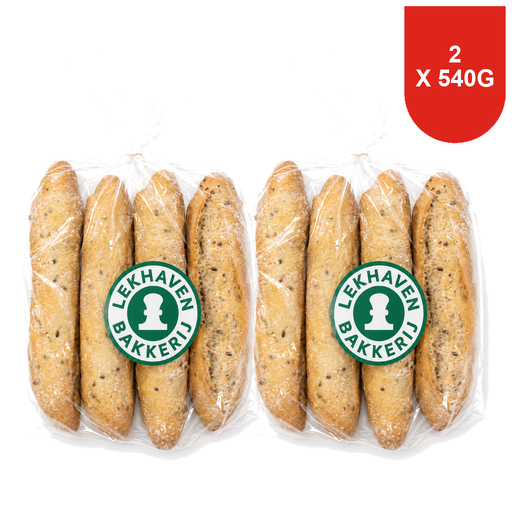 Image unavailable
Lekhaven Bakkerij Multigrain Rustic Baguette, 4 x 135 g x 2
For anyone who wants to serve individual portions of bread with aniseed sprinkles and has time to prepare them.
The listed ingredients include both sourdough and yeast, so don’t choose this product assuming it rises using sourdough alone. It needs to be defrosted and baked. Check the packaging for preparation instructions, wholemeal status and iodised salt information.
View at Joybuy
 Image unavailable
Lekhaven Bakkerij Multigrain Rustic Baguette, 4 x 135 g
For anyone who wants to bake four individual baguettes for their visitors.
The listed ingredients include yeast as well as sourdough. Defrost the baguettes before baking and follow the packaging for the correct baking time; check it too for wholemeal status and iodised salt information.
View at Joybuy
Frequently asked questions
Is multigrain sourdough bread the same as rusks with aniseed sprinkles?
No, it’s a different base for the aniseed sprinkles. Albert Heijn describes rusks with aniseed sprinkles as a Dutch birth tradition; bread is a good option if you’d rather serve a slice or a roll.
Does ‘sourdough’ in the name mean the bread contains no yeast?
No, sourdough in the name doesn’t rule out added yeast. The products described by Albert Heijn, Jumbo and PLUS list both; check the ingredients if you want bread made to rise using sourdough alone.
Is multigrain bread always wholemeal?
No. According to the Netherlands Nutrition Centre, ‘multigrain’ tells you how many types of grain are used, but doesn’t automatically mean the bread is wholemeal. Check the product description and ingredients to find out.
How do I prepare multigrain sourdough demi-baguettes?
Follow the instructions for the product you’ve chosen. PLUS says to bake its multigrain sourdough demi-baguettes in a preheated oven at 220 °C for 8–10 minutes; times and temperatures may vary for other rolls.
Where can I find allergen information for unpackaged bread?
Ask the seller about allergens in the specific bread before buying. According to the Netherlands Food and Consumer Product Safety Authority, information about allergens in unpackaged food must be made available in a way other than on packaging.


