
If you want to serve the traditional treat
If you want to offer the familiar new-baby treat, you’ll need rusks and sugared aniseed, not bread as a substitute. Jumbo describes rusks with sugared aniseed as the usual combination for a birth.


If you want to serve the traditional new-baby treat, choose rusks with sugared aniseed; Jumbo describes this as the usual combination. If you’d rather make a bread-based version, choose multigrain bread and check whether you can have the slices cut to your preferred thickness or cut them yourself. If you want wholemeal bread or need to check for allergens, read the label on the specific loaf: multigrain does not automatically mean wholemeal.
If you want to offer the familiar new-baby treat, you’ll need rusks and sugared aniseed, not bread as a substitute. Jumbo describes rusks with sugared aniseed as the usual combination for a birth.
If you’d rather top bread and cut the portions yourself, check the actual slice thickness. A description such as ‘firm’ doesn’t tell you how thick a slice is; ask or buy a whole loaf and slice it yourself.
If the wholemeal content, ingredients or allergens affect your choice, check the specific loaf. According to the Voedingscentrum, ‘multigrain’ does not automatically mean that bread is wholemeal.
First decide whether you want to make the traditional rusk treat or a bread-based version. If you choose bread, check the slice and then read the label for the ingredients that matter to you.
| What to consider | What to check | Who it matters to |
|---|---|---|
| Type of treat | Choose rusks for the traditional rusk-and-sugared-aniseed treat; choose bread only if you deliberately want a different base. | I want to serve the familiar new-baby treat, so I don’t want to use bread instead of rusks. For around 33% of consumers, the traditional option comes first. |
| Slice thickness | Ask how thick the slices are, look at them or buy a whole loaf and slice it yourself. ‘Firm’ and ‘sliced whole’ don’t specify thickness. | For my bread snack, I want to decide how thick the pieces are instead of relying on a description. Around 42% of consumers prioritise having control over the slice. |
| Ingredients and label | Check the wholemeal claim, ingredients and allergen information on the bread you choose; check the ingredients list if iodised salt matters to you. | If I choose bread, I want to know which grains and allergens it contains and whether it’s wholemeal. For around 25% of consumers, checking the label is the first priority. |
According to the Voedingscentrum, ‘multigrain’ refers to the use of different types of grain; it doesn’t automatically mean the bread is wholemeal. A dark colour or visible seeds doesn’t tell you either.
Look for an explicit wholemeal claim and read the ingredients on the bread you want to buy.
A description of the texture doesn’t confirm the slice thickness. ‘Sliced whole’ doesn’t tell you how thick the individual slices are either.
Ask the retailer about the slices, look at the bread in store or choose a whole loaf that you can slice yourself.
The term ‘multigrain bread’ doesn’t tell you what type of salt has been used in the product.
Check the ingredients list on that loaf if the presence of iodised salt is important to your purchase.
Ingredients vary from one loaf to another. According to the Voedingscentrum, common allergens must be clearly listed on the label.
Read the current ingredients and allergen information for the specific product before serving it.
AH OerDesem dark multigrain is an example of sliced multigrain bread described as wholemeal.
Jumbo offers both multigrain bread and rusks for the traditional combination with sugared aniseed.
Lidl describes one multigrain loaf as firm and lists wheat, barley and buckwheat among its ingredients.
PLUS offers, among other options, a dark multigrain round loaf, sliced whole.
Dirk offers half and whole loaves among its range of multigrain bread.
These multigrain loaves are for anyone who wants to make a bread-based version with sugared aniseed instead of using rusks. When choosing, check that the finished pieces are the thickness you want; bread isn’t the same as rusks.
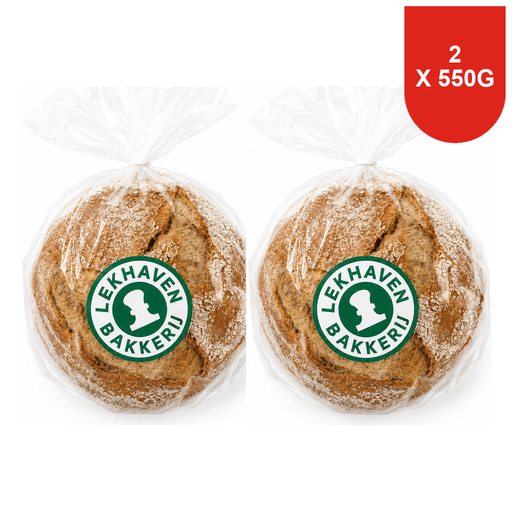 No image available
A round multigrain loaf for anyone who wants to slice their own pieces for a bread snack.
Allow time to defrost, bake and cool before slicing. Check the packaging if wholemeal content or allergens are important to your choice.
 No image available
A round multigrain loaf for anyone who would rather make their own bread portions than serve rusks.
Allow time to defrost, bake and cool before slicing. Check the slice thickness yourself and read the label for wholemeal content and allergens.
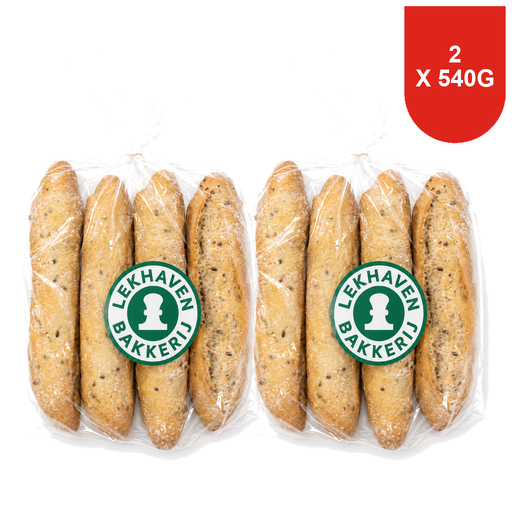 No image available
A baguette-shaped option for anyone who wants to slice smaller pieces for a bread snack rather than use round slices of bread.
Allow time to defrost and bake. Check that the pieces are the thickness you want, and read the label if wholemeal content or allergens matter to you.
No. According to the Voedingscentrum, ‘multigrain’ refers to bread made with different types of grain; it doesn’t automatically mean the bread is wholemeal. Look for a wholemeal claim and check the ingredients on the specific loaf.
Rusks are the usual base for the traditional new-baby treat; Jumbo describes rusks with sugared aniseed in this context. Bread with sugared aniseed is another option, but it gives you a different product format and portion size.
Read the ingredients list on the loaf you’ve chosen and look for iodised salt or baker’s salt. Don’t rely on the term ‘multigrain’ alone.
No. The term ‘multigrain’ doesn’t mean that bread is gluten-free. Check the allergen information and, if you need a gluten-free product, look for an explicit gluten-free claim on the specific loaf.