
Small households that don't eat many rusks
If you only eat rusks occasionally, the number in the pack and how to store them after opening are important. A pack you can keep dry and sealed may suit your habits better than one with lots left over.


Choose rusks if you want a small, crunchy base for light toppings or leftovers during or after your Sunday roast. If you need soft bread for gravy or sandwiches, half a loaf is a better fit. If you only use rusks occasionally, compare the number in the pack and the storage instructions to avoid leaving an opened pack unused.
If you only eat rusks occasionally, the number in the pack and how to store them after opening are important. A pack you can keep dry and sealed may suit your habits better than one with lots left over.
Rusks can provide a crunchy base for a small portion of leftovers after your Sunday roast. If you’re looking for soft bread for gravy or a sandwich, rusks are a different choice.
If you’re considering plain, wholemeal, multiseed or another variety with a different nutritional profile, compare the nutrition information and ingredients for each product. If you have allergies, always check the current label.
First decide whether you need crunchy rusks or soft bread. Then compare how many rusks you’ll use, how you’ll store the pack and which ingredients matter to you.
| What to consider | What to check when buying | Who it matters to |
|---|---|---|
| Portion size and storage | Compare the number of rusks in each pack and check how to store them after opening. | If I only eat rusks occasionally, I want a pack that lets me keep the rest crunchy. Around 36% of consumers prioritise avoiding leftover portions. |
| How they fit with the meal | Choose rusks for a crunchy base; choose half a loaf if you need soft bread for gravy or sandwiches. | For Sunday roast, I want to know in advance whether the bread will suit the meal, not just whether the pack is small. Around 29% of consumers prioritise how a product fits with a meal. |
| Variety and nutritional value | Check the product name and compare fibre and protein on the same basis, for example per 100 g. | When I’m choosing between plain, wholemeal and multiseed, I want to know what the nutrition information says about each variety. This nutritional profile is the top priority for around 21% of consumers. |
| Ingredients and allergens | Read the current ingredients and allergen information. If the type of salt used matters to your choice, check the details for that specific product. | If I need to avoid certain ingredients, the packaging must give me the information I need before I serve anything. Around 14% of consumers put this check first when buying. |
Rusks are dry and crunchy. A small pack doesn’t make them a substitute for soft bread with gravy or in sandwiches.
Before you buy, decide whether you want a base for light toppings or an actual half loaf to serve with your meal.
Even a small pack can go partly unused if you only eat rusks occasionally and don’t seal the rest properly.
Compare packs of 10 and 13 with your usual consumption, and follow the storage instructions on the packaging. Bolletje says its individually wrapped Mono rusks aren’t available in supermarkets.
A name such as multiseed or protein won’t tell you how much fibre or protein another variety contains, or which allergens it includes.
Compare the nutrition information per 100 g and, if available, per serving. Also read the ingredients and allergen information for the exact variety you’re buying.
Information about baker’s salt in bread doesn’t confirm which salt has been used in a particular rusk product.
Check the ingredients on the current packaging, or ask the manufacturer if this matters to your choice.
Bolletje offers several types of rusks, including Echte Beschuit and multiseed varieties.
AH plain rusks are listed by Albert Heijn in a 125 g pack with 13 servings.
PLUS lists a 125 g roll of plain rusks as one of its own-brand products.
ALDI lists Goud Gebakken plain rusks in a pack of 13.
Lidl lists 140 g wholemeal rusks as an in-store product.
These Bolletje products are rusk varieties in packs of 10 or 13, for anyone looking for a crunchy base for light toppings. They won’t replace soft bread from half a loaf with your Sunday roast. If you won’t eat a whole pack straight away, check the storage instructions too.
 Image unavailable
A multiseed variety to consider if you want a pack of 10 for a small meal with toppings. If you have allergies, check the current ingredients and allergen information.
 Image unavailable
This wholemeal variety is an option if you’re looking for a pack of 10 rusks to enjoy with light toppings. Compare the nutrition information and check the allergens on the current packaging.
 Image unavailable
A wholemeal rusk variety for anyone who expects to enjoy several small portions with toppings from one pack. Compare nutritional values on the packaging using the same basis, and store the remainder according to the instructions after opening.
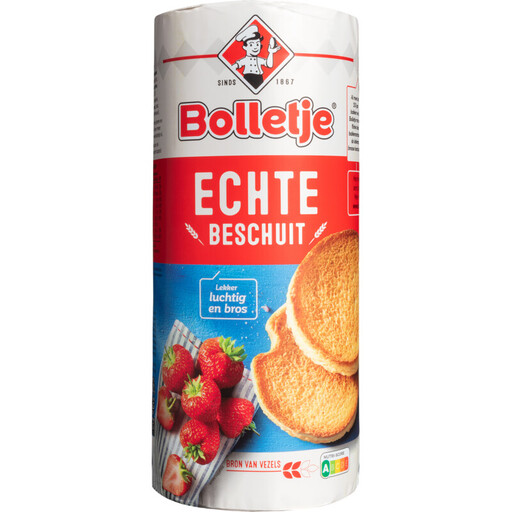 Image unavailable
A pack of rusks for anyone looking for a crunchy base for light toppings and who can use 13 pieces. If you have specific ingredient requirements, read the current label and seal the pack securely after opening.
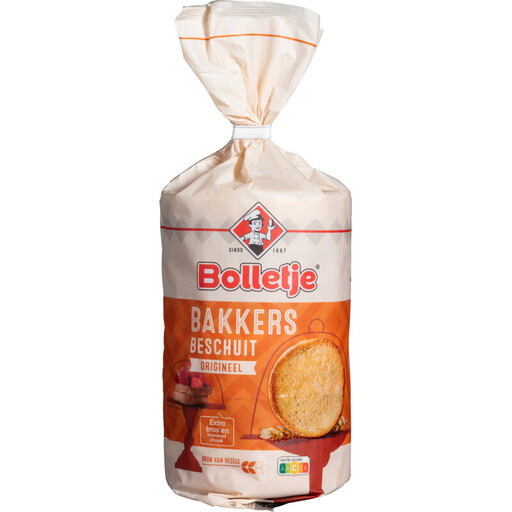 Image unavailable
This rusk variety is an option if you’re looking for a pack of 10 for occasional use. Store opened rusks according to the instructions on the packaging, and check the label if you have allergies.
Yes, if you’re looking for a small, crunchy base for light toppings or leftovers. Rusks aren’t an equivalent substitute for half a loaf if you need gravy, sandwiches or soft bread to serve with your meal.
Keep rusks dry and sealed, following the instructions on the packaging. Albert Heijn and PLUS also recommend storing their respective rusk products in a dark place after opening.
You can’t tell from the product category alone. Check the ingredients for the specific rusk product or ask the manufacturer if the type of salt used matters to your choice.
Check the exact variety, ingredients and nutrition information on the packaging. For example, compare fibre per 100 g on the same basis, and if you have an allergy, read the allergen information too.
It varies by product. The varieties described here list ingredients including wheat, other grains, egg and sesame. Don’t rely on the variety name alone: read the current label on the pack you’ve chosen before eating.