Plain rusks are a neutral choice for a Vlaggetjesdag table with a range of toppings. Choose wholemeal rusks if you want to take the grain type and fibre content into account, or seeded rusks if you’re looking for a larger, more distinctive option. Always check the ingredients and allergens for your guests. ‘Medium sliced’ isn’t a useful description for rusks: if you mean medium-sliced bread, you’ll need to look in a different product category.
Which rusks are right for you?
If you’re serving celebratory toppings
According to Stichting Vlaggetjesdag Scheveningen, Vlaggetjesdag is all about Nieuwe Haring. Serving toppings on rusks is a personal choice, rather than an established part of the event. Consider whether you’d prefer a neutral rusk for a range of toppings or a seeded option on the table.
If you’re also buying for everyday use
If you’ll finish the pack after the celebrations, the number of rusks and storage instructions matter too. Plain rusks are an option if you’d like to use the same pack for breakfast or a snack. Compare the ingredients and size of each product.
If you’re watching fibre and ingredients
Compare wholemeal and seeded options using the nutritional information per 100 g and per rusk. Also check the ingredients and allergens: a different grain or added seeds don’t, on their own, tell you whether a rusk is suitable for all your guests.
What should you look for when choosing?
First, decide which toppings you’d like to serve and how many rusks you’ll need. Then compare the ingredients of the options you’re considering for your table.
| What to consider |
What to check when buying |
Who it matters to |
| Base for toppings |
Choose between plain rusks and a seeded option; when serving, consider the size and amount of topping. |
If I’m putting out a range of toppings, I want a rusk that doesn’t dictate the flavour. Around 42% of consumers prioritise having a choice of toppings. |
| Quantity and storage |
Compare the number of rusks in each pack and check how to store them in an airtight container after opening. |
I want to use any leftover rusks later rather than leave an open pack lying around. Around 33% of consumers prioritise practicality. |
| Fibre and ingredients |
Compare the fibre content per 100 g and per rusk; check the current ingredients and allergen list. |
When I choose wholemeal or seeded rusks, I want to know what’s actually in them and whether my guests need to take anything into account. For around 25% of consumers, these ingredients are the top priority. |
The fibre content per rusk also depends on its weight. As a guide, the Voedingscentrum gives an average of 0.8 g of fibre per 10 g wholemeal rusk; the value for a specific pack may differ. So check the nutritional information for the rusks you want to buy rather than assuming the average applies to every brand.
Common mistakes
-
Looking for rusks as if they were medium-sliced bread
‘Medium sliced’ doesn’t describe the varieties into which Dutch shops typically divide rusks. Jumbo describes a rusk as a baked bun that’s cut in half, with the halves baked again; this is different from specifying the thickness of a slice of bread.
If you want to serve round, crisp rusks, compare plain, wholemeal and seeded or grain varieties. If you mean bread cut into slices of a particular thickness, look for bread instead.
-
Choosing seeds or fibre without reading the label
Ingredients vary between products. For example, Albert Heijn’s product information lists wheat and egg in Bolletje Echte beschuit, and wheat and sesame in the Bolletje multiseed variety described here.
Check the current ingredients and allergen information for the exact pack you’re serving, especially if a guest needs to avoid an allergen.
-
Assuming the salt is iodised bakers’ salt
The Voedingscentrum states that bakers aren’t required to use bakers’ salt. The word ‘salt’ in an ingredients list doesn’t, by itself, tell you whether iodised bakers’ salt was used.
If the type of salt matters to you, check whether it’s specified on the pack or ask the manufacturer.
-
Leaving an opened pack out
If you’re serving rusks to a small group, you may have some left over. Product information from Albert Heijn and Bolletje recommends storing them in a dry, airtight place.
Choose the number of packs to suit your group, and put any leftover rusks in an airtight tin or container after opening.
Brands compared
Always compare individual products within a brand: size, ingredients and nutritional value can vary between plain, wholemeal and seeded rusks.
Bolletje
Bolletje offers plain rusks as well as varieties with wholegrain or seeds.
- The multiseed variety described is larger than the plain option and contains seeds; compare the size if you’re serving a range of toppings.
- The plain variety described contains wheat and egg; wheat and sesame are relevant allergens in the multiseed option. Check the label for the variety you choose.
AH
Albert Heijn’s own-brand range includes plain rusks and other varieties.
- AH Plain Rusks come in a 125 g pack. Albert Heijn states that they contain 4.2 g of fibre per 100 g.
- This plain variety contains wheat, rye and egg, among other ingredients; check the current packaging before buying.
Jumbo
Jumbo offers plain rusks as well as a hearty multigrain variety.
- The plain pack mentioned contains 13 rusks, which is useful when estimating how many you’ll need for your guests.
- Check the nutritional value and allergens for the pack you choose; the term ‘multigrain’ doesn’t provide all this information.
PLUS
PLUS offers plain rusks as well as larger seeded or spelt varieties.
- The luxury seeded variety described is large and crisp, offering a different serving option from plain rusks.
- Check the ingredients, allergens and current availability for each variety before planning your table around it.
Goud Gebakken (ALDI)
ALDI describes both a plain and a wholemeal Goud Gebakken variety.
- ALDI states that both varieties described contain 13 rusks per pack.
- If nutritional information and allergens affect your choice, check the packaging for the variety you select.
Rusks for different serving preferences at Joybuy
These Bolletje products offer a choice of classic, wholemeal and seeded rusks. First, choose the type that suits your toppings and guests, then compare the number of rusks per pack.
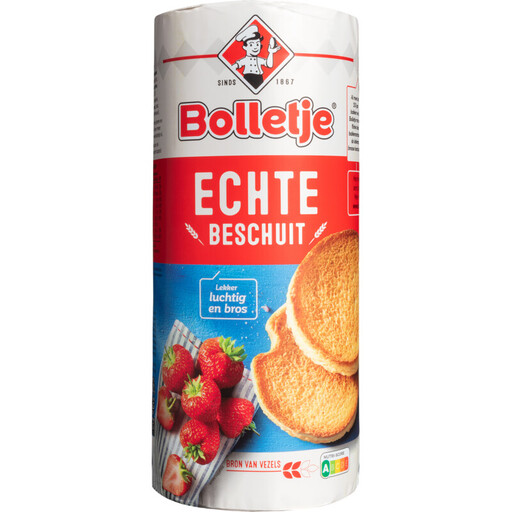 Image unavailable
Bolletje Real Rusk – 13 pieces
A classic rusk to serve with toppings. The pack contains 13 rusks; if you’re serving guests, check the current ingredients and allergen information.
Shop at Joybuy
 Image unavailable
Bolletje Wholegrain Rusk – 13 pieces
A wholemeal option if you’d like to serve a different grain variety alongside plain rusks. The pack contains 13 rusks; if fibre content matters to you, compare the nutritional information on the current packaging.
Shop at Joybuy
 Image unavailable
Bolletje Multi-Seed Rusk – 10 pieces
A multiseed option for anyone who wants to offer something more distinctive alongside classic rusks. The pack contains 10 rusks; check the allergen information when serving guests.
Shop at Joybuy
 Image unavailable
Bolletje Dark Whole Wheat Rusk – 10 pieces
A wholemeal option if you’d like to serve something different from classic rusks. The pack contains 10 rusks; check the current label for the ingredients and nutritional value of this variety.
Shop at Joybuy
Frequently asked questions
Is ‘medium sliced’ a size for rusks?
No. Don’t use ‘medium sliced’ to describe the type of rusk you’re looking for. Dutch ranges include plain, wholemeal and seeded varieties; if you mean medium-sliced bread, look for bread rather than rusks.
Which rusks should I choose for a range of Vlaggetjesdag toppings?
Plain rusks are a neutral base if you want to offer a selection of toppings. A wholemeal or seeded variety may also suit guests who prefer a different grain or texture; check the packaging for allergens for every variety.
Are rusks always made with iodised bakers’ salt?
No, don’t assume they are. The Voedingscentrum states that bakers aren’t required to use bakers’ salt. Check the packaging or ask the manufacturer which type of salt is used in a particular rusk.
How should I store rusks after opening?
Store opened rusks in a dry, airtight place, such as a tin with a tight-fitting lid. This follows the storage advice Albert Heijn and Bolletje give for the products described here.
Can I serve any plain or seeded rusks to someone with an allergy?
No. Check the allergens for each product and its current packaging. The AH and Bolletje plain products described here contain wheat and egg; wheat and sesame are listed for the Bolletje multiseed variety described.


