
Small households
You’re buying rusks for one breakfast or special occasion and don’t want to end up with a large pack by default. The ranges we looked at include packs of 10 and 13, so check the quantity on the packaging before you choose.


For a small Vlaggetjesdag breakfast, start by thinking about how many rusks you expect to use: a pack of 10 gives you a smaller supply than a pack of 13. Then compare the ingredients and nutritional information for your chosen variety, especially if you’re buying rusks for guests with allergies.
You’re buying rusks for one breakfast or special occasion and don’t want to end up with a large pack by default. The ranges we looked at include packs of 10 and 13, so check the quantity on the packaging before you choose.
You’re planning to serve rusks with celebratory toppings and also want to check for wholemeal flour, seeds or fibre. Ingredients and fibre content vary between the varieties described, so the nutritional information for the specific pack is what matters.
You don’t often buy rusks and want a straightforward pack that suits the number of people you’re feeding. If others will be eating too, check the allergen information: plain rusks don’t have the same ingredients in every product.
Start by working out how many rusks you need for Vlaggetjesdag. Then choose between plain, wholemeal and multiseed varieties based on the label for each individual pack.
| What to consider | What to check before buying | Who it matters to |
|---|---|---|
| Number of pieces | Compare the number of rusks shown on the packaging: 10 pieces gives you a smaller supply than 13. | When I’m making breakfast for a small group, I want to have as few rusks left over as possible. Around 50% of consumers prioritise a smaller starting supply. |
| Nutritional composition | Read the ingredients and compare fibre on a like-for-like basis, for example per 100 g. | When serving rusks with celebratory toppings, I also want to know what’s in the rusks themselves. Nutritional composition is the top priority for around 30% of consumers. |
| Allergens | Check the current allergen information for your chosen variety, even if the product name sounds familiar. | When I’m serving guests, I want to know before serving whether the ingredients are suitable for them. This is the main concern for around 20% of consumers. |
In the Dutch ranges we looked at, rusks are sold in packs or by the number of pieces. The term ‘half loaf’ doesn’t tell you how many rusks you’ll get.
Search by the number of pieces and compare the pack weight too, if that matters to your choice.
These terms don’t describe the same ingredients or fibre content. According to the product information on PLUS, Bolletje Echte Beschuit contains 4 g of fibre per 100 g, while Bolletje Vezelrijk Meerzaden contains 10 g per 100 g.
Compare the ingredients list and nutrition table per 100 g for the varieties you’re considering.
The varieties described differ in whether they contain egg, cereals containing gluten and sesame, among other things. As a result, another variety from the same brand may not be suitable for the same guest.
Read the allergen information on the current packaging before serving rusks to others.
A particular variety of rusks may not be available at every shop or at every point when you place an order.
Before buying, check that your chosen shop or delivery area has the pack you want.
The Bolletje varieties described include classic, wholemeal and multiseed rusks, in packs of 10 and 13.
The PLUS own-brand range includes plain rusks in a 125 g pack and wholemeal rusks with seeds in a 230 g pack.
ALDI lists plain and wholemeal rusks from Goud Gebakken, both in packs of 13.
The Jumbo range includes own-brand plain and wholemeal rusks, alongside rusks from other brands.
Albert Heijn lists own-brand plain rusks in a 125 g pack and wholemeal rusks in a 140 g pack, as well as other brands.
These Bolletje packs include 10-piece options for a smaller supply and 13-piece options for when you need more rusks. Then choose your variety based on the latest ingredient and nutritional information.
 No image available
A pack of 10 to consider if you’d like to serve multiseed rusks to a small group.
The product information states 10 g of fibre per 100 g. If you have a sesame allergy, check the current packaging.
 No image available
This pack of 10 is a good fit if you want a smaller supply and are considering wholemeal rusks.
According to the product information provided, this variety contains 10 g of fibre per 100 g. If you have an allergy, check the latest ingredients and allergen information.
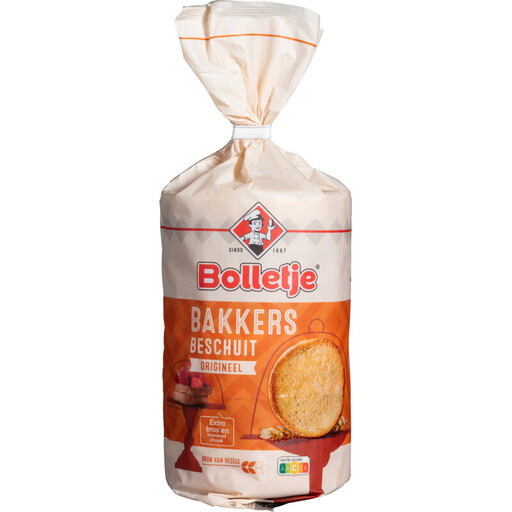 No image available
A classic pack of 10 if you don’t need 13 rusks for your special occasion.
If you have an allergy, check the current packaging for wheat, egg and any sesame information.
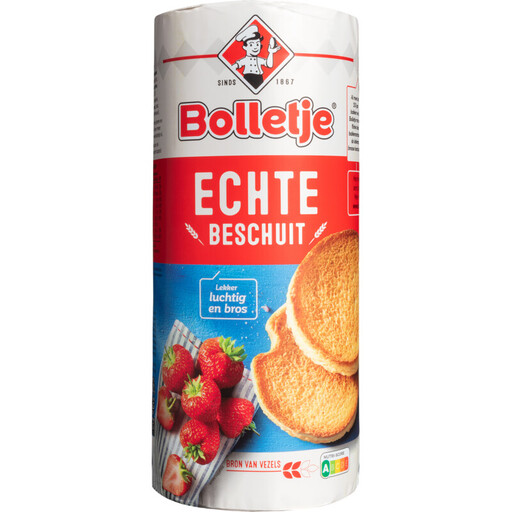 No image available
Consider this classic pack if you expect to use more than 10 rusks.
The pack contains 13 pieces. If you have an allergy, check the current allergen information, including for wheat, rye and egg.
 No image available
A wholemeal option if you’d like to buy 13 pieces rather than a smaller pack.
The product description lists wholemeal wheat flour. Compare the fibre content using the latest nutrition table and check the packaging if you have an allergy.
Don’t use ‘half loaf’ as a measure for a pack of rusks: the Dutch products described are listed by weight or number of pieces. For a smaller Vlaggetjesdag breakfast, you can compare a pack of 10 with the packs of 13 mentioned above.
Follow the storage instructions on the packaging and seal the pack securely after opening. For the Bolletje products described, the advice is to store them in a cool, dry, dark place in a sealed container after opening.
You can’t assume that every pack does. The Dutch agreement on baker’s salt, published in 2008, defines baker’s salt as iodised table salt for bread and other baked goods; it doesn’t confirm the ingredients of any individual pack of rusks. Check the latest label or ask the manufacturer.
Read the allergen information for the specific pack before serving it. The Bolletje varieties described differ in their ingredients and potential allergens, so don’t rely on the brand or the words ‘plain’, ‘wholemeal’ or ‘multiseed’ alone.