
If you’re serving a range of toppings
If you’re putting sweet and savoury toppings on the table, a classic or plain rusk is a good place to start. Even with a simple variety, check the ingredients and allergen information for your guests.


If you’re serving sweet and savoury toppings, start with a classic or plain rusk. For a more eye-catching plate, consider an extra-large variety; if your guests prefer wholegrain or seeds, choose an option to match. Don’t use ‘medium sliced’ as a guide to rusk size: compare the dimensions, ingredients and number of rusks, and check the latest allergen information before serving.
If you’re putting sweet and savoury toppings on the table, a classic or plain rusk is a good place to start. Even with a simple variety, check the ingredients and allergen information for your guests.
If the rusks will be on show on a plate or platter, look for a variety described as extra large. Match the toppings to the size, and check which allergens the variety contains.
A wholegrain or multiseed variety gives you a different base from a classic rusk. Compare the nutritional information if fibre matters, and check the allergen information on seeded varieties, particularly for sesame.
First decide what role the rusks will play at the table: a base for different toppings, a noticeable part of the presentation, or a variety that suits your guests’ ingredient preferences. Then check what each pack actually contains.
| What to consider | What to check when buying | Who it matters to |
|---|---|---|
| Toppings and flavour | Compare classic, plain and multiseed varieties with the toppings you plan to serve. | If I’m serving both sweet and savoury toppings, I want to choose a base that suits my menu. Versatility is the top priority for around 40% of consumers. |
| Presentation and size | Check whether the chosen variety is described as ‘extra large’ and count the number of rusks in each pack. | If the rusks will be a noticeable part of the plate, I want their size to suit the presentation. This is the main consideration for around 30% of consumers. |
| Ingredients and preferences | Read the ingredients and allergen information on each pack; compare the nutritional information if fibre is important. | Before serving a variety, I want to take account of my guests’ allergies and preferences for wholegrain or seeds. This is the top priority for around 30% of consumers. |
A simple flavour doesn’t tell you whether a product is suitable for someone with a food allergy. The classic and plain varieties described here may contain wheat and egg, among other ingredients.
Ask guests about any relevant allergies in advance, and check the ingredients list and allergen information on the pack you plan to serve.
According to the Netherlands Nutrition Centre, bakers aren’t required to use baker’s salt. So you can’t assume a product contains it just because it’s a rusk.
If baker’s salt is relevant to your choice, check the latest ingredient information for the specific product.
An extra-large rusk may suit a different presentation, while wholegrain or multiseed varieties have a different ingredient base. Neither description replaces checking for allergens or considering your guests’ preferences.
First decide what you want to use the rusks for, then compare the variety, pack and ingredients.
Albert Heijn notes that ingredient, nutritional and allergen information can change. For guests with a food allergy, it’s therefore important to check the information on the pack you receive.
Read the label again before putting the rusks on the table.
Bolletje offers classic rusks, Bakkers Beschuit and wholegrain and multiseed varieties. Compare the specific variety within the range rather than looking at the brand name alone.
Albert Heijn’s own-brand range includes plain, wholegrain and multiseed rusks.
PLUS offers plain rusks and a seeded variety, among other options.
This brand is sold at ALDI in plain and wholegrain varieties, in packs of 13.
Albert Heijn lists TastyBasics rusks made with sunflower and pumpkin seeds.
These rusks offer different starting points for your dinner: a classic base for toppings, an extra-large variety for presentation, and wholegrain or multiseed options. Choose according to your menu, and check each product’s packaging before serving it to your guests.
 No image available
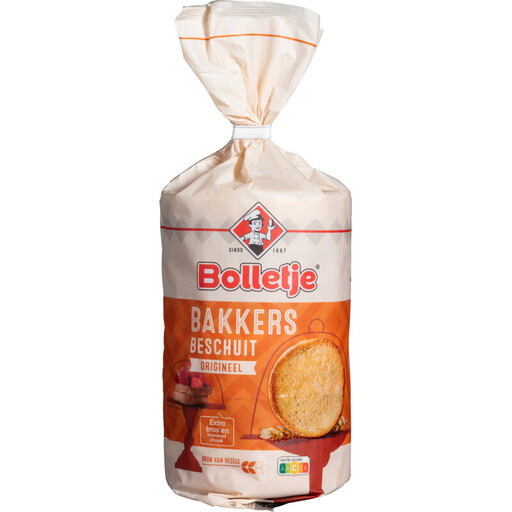
A wholegrain option if you’re also looking for a larger size for presentation.
The product information describes this variety as extra large and states that it contains 10 g of fibre per 100 g. The ingredients listed include wheat, oats, barley and sesame; check the latest packaging before serving it to guests.
 No image available
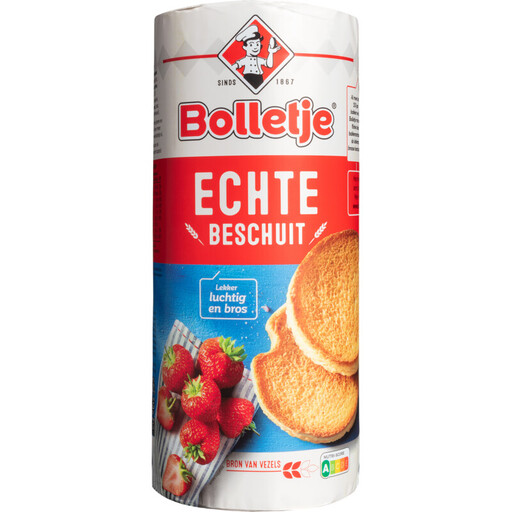
Consider this variety if you want the rusks to stand out on the plate.
Bolletje describes Bakkers Beschuit as extra large, light and crisp. This variety contains wheat and egg and may contain sesame; check the packaging before serving.
 No image available
An option to consider if you’d like to serve something with a distinctive seed base alongside classic toppings.
The variety described contains sunflower seeds, linseeds, sesame seeds and pumpkin seeds. As it contains wheat and sesame, it’s important to check the latest allergen information.
 No image available
A wholegrain option if that’s more important to your guests than a classic rusk base.
The product name states that the pack contains 13 pieces. The variety described contains wheat and egg and may contain sesame; read the latest packaging before serving.
 No image available
A classic rusk to compare when you’re putting a selection of toppings on the table.
The product name states that the pack contains 13 pieces. The variety described contains wheat, egg and rye and may contain sesame; check the latest packaging for your guests.
Don’t use ‘medium sliced’ as a defining feature when choosing rusks. For your dinner, it’s better to compare the type of rusk, the stated size, the ingredients and the number of pieces in each pack.
Ask about any relevant allergies and read the ingredients and allergen information on every pack you serve. The Netherlands Food and Consumer Product Safety Authority explains which allergens must be declared on labels; ingredients such as wheat, egg and sesame vary between rusk varieties.
No, not based on the product category alone. According to the Netherlands Nutrition Centre, bakers aren’t required to use baker’s salt. If this matters to your choice, check the ingredient information for the specific rusks.
Store the pack according to the instructions on the product and keep the rusks away from moisture. PLUS recommends keeping its plain variety in a cool, dry place, away from moisture and heat. Add toppings shortly before serving.