
If you want more room for sweet toppings
A larger size can be appealing if you’re adding jam, fruit or honey. Bolletje and PLUS use descriptions like these, but they don’t guarantee that a rusk will be thicker or stronger.


If you want more room for sweet toppings, start by looking for rusks described as ‘extra large’ or ‘large’. This doesn’t tell you how thick or break-resistant they are. Then consider wholegrain, fibre and ingredients, especially if allergens affect your choice.
A larger size can be appealing if you’re adding jam, fruit or honey. Bolletje and PLUS use descriptions like these, but they don’t guarantee that a rusk will be thicker or stronger.
For this choice, the ingredients and nutritional value of the specific variety matter. Classic, wholegrain and seed rusks aren’t interchangeable.
If gluten, egg or sesame matters to you, check the ingredients and allergen information on the pack you buy. These can vary between rusk varieties.
When choosing rusks for a sweet breakfast, first decide what matters most to you: room for toppings, nutritional information, ingredients or practical packaging.
| What to consider | What to check when buying | Who it matters to |
|---|---|---|
| Size for sweet toppings | Check whether the variety is described as ‘extra large’ or ‘large’. At home, see how it works with the amount of topping you usually use. | If I want to add fruit or a more generous layer of sweet topping, I’m mainly looking for more surface area. Around 33% of consumers would say this is their main need. |
| Wholegrain and fibre | Compare the ingredients and fibre per 100 g and per portion. For seed rusks, also consider the other nutritional information. | For my sweet breakfast, I mainly want to know how much fibre my chosen rusk contains. Around 27% of consumers would say this is their main reason for choosing. |
| Allergens and ingredients | Read the current ingredients list and allergen information, including any ‘may contain’ warnings. | If I need to avoid certain ingredients, the label matters more than the size. This would be the top priority for around 20% of consumers. |
| Pack size and storage | Compare the number of pieces and follow the storage instructions on the pack. | I want to choose a pack that suits how often I eat rusks and how I store them after opening. Around 20% of consumers would put this first. |
A size description doesn’t tell you how thick or break-resistant a rusk is. Even a large rusk may not perform as you expect with the toppings you use.
Use the size description to narrow down your options, then try the rusk at home with your usual amount of topping.
Wholegrain and seed varieties can differ in fibre, salt, ingredients and allergens. A product name doesn’t tell you everything about its nutritional value.
Compare the nutritional information per 100 g and per portion. If you have an allergy, read the full allergen information too.
Bolletje offers classic and wholegrain rusk varieties that you can compare for this breakfast.
PLUS offers, among other options, wholegrain rusks with seeds for comparison.
This ALDI own-label brand offers wholegrain rusks that you can compare by pack size.
TastyBasics offers rusks with sunflower seeds for consumers who also want to check the ingredients of a different variety.
This Joybuy selection includes classic, seed and wholegrain rusks for a breakfast with toppings. Compare the stated size and ingredients separately: a larger size isn’t proof of sturdiness.
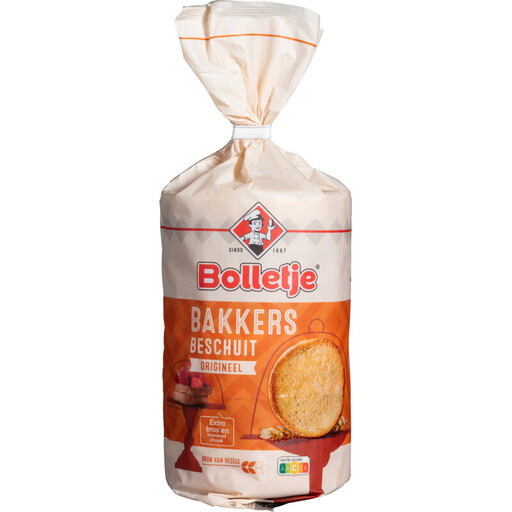 Image unavailable
For anyone who first looks for a larger size when choosing rusks for sweet toppings. ‘Extra large’ doesn’t guarantee thickness or sturdiness; if you have allergies, check the label for wheat, egg and possible traces of sesame.
 Image unavailable
A seed rusk for anyone who wants to compare ingredients as well as toppings for breakfast. If you like thick sweet toppings, don’t rely on a size description alone. If you have allergies, check the pack for cereals containing gluten and sesame.
 Image unavailable
For anyone looking for a wholegrain variety in a larger stated size. Joybuy’s product information states that it’s 100% wholegrain and contains 10 g of fibre per 100 g; ‘extra large’ doesn’t prove that it can support thick toppings. If you have allergies, check the current ingredients.
 Image unavailable
A wholegrain option for anyone who prioritises that over a larger stated size. The product name states that the pack contains 13 pieces; consider separately whether they suit the amount of sweet topping you use, and check the pack if you have allergies.
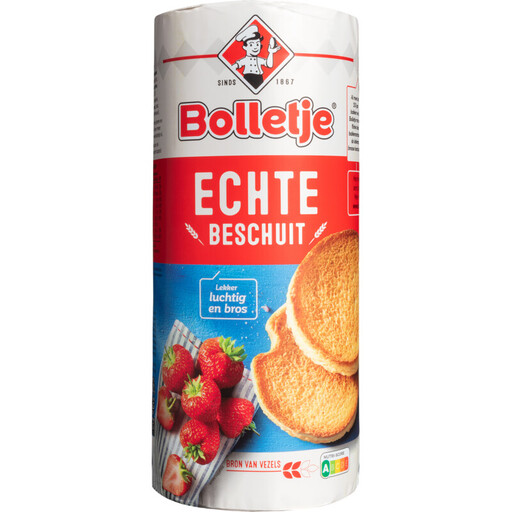 Image unavailable
A classic rusk option for breakfast with toppings, with 13 pieces according to the product name. Compare the size for yourself if you use lots of sweet toppings; if you have allergies, check the pack for cereals containing gluten, egg and possible traces of sesame.
If you’re mainly looking for more surface area, start with a variety described as ‘extra large’ or ‘large’. This doesn’t guarantee that the rusk is thicker or more break-resistant, so try it with the amount of topping you usually use.
Compare the nutritional information per 100 g and per portion for the varieties you’re considering. PLUS states that its wholegrain rusks with seeds contain 10.6 g of fibre per 100 g; also check the other nutritional information, ingredients and allergens.
Check the current ingredients and allergen information for every variety. The products discussed include cereals containing gluten, egg and sesame, among other allergens, but ingredients vary by product.
Check the ingredients list on the rusks you buy for baker’s salt or iodised salt. If iodine matters to your choice, don’t rely on the product category alone.
Seal the pack tightly and follow the storage instructions on it. When choosing, you can also consider how quickly you’ll use the rusks after opening.