For your first student food shop, a small pack of plain rusks is a practical choice if you have limited storage space and want a simple option for breakfast or lunch. If you prefer wholemeal or seeded rusks, compare the ingredients and nutritional information per 100 g, and check the allergens and storage instructions after opening for each variety. A description such as ‘medium-sliced’ isn’t a confirmed measurement you can use to choose rusks.
Who is this choice relevant to?
First-time shopper with limited storage space
You want a small pack for breakfast or lunch that you can seal properly. Jumbo lists plain rusks weighing 125 g with 13 pieces; PLUS also lists a 125 g pack of plain rusks. As well as checking the pack size, consider where you’ll store an opened pack to keep it dry.
Student keeping an eye on fibre
You’re choosing between plain, wholemeal and seeded rusks. Compare the nutritional information per 100 g, then consider how many you usually eat: the nutritional value per piece may be based on a different serving size.
Shopper checking ingredients or allergens
You need to know whether a particular pack suits your diet. Bolletje lists wheat, rye and egg among the allergens in its Echte Beschuit; sesame may also be a concern in seeded rusks. Check the allergen information for the variety you’re actually buying.
What should you look for when choosing?
First decide whether your priority is a small store-cupboard supply, the ingredients or a necessary ingredient check. Then compare packs within the variety that meets your needs.
| What to consider |
What to check when buying |
Who it matters to |
| Small supply and storage |
Check the weight, number of pieces and storage advice after opening. |
If I’ve just moved, I want a pack that fits in my limited storage space and can be sealed properly after opening. For around 38% of consumers, this practical choice about how much to stock is the top priority. |
| Wholemeal and fibre |
Compare the ingredients and grams of fibre per 100 g; check the serving size too. |
If you’re looking for wholemeal rusks or a different fibre content, don’t rely on the front of the pack alone. For around 37% of consumers, this is the most important factor in the ingredients. |
| Ingredients and allergens |
Read the current ingredients list and allergen information for the variety you’ve chosen. |
If wheat, egg or sesame is a deal-breaker for me, the information for that exact pack needs to be right before I choose it. For around 25% of consumers, checking these ingredients is the first concern. |
The Netherlands Nutrition Centre lists 0.8 g of fibre for one 10 g wholemeal rusk and 0.6 g for a 20 g serving of plain rusks. As these serving sizes differ, you can’t compare the figures per serving directly between two packs; compare the nutritional information per 100 g instead.
Common mistakes
-
Searching for ‘medium-sliced’ as if it were a rusk size
Dutch rusk ranges mainly distinguish between varieties such as plain, wholemeal and seeded. They don’t confirm a particular slicing thickness.
Compare the variety, pack size and ingredients listed. If thickness is important to you, check the packaging of the specific product rather than relying on the search term.
-
Assuming all packs with the same number of pieces are alike
The number of pieces on its own doesn’t tell you how much product is in the pack: weights can vary between packs and varieties too.
Check both the weight and the number of pieces when deciding how much to put in your first store-cupboard supply.
-
Overlooking allergens in wholemeal or seeded varieties
A variety name doesn’t tell you whether a product is suitable for a restricted diet. Bolletje lists wheat, rye and egg in its Echte Beschuit; sesame is also relevant to the seeded variety described by PLUS.
Check the current allergen information for each individual pack, even if you’ve bought that variety before.
-
Leaving an opened pack unsealed
Rusks can lose their quality and go soft. The Netherlands Nutrition Centre recommends keeping opened rusks in a kitchen cupboard for one month, provided they’re stored in a cool, dry, dark place and sealed properly.
Seal the pack properly after use, and follow the date and storage information on the label for unopened packs.
Brands to compare
These brands give you an idea of the rusk varieties you can compare. Always check the ingredients for each product: a feature of one variety doesn’t necessarily apply to the whole range.
Bolletje
Bolletje’s range includes Echte Beschuit, as well as wholemeal and seeded varieties.
- The different varieties give you a choice between a classic pack and a different combination of ingredients.
- Bolletje lists wheat, rye and egg as allergens in its Echte Beschuit; check the packaging of every other variety separately.
Albert Heijn
Albert Heijn’s rusk range includes plain and wholemeal varieties, as well as seeded options.
- You can compare pack sizes and ingredients across different varieties within one range.
- Albert Heijn notes that ingredients, nutritional values and allergen information may change, so check the current label.
Jumbo
Jumbo lists plain rusks weighing 125 g with 13 pieces, as well as other rusk varieties.
- The stated pack size makes it easy to compare the plain variety with other packs.
- The plain variety reviewed contains wheat and egg; if you have dietary restrictions, always check the allergen information on the pack you choose.
PLUS
PLUS lists a 125 g pack of plain rusks and a separate variety with seeds and kernels.
- The varieties give you a choice between plain rusks and a different combination of ingredients.
- Sesame and egg are among the ingredients to look out for in the seeded variety described; check the packaging before choosing it.
Lidl
Lidl Netherlands lists plain rusks weighing 125 g and notes that this product is available in store.
- The stated pack size helps you compare products by how much you want to keep in stock.
- If you have specific requirements around ingredients or allergens, read the label on the pack in store.
ALDI / Goud Gebakken
ALDI lists Goud Gebakken plain rusks with 13 pieces, as well as wholemeal rusks.
- The number of pieces in the plain pack is clearly stated.
- If you have specific requirements around ingredients or allergens, check the current packaging before choosing.
Rusks at Joybuy
These four Bolletje packs give you a choice of seeded, wholemeal and classic rusks for your first food shop. Compare the pack sizes, and check the current product packaging for ingredients and allergens.
 Image unavailable
Bolletje Multi-Seed rusks, 10 pieces
For anyone looking specifically for seeded rusks in their first food shop. Check the ingredients and allergens for this variety on the current packaging.
View at Joybuy
 Image unavailable
Bolletje Dark Whole Wheat rusks, 10 pieces
A wholemeal option for anyone who prioritises this type of ingredients. Compare the nutritional information per 100 g, and check the current allergen information if you have dietary restrictions.
View at Joybuy
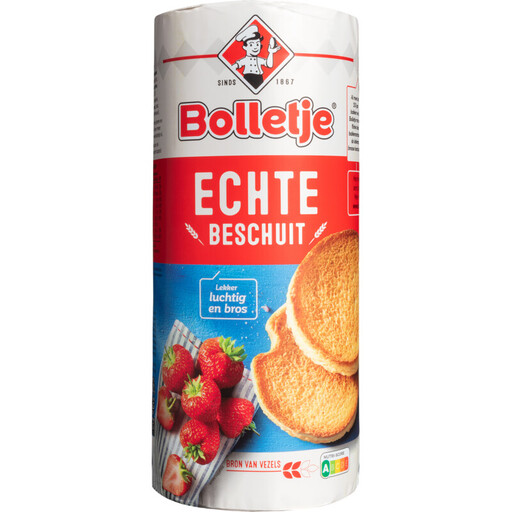 Image unavailable
Bolletje Real rusks, 13 pieces
For anyone looking for a classic pack of rusks for breakfast or lunch. When comparing it with smaller packs, check the pack size as well as the allergens.
View at Joybuy
 Image unavailable
Bolletje Wholegrain rusks, 13 pieces
A wholemeal pack for anyone looking for this variety in a 13-piece pack. Compare the nutritional information per 100 g with other wholemeal packs and check the allergens on the label.
View at Joybuy
Frequently asked questions
Can I choose rusks based on ‘medium-sliced’?
Don’t use that term as a standard rusk measurement. Jumbo explains that a rusk loaf is sliced after baking and baked again, while Dutch ranges mainly distinguish between varieties such as plain, wholemeal and seeded. If a particular thickness matters to you, check the product packaging itself.
How should I store an opened pack of rusks in my room?
Store opened rusks in a cool, dry, dark place and seal them properly. The Netherlands Nutrition Centre recommends keeping opened rusks in a kitchen cupboard for one month. If they’ve gone soft or smell or taste musty, their quality has deteriorated.
Are plain or wholemeal rusks automatically suitable for someone with an allergy?
No, the variety name alone doesn’t tell you which allergens a pack contains. Bolletje lists wheat, rye and egg in its Echte Beschuit; sesame may also be relevant in seeded rusks. Always read the current allergen information for the specific product before eating it.


