
Small households looking to reduce leftovers
You’re serving just a few rusks and want to know whether you’ll use the rest later. In that case, the number of rusks per pack and how you store them matter more than the term ‘half loaf’.


For a small Sinterklaas evening, check how many rusks are in a pack rather than searching for ‘half loaf’: the packs discussed here contain 10 or 13 rusks, while Jumbo describes its four rusk rolls as white wheat rolls. Choose a pack whose contents you’ll also use after the festivities, store opened rusks in an airtight container and check the label of your chosen variety if you have dietary or ingredient requirements.
You’re serving just a few rusks and want to know whether you’ll use the rest later. In that case, the number of rusks per pack and how you store them matter more than the term ‘half loaf’.
You’d like to eat rusks after Sinterklaas evening too, and are comparing plain, wholemeal and seeded varieties. Check the nutritional information per 100 g and the ingredients for the specific variety.
Before serving, you need to know which grains, egg or sesame a rusk contains or may contain. Check the label on the pack you buy.
Work out how many rusks you’ll use during the festivities and whether you’ll want to eat the rest later. Then compare the types of rusks and check any ingredients that matter to you.
| What to consider | What to check when buying | Who it matters to |
|---|---|---|
| Quantity and storage | Compare both the number of rusks and the pack weight. Consider whether you can store the rest in an airtight container and use them later. | I’m serving just a few rusks and don’t want the rest to go soft. For around 50% of consumers, reducing leftovers would be the main consideration. |
| Type of rusk and fibre | Compare plain, wholemeal and seeded varieties by their ingredients and nutritional information per 100 g. | If I’ll also eat the rusks for breakfast later, I want to compare the varieties and their fibre values. For around 30% of consumers, the type of rusk and its fibre content would be the deciding factors. |
| Allergens and ingredients | Check the ingredients, allergens and any ‘may contain’ statements on the exact pack. | Before serving rusks, I need to know which ingredients this variety contains. Checking allergens would be the main concern for around 20% of consumers. |
That search term may lead you to bread or rolls. Jumbo describes its product of four rusk rolls as white wheat rolls, not ready-to-eat rusks.
When comparing rusks, check the number of pieces, the pack weight and the packaging. Choose rusk rolls only if rolls are what you mean.
A pack of 10 doesn’t necessarily contain less than every pack of 13: you’ll need to compare the weight too.
Check both figures and think about when you’ll eat the remaining rusks. According to the Voedingscentrum, opened rusks keep for about a month if stored in a cool, dry, dark place in an airtight container.
A seeded variety may contain allergens that aren’t present in the rusks you’re used to. The multiseed and spelt varieties discussed here list sesame among their ingredients.
Check the ingredients and allergens on the specific pack before serving the rusks.
Bolletje offers regular rusks and a multiseed variety. Compare them by quantity, ingredients and nutritional information.
Jumbo offers plain and wholemeal rusks; its rusk rolls are a different type of product.
PLUS offers a plain rusk roll and a spelt rusk with seeds and kernels: different options for anyone comparing quantity and ingredients.
Goud Gebakken is ALDI’s rusk range, available in plain and wholemeal varieties.
These Joybuy options are Bolletje packs containing 10 or 13 rusks. For a small Sinterklaas evening, compare the number of pieces with how many you plan to use. To check the total quantity, look at the pack weight too, and read the label if you have ingredient requirements.
 Image unavailable
A seeded variety for anyone who’d also like to eat rusks after the festivities. The pack contains 10 pieces; also compare the pack weight and check the label for wheat and sesame.
 Image unavailable
A wholemeal variety for anyone who’d like to enjoy rusks after Sinterklaas evening too. The pack contains 10 pieces; compare the pack weight and, if you have allergen requirements, check the label for sesame as well.
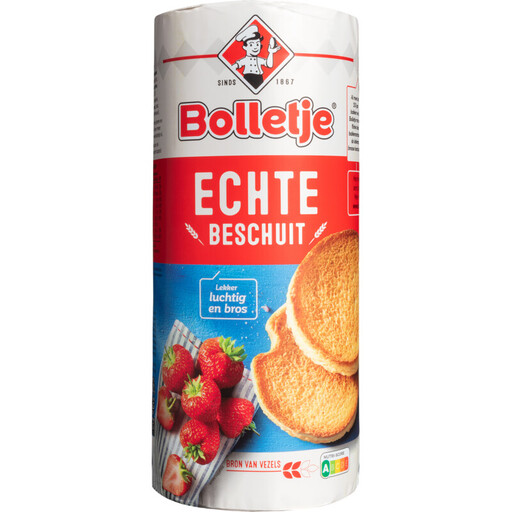 Image unavailable
A regular variety if you’d like to use the rusks after the festivities too. The pack contains 13 pieces; for a quantity comparison, check the weight as well, and read the label for grains, egg and possible traces of sesame.
 Image unavailable
A wholemeal variety for anyone comparing the nutritional information of rusks. The pack contains 13 pieces; check the fibre value and its unit on the packaging, and read the label for wheat, egg and possible traces of sesame.
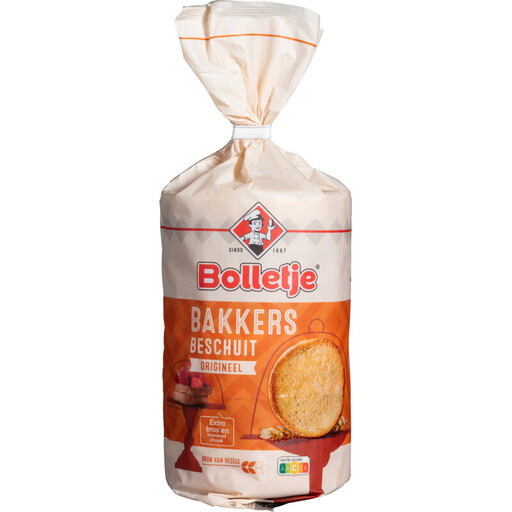 Image unavailable
A regular variety if you’d like to enjoy the rest at another time after the festivities. The pack contains 10 pieces; compare the weight too, as the number alone doesn’t tell you the total quantity. If you have allergen requirements, check the label for wheat, egg and possible traces of sesame.
Don’t use that term as your starting point when looking for rusks: compare the number of pieces and the pack weight instead. The packs discussed here contain 10 or 13 rusks; Jumbo describes its four rusk rolls as white wheat rolls.
Store opened rusks in a cool, dry, dark place in an airtight container. According to the Voedingscentrum, rusks keep for about a month in these conditions; check their quality before eating them too.
No, don’t assume that for every product. Check the ingredients on the specific pack if the type of salt used matters to your choice.
Check the allergen information for the specific variety, including any gluten-containing cereals and sesame. The multiseed and spelt rusks discussed here list sesame; also check for any ‘may contain’ warnings on the pack you’re serving.