For a small international dinner, start by choosing a pack size that suits both your guests and how you’ll use any leftovers. Rusks are sold in rolls or packs, rather than as a standard ‘half loaf’. Then compare plain rusks with wholemeal or multi-seed varieties, depending on the toppings you have in mind. If you’re catering for guests, always check the ingredients and allergens for the specific variety you choose.
Who is this choice relevant to?
Small groups looking to limit leftovers
If you’re only having a few guests over, it’s not just about how many rusks you’ll need that evening, but also whether you’ll use the rest of the pack later. The Voedingscentrum lists bread among the food groups most often wasted in Dutch households. Planning what you have in stock and how you’ll use it can help you make a more informed choice.
Fans of topped rusks
If you’re using rusks as a base for sweet or savoury toppings, you can choose between plain, wholemeal and multi-seed varieties. Check the ingredients and nutritional information for the specific variety if fibre or seeds are important to you.
Hosts who need to check ingredients
If wheat, gluten, egg or sesame could be an issue for your guests, read the current label on the exact pack you’re buying. Ingredients and allergen information vary between the varieties reviewed.
What should you look for when choosing?
First, work out how many rusks you need and what you’ll do with any leftovers. Then choose a type to suit your toppings, and finally check the label for your guests.
| What to consider | What to check when buying | Who is this important for? |
|---|
| Quantity and leftovers |
Compare the number of rusks and the net weight with your serving plan; check how to store the pack after opening. |
I want enough rusks for my guests, but I also want to make sure I use the rest of the pack. Around 50% of consumers put choosing a suitable quantity first. |
| Fibre and toppings |
Check the ingredients list for wholemeal flour and seeds, and compare fibre content on the same basis, such as per 100 g. |
I’m looking specifically for a wholemeal or multi-seed variety for my toppings, rather than a plain pack. Around 30% of consumers put this choice first. |
| Ingredients and allergens |
Read the current label for wheat, gluten, egg, sesame and any cross-contamination warnings. |
If my guests need to avoid certain ingredients, I’ll only choose a product after checking the ingredients in that variety. For around 20% of consumers, checking ingredients is the top priority. |
Common mistakes
-
Looking for a ‘half loaf’ of rusks
In the ranges reviewed, rusks are sold in rolls or packs, including options with 10 or 13 pieces. That means a half loaf of bread isn’t a useful way to compare these products.
Check the number of pieces and the net weight, then decide how many rusks you want to serve each guest.
-
Forgetting to account for the rest of the pack
If you won’t finish a pack during dinner, you’ll need a practical plan for using the rest later. The Voedingscentrum recommends checking what you already have in stock before shopping.
Plan how you’ll use the remaining rusks and follow the storage instructions on the pack once it’s open.
-
Assuming wholemeal and multi-seed mean the same thing
These terms don’t tell you the same thing about ingredients or nutritional value. For example, PLUS lists 49% wholemeal wheat flour and 10.6 g of fibre per 100 g for the wholemeal rusks with seeds reviewed here. Those figures apply to that product, not to every multi-seed pack.
Compare the ingredients, nutritional information and allergens for the varieties you’re considering, rather than relying on the front of the pack alone.
-
Assuming ‘salt’ means the product contains iodine
A mention of salt doesn’t confirm that the rusks are made with iodised baker’s salt. The Voedingscentrum says that bakers aren’t required to use baker’s salt.
Only make claims about the iodine content of a specific product if it’s clearly stated on the label or confirmed by the manufacturer.
Brands to consider
Bolletje
The Bolletje varieties reviewed include plain rusks, extra-large baker’s rusks and multi-seed rusks. Compare each pack by size, number of pieces and ingredients.
- Jumbo lists 13 pieces for Bolletje Echte Beschuit; Albert Heijn lists 10 pieces for Bakkers Beschuit Origineel.
- Check the label for each variety: wheat, egg and sesame don’t appear in the same combination in every rusk product reviewed.
PLUS
The PLUS range reviewed includes both plain rusks weighing 125 g and wholemeal rusks with seeds weighing 230 g.
- For the wholemeal variety reviewed, PLUS lists 49% wholemeal wheat flour and 10.6 g of fibre per 100 g.
- The two packs differ in weight and ingredients. If you’re catering for guests, check the allergen information for the variety you choose.
Goud Gebakken
ALDI lists plain and wholemeal rusks from Goud Gebakken, both sold in packs of 13.
- The number of pieces makes it easy to compare the pack with the number of servings you’ve planned.
- Check the ingredients, allergens and nutritional information on the current packaging before choosing between the varieties.
Lidl huismerk
Lidl lists plain rusks weighing 125 g, a pack size you can compare with your serving plan.
- The 125 g weight gives you a specific size to work with for the plain rusks.
- To compare ingredients, allergens or nutritional value, check the packaging of the product in store.
Rusk products on Joybuy
These Bolletje packs offer a choice of 10 or 13 pieces, including multi-seed and wholemeal varieties. Start by using the number of pieces to plan your servings, and check the packaging if net weight or ingredients are also important.
 Image unavailable
Bolletje Multi-Seed Rusk, 10 pieces
An option if you’re looking for a multi-seed variety to serve with your toppings. The pack contains 10 pieces; compare the net weight with your serving plan too. If you’re catering for guests, check the current label for sesame and cereals containing gluten.
View on Joybuy
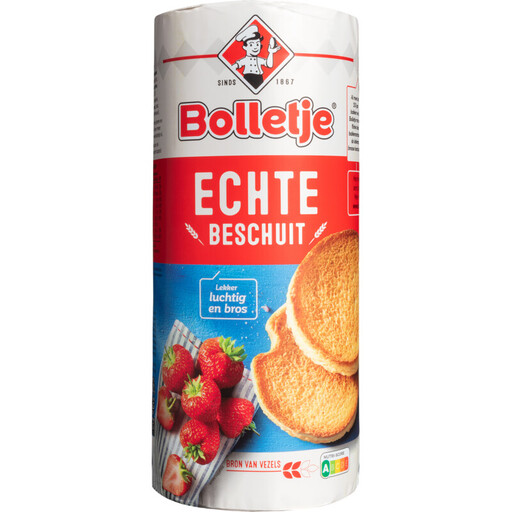 Image unavailable
Bolletje Real Rusk, 13 pieces
A pack of 13 pieces to compare with the number of guests and how you plan to use any leftovers. Check the net weight and current label too: wheat, gluten and egg are listed, and sesame may be present.
View on Joybuy
 Image unavailable
Bolletje Wholegrain Rusk, 13 pieces
A wholemeal option if you’d like to use it as a base for your toppings. The pack contains 13 pieces; check the net weight and only compare fibre once you’ve checked the unit used in the nutritional information. Wheat, gluten and egg are listed; sesame may be present.
View on Joybuy
 Image unavailable
Bolletje Dark Whole Wheat Rusk, 10 pieces
A wholemeal option with 10 pieces if that suits your group. Check the net weight to see how much you’re getting, and if relevant to your guests’ allergies, read the current label for sesame and cereals containing gluten.
View on Joybuy
Frequently asked questions
Is ‘half loaf’ a common size for rusks?
No. When choosing rusks, go by the roll or pack size listed rather than looking for a ‘half loaf’. The products reviewed are sold in packs of 10 or 13 pieces, among other sizes. Use the number of pieces and net weight to find a smaller quantity.
How should I store rusks once the pack is open?
Follow the instructions on the pack you choose. The Bolletje products reviewed recommend storing them in a cool, dry, dark place in a sealed container once opened. Plan when you’ll use the remaining rusks too.
Which allergens should I check for my guests?
Check the current label for the exact variety for wheat, gluten, egg and sesame, as well as any cross-contamination warnings. This information varies between rusk products.
Does ‘salt’ on the label mean the rusks contain iodine?
No. The word ‘salt’ doesn’t confirm that iodised baker’s salt has been used. According to the Voedingscentrum, bakers aren’t required to use baker’s salt. For information about a specific product, check the packaging or ask the manufacturer.


