Choose rusks for a secondary school lunch based on how many your household actually uses, rather than the ‘half loaf’ label: Dutch retailers offer packs of 10 and 13, among other sizes. Also compare wholegrain status, fibre and allergens for each pack, and plan the rest of the lunch around what the pupil takes to school and eats.
Which choice suits you?
Small household that eats rusks occasionally
A pack should suit the number of rusk lunches you actually eat. Albert Heijn stocks Bolletje packs of 10 and 13, for example. Compare the number in the pack with how many you use at home, and check how to store the opened pack. A smaller pack does not automatically prevent waste.
Pupil for whom wholegrains and fibre matter
If you choose rusks as the basis of a lunch, check the pack to see whether they are wholegrain and how much fibre the nutritional information lists per 100 g. Consider the toppings and anything else going into the lunch, too: the choice of rusk alone does not tell you what the whole lunch contains.
Household that needs to check allergens and school rules
Check the current ingredients list for the chosen variety for any allergens relevant to the pupil, including cereals containing gluten and other ingredients such as egg or sesame. If necessary, ask the school what rules it has for food brought in from home.
What should you look for when choosing?
First, work out how many rusks are likely to be eaten. Then compare the nutritional information and check the ingredients and any school rules before packing the lunch.
| What to consider |
What to check when buying |
Who is this important for? |
| Pack size and waste |
Compare the number of rusks with how many you expect to use, and check the storage advice for after opening. |
If rusks only go to school occasionally, I want to be able to finish an opened pack before the quality deteriorates. For around 42% of consumers, finding a pack size that suits how they use it comes first. |
| Wholegrains and fibre |
Check whether the product is labelled wholegrain and compare the fibre per 100 g in the nutritional information for the variety you choose. |
When rusks form the basis of a lunch, I want to know what they contain before choosing toppings and other foods. Wholegrain status and fibre are the first considerations for around 33% of consumers. |
| Allergens and school rules |
Read the current allergen information on the pack and, if there are relevant dietary restrictions, ask about the school’s rules. |
If certain ingredients need to be avoided, I want to know what this variety contains and what rules apply at school before packing it. For around 25% of consumers, this is the main factor limiting their choice. |
Common mistakes
-
Treating ‘half loaf’ as a set rusk pack size
This search term does not tell you how many rusks are in a pack. Albert Heijn stocks packs of 10 and 13, for example. For a small household, the number of rusks is more useful than the English label.
Count how many rusks you usually eat each week, then compare the number in the pack and the storage advice on the packaging.
-
Assuming wholegrain or seed-rich means allergen-free
A name that mentions wholegrains or seeds does not mean other ingredients are absent. PLUS lists wheat, barley, oats, egg and sesame among the ingredients in its wholegrain rusks with seeds.
Check the current ingredients and allergen information for every variety you buy. The Netherlands Food and Consumer Product Safety Authority says that allergens which must be declared should be clearly listed among the ingredients.
-
Judging the rusk alone, rather than the whole lunch
The toppings and anything else the pupil takes with them also affect what they eat during the school day. The Netherlands Nutrition Centre lists wholegrain products, vegetables and fruit among the possible components of a school meal.
First choose a rusk variety that suits your household and the pupil’s ingredient needs. Then consider which toppings and extras they will actually take with them.
-
Assuming a product contains iodine based on its name
The word ‘rusk’ does not tell you which salt was used in a particular variety. The Netherlands Nutrition Centre points out that using baker’s salt in bread is not compulsory, so do not assume rusks contain iodine based on the product type either.
If it matters for your product comparison, check the ingredients list to see whether baker’s salt or iodised salt is mentioned.
Brands compared
Compare specific varieties, rather than brands in isolation: pack sizes, ingredients and nutritional information can vary within the same range.
Bolletje
Bolletje offers plain, wholegrain and high-fibre rusk varieties. Albert Heijn stocks packs of 10 and 13, as well as a separately wrapped variety in a pack of 40.
- The range of pack sizes and varieties makes it possible to compare them by how you use them and their nutritional information.
- Check allergens for each variety. The information for the individually wrapped rusks does not automatically apply to other Bolletje packs.
AH
Albert Heijn’s own brand includes plain and wholegrain rusks in packs of 13.
- You can compare plain and wholegrain varieties within the same range while the stated number of rusks stays the same.
- Read the label on the pack you buy before use. Albert Heijn also recommends doing this with its online product information.
PLUS
PLUS offers wholegrain rusks, including a variety with seeds. According to PLUS product information, the seeded variety contains 49% wholemeal wheat flour and 10,6 g of fibre per 100 g.
- The listed ingredients and fibre content give you specific details to compare when considering this seeded variety.
- PLUS lists wheat, barley, oats, egg and sesame for this variety. Check that the current pack suits the pupil’s dietary needs.
Goud Gebakken
ALDI Nederland lists plain and wholegrain rusks from Goud Gebakken, both in packs of 13.
- With the same number in each pack, you can choose between plain and wholegrain without pack size affecting your decision.
- Check the ingredients and allergens on the pack before deciding whether a variety is suitable for the pupil.
Rusk options at Joybuy
These Bolletje varieties are listed in packs of 10 or 13. Compare the variety shown with how many you actually use, and check the nutritional information and ingredients on the pack you buy.
 Image unavailable
Bolletje dark wholegrain rusks, 10 pieces
An option to compare if your household does not use many rusks and you are looking for a wholegrain variety.
The product name states that the pack contains 10 pieces. Check the current label for fibre per 100 g and any allergens relevant to the pupil.
View at Joybuy
 Image unavailable
Bolletje wholegrain rusks, 13 pieces
A wholegrain option if a pack of 13 suits the number of lunches for which you use rusks at home.
The product name states that the pack contains 13 pieces. Compare the fibre per 100 g and read the allergen information on the pack you buy.
View at Joybuy
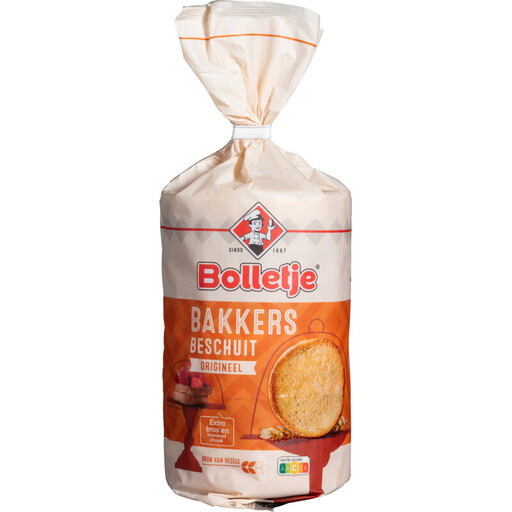 Image unavailable
Bolletje original rusks, 10 pieces
An option to consider if a pack of 10 suits how your household uses rusks better than a larger pack.
The product name states that the pack contains 10 pieces. Do not assume that ‘original’ means wholegrain or tells you about allergens; check the label for that information.
View at Joybuy
 Image unavailable
Bolletje multiseed rusks, 10 pieces
A seeded variety to compare if the pupil likes this type of rusk as the basis of a lunch.
The product name states that the pack contains 10 pieces. Check the number on the pack before comparing its size with other varieties. Also read the ingredients if sesame or other allergens are relevant to the pupil.
View at Joybuy
Frequently asked questions
Can I search for ‘half loaf’ if I want a small pack of rusks?
It is better to choose by the stated number of pieces. Albert Heijn stocks packs of 10 and 13, among other sizes. Compare those numbers with how many you use at home, and check how to store the pack after opening.
Does wholegrain rusk automatically make a suitable school lunch?
No. The wholegrain label describes only the rusk variety you have chosen, not the whole lunch. Compare the nutritional information per 100 g and consider the toppings and anything else the pupil takes with them. The Netherlands Nutrition Centre includes wholegrain products, vegetables and fruit among its examples of foods for a school meal.
When should I check allergens in rusks?
Check them before packing the lunch if the pupil’s dietary needs or school rules make ingredients important, and check the specific variety you are buying. The Netherlands Food and Consumer Product Safety Authority says that allergens which must be declared need to be listed among the ingredients. The words ‘wholegrain’ or ‘with seeds’ are no substitute for checking.
Does every pack of rusks contain iodine because of baker’s salt?
You cannot tell that from the product type. Check the ingredients list to see whether baker’s salt or iodised salt is mentioned for the variety you have chosen. Do not assume it contains iodine without product-specific nutritional information.


