
Road-trippers comparing portions
You’re taking several snacks and want to know how many rusks are in a roll. Compare the net weight too: a 125 g pack doesn’t necessarily contain the same number of pieces as another roll.


Start with plain rusks if you mainly want a roll with a clearly stated number of pieces for your road trip. Choose wholemeal or seeded rusks if the ingredients matter more to you; compare the nutritional information and ingredients on the exact pack you’re buying. Whichever type you take, protect the rusks from moisture and breakage once opened.
You’re taking several snacks and want to know how many rusks are in a roll. Compare the net weight too: a 125 g pack doesn’t necessarily contain the same number of pieces as another roll.
You want to compare the ingredients in plain, wholemeal and seeded rusks. Check the fibre per 100 g and the size of each rusk or portion.
Check the label on your chosen roll before setting off. The plain and seeded products described here include, among other things, cereals containing gluten and egg; sesame is also listed for one seeded variety.
First decide whether the number of pieces, ingredients, allergens or ease of transport matters most to you. Then check the details on the pack you’ll actually be taking with you.
| What to consider | What to check when buying | Who it matters most to |
|---|---|---|
| Pack size and portions | Compare the net weight and number of pieces per roll. | If I’m packing snacks for several stops, I want to know how many rusks I can take. Pack size is the top priority for around 25% of shoppers. |
| Fibre and ingredients | Check the fibre per 100 g and, if listed, per rusk. See whether it’s wholemeal rusk or rusk with seeds. | If you want wholemeal or seeded rusks, the product name alone isn’t enough to compare nutritional values. Around 25% of shoppers give these ingredients top priority. |
| Allergens | Check the ingredients and the ‘contains’ and ‘may contain’ statements on the pack you’ve chosen. | If someone needs to avoid certain allergens while travelling, I need to check the exact variety before packing it. This is a top priority for around 25% of shoppers. |
| Taking them along and storage | Read the storage instructions and, once opened, keep the pack dry and tightly sealed. | I want to stop the rusks going soft or breaking before we eat them. For around 25% of shoppers, transport is the main concern. |
The PLUS wholemeal seeded rusks described here list cereals containing gluten, egg and sesame, among other ingredients. Plain rusks can contain allergens too.
Read the ingredients and allergen information for the exact roll, even if you’re familiar with another variety from the same brand.
Rusks are brittle. Storage advice from brands including Albert Heijn and PLUS highlights the importance of keeping them dry and sealing the pack properly after opening.
Use a sealable tin or sturdy box, and keep toppings separate until you’re ready to eat.
These brands offer different types of rusks. The features listed apply to the specific products described, not every variety from each brand.
ALDI lists Goud Gebakken plain and wholemeal rusks in packs of 13.
The range includes AH plain and wholemeal rusks, as well as varieties from Bolletje.
Jumbo has its own plain rusks, as well as other varieties.
PLUS offers plain rusks and a wholemeal variety with seeds and kernels.
Lidl lists plain rusks weighing 125 g and states that this product is only available in store.
Bolletje offers Echte Beschuit and other varieties of rusks.
These products include plain rusks and wholemeal or seeded varieties to compare for your road trip. Pay particular attention to the stated number of pieces or net weight; always check the label for ingredients and allergens for your chosen variety.
 Image not available
A wholemeal variety if you’re looking for a roll with a stated number of pieces to take with you.
Pack: 13 pieces. Check the ingredients and allergens on the label.
 Image not available
A dark wholemeal variety for anyone who wants to take this type of rusk along and compare packs by the piece.
Pack: 10 pieces. Check the label for the ingredients and allergens in this variety.
 Image not available
A variety with several types of seed, if the ingredients are important to you when choosing rusks for the road.
Pack: 10 pieces. If you have allergies, check the full ingredients list and allergen information.
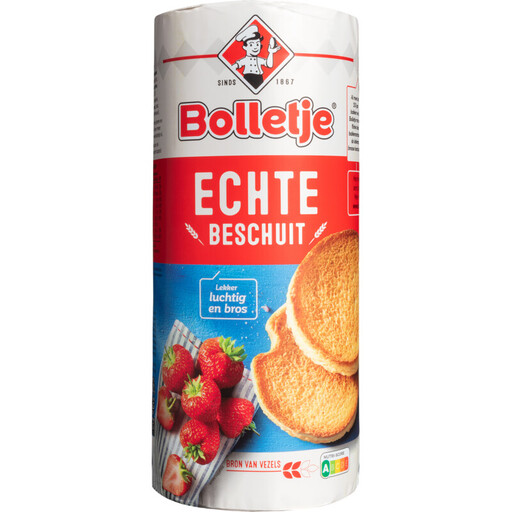 Image not available
A roll of rusks with a stated number of pieces, so you can plan portions for your journey.
Pack: 13 pieces. Check the label for the ingredients in this variety.
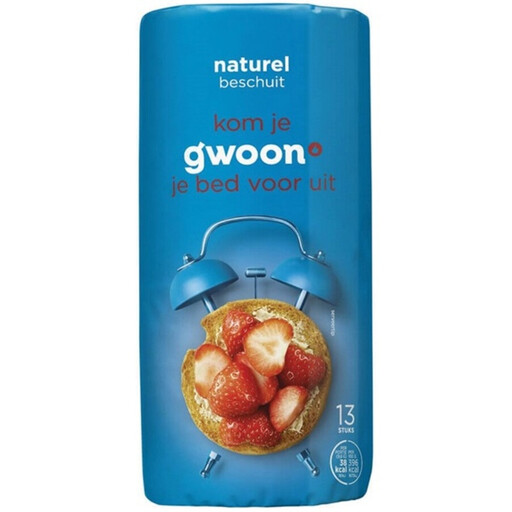 Image not available
A plain variety if you want to compare rusks with other rolls by net weight.
Net weight: 125 g. Check the pack for the number of pieces and allergen information.
Take an opened roll in a dry, airtight tin or sturdy box. Albert Heijn advises storing its plain rusks in a dry place and resealing the pack after opening. Keep toppings separate until you’re ready to eat.
Check the ingredients and allergen information for the exact variety. The plain products described here list wheat or other cereals containing gluten, as well as egg; sesame is also included in the PLUS wholemeal seeded variety described here.
Compare the nutritional information per 100 g, and also look at portion size and ingredients. The Voedingscentrum gives an average of 0,8 g of fibre for a 10 g piece of wholemeal rusk; check the pack for the value for a specific roll.
Check the ingredients for the specific product; the word ‘rusk’ doesn’t tell you which salt has been used. If you have a dietary restriction that makes this relevant, read the current label before taking the roll with you.