
Hosts with guests who like to have a choice
If you want guests to choose for themselves, a pack of plain rusks and a pack of wholemeal rusks offer two familiar options. Albert Heijn and Jumbo both include these varieties in their rusk ranges.


If you’re expecting guests with different preferences, serve plain and wholemeal rusks separately rather than choosing one type for everyone. Rusks with seeds can offer an extra choice, but check the ingredients and allergen information on each pack before serving.
At a shared tasting, there’s no need for everyone to choose the same rusks. Whether you want a familiar plain option, wholegrain cereals or a base for toppings will help you decide which types to serve alongside each other.
If you want guests to choose for themselves, a pack of plain rusks and a pack of wholemeal rusks offer two familiar options. Albert Heijn and Jumbo both include these varieties in their rusk ranges.
If your guests look for wholegrain cereals or pay attention to fibre content, standard wholemeal rusks and varieties with seeds offer different options. Compare the nutritional information per 100 g and check the allergen information for the pack you choose.
Plain rusks can make a simple base for sweet or savoury toppings. Plain doesn’t mean allergen-free: Bolletje lists wheat, rye and egg among the ingredients in its Echte Beschuit.
First decide whether you want guests to have a choice between plain and wholemeal. Then compare the nutritional information, number of rusks and allergens for the packs you plan to serve.
| What to consider | What to check | Who it matters to |
|---|---|---|
| Choice of varieties | Decide whether you want to serve both plain and wholemeal rusks, and check how many are in each pack. | If my guests have different preferences, I don’t want to limit them to one type of grain. Around 40% of consumers would put having a choice first. |
| Wholemeal and fibre | Compare the ingredients and fibre per 100 g for the exact variety; if you’re choosing rusks with seeds, check the allergen information too. | I choose wholemeal deliberately or pay attention to fibre, but I want to know which ingredients that involves. For around 30% of consumers, this would be the main consideration. |
| A base for toppings | Choose a flavour that goes with your toppings and check the ingredients, even for plain rusks. | When the toppings are the star, I want rusks that won’t overpower their flavour. Around 30% of consumers would prioritise a neutral base. |
Wholemeal rusks may contain cereals containing gluten. PLUS lists wheat, barley and egg among the ingredients in its standard wholemeal variety; oats and sesame are also relevant for the seed variety reviewed.
Check the allergen information on every pack you choose and keep it available when serving.
According to the Netherlands Nutrition Centre, bakers aren’t required to use baker’s salt. You can’t tell whether a particular rusk contains it just from the product category.
If a guest needs to know whether baker’s salt is present, check the current ingredients list or ask the manufacturer.
The texture and flavour of seeds may work differently with your toppings than plain or standard wholemeal rusks. Sesame is also an allergen to look out for in the variety you choose.
Serve rusks with seeds separately and make it clear which pack they come from.
Bolletje offers Echte Beschuit, wholemeal rusks and varieties with different combinations of cereals or seeds.
Albert Heijn’s range includes plain, wholemeal, multiseed and spelt rusks.
Jumbo stocks plain, wholemeal and multigrain rusks, alongside rusks from other brands.
PLUS offers standard wholemeal rusks and a larger wholemeal variety with seeds and kernels.
Lidl lists 140 g packs of wholemeal rusks as a product available in store.
Aldi lists Goud Gebakken wholemeal rusks in a pack of 13.
These three packs offer one plain option and two wholemeal options for a platter with a choice of flavours. Choose each pack according to the variety you want, and check the current packaging when serving.
 No image available
An option for guests who prefer dark wholemeal rusks. Serve a separate plain variety alongside them if you’d like to offer both flavours.
If anyone has allergies, check the current packaging for ingredients including wheat, oats, barley and sesame.
 No image available
This pack of wholemeal rusks is another option to serve alongside plain rusks when guests can choose between two types.
The pack contains 13 rusks. If anyone has allergies, check the current information for wheat, egg and possible traces of sesame.
 No image available
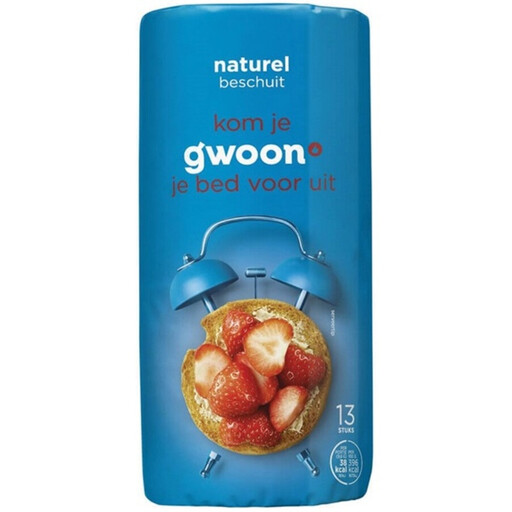
This pack of plain rusks offers an alternative to wholemeal. Try them with your toppings to see if the flavour works: the product description also mentions a sweet taste.
If anyone has allergies, check the current packaging for milk, egg and cereals containing gluten.
Offering two types gives guests more choice if you don’t know what they prefer. Albert Heijn and Jumbo sell plain and wholemeal as separate varieties, so you could serve them alongside each other rather than assuming one pack offers both flavours.
Check the current allergen information for each pack individually and keep the packaging by the buffet. Depending on the product, allergens may include cereals containing gluten, egg and sesame. Plain and wholemeal don’t mean allergen-free.
No, you can’t assume that just because something is called a rusk. The Netherlands Nutrition Centre says baker’s salt isn’t compulsory; if its presence matters, check the ingredients list on the pack you choose.
Store the packs in a dry place and follow the instructions on the packaging. For the standard wholemeal rusks reviewed, PLUS recommends protecting them from moisture and heat; for its seed variety, it recommends a cool, dry and dark place.