
Budget-conscious lunch shoppers
If you regularly pack rusks for nursery, you’ll want to choose a suitable pack, comparing own-brand options, pack size and the variety shown on the label.


Start with the nursery’s lunch arrangements: a supermarket own-brand plain rusk is a straightforward choice if you’re on a budget, while wholemeal rusks suit a preference for wholegrain foods. If a child has an allergy, check the current packaging and the nursery’s arrangements before buying. The variant or brand name alone cannot tell you whether it’s suitable for that child.
If you regularly pack rusks for nursery, you’ll want to choose a suitable pack, comparing own-brand options, pack size and the variety shown on the label.
For them, it matters whether the rusk they choose is a wholemeal variety and fits in with the nursery’s lunch options. The Voedingscentrum includes wholemeal rusks on its list for school lunches; that list doesn’t replace a nursery’s own arrangements.
They need to check the ingredients and allergen information on the current packaging against the arrangements for the child and nursery in question. A familiar brand name is no substitute for this.
First, check that the rusks are suitable for any allergies and comply with the nursery’s arrangements. Then choose between plain and wholemeal, and compare the pack sizes of the options that suit your lunch needs.
| What to consider | What to check when buying | Who is this most important to? |
|---|---|---|
| Budget and pack size | Compare the number of rusks or the weight of packs containing the same variety. | For regular lunches, I want to choose a pack that fits my budget without overlooking how much it contains. For around 33% of consumers, this budget consideration comes first. |
| Wholemeal option | Check whether the packaging says wholemeal and consider how the variety fits in with the lunch options. | I’d rather pack wholemeal rusks if they suit what the child eats and the lunch arrangements. Around 27% of consumers put this preference for wholemeal first. |
| Allergens and nursery arrangements | Read the current ingredients and allergen information, and check with the nursery. | If a child has an allergy, I want to know before packing whether these particular rusks comply with the arrangements for that child. For around 27% of consumers, this check is their main concern when buying. |
| Availability | Check which plain and wholemeal varieties are available at the shop where you do your food shopping. | I want to be able to pick up a suitable variety during my usual food shop. Availability is the first consideration for around 13% of consumers. |
Rusk packs can vary in weight and number of pieces. So, comparing two packs without checking what they contain tells you little about how many rusks you’re getting.
Compare the weight or number of pieces of the same variety, and check whether it suits the lunch arrangements.
PLUS lists wheat and egg among the allergens in its plain rusks. Which allergens matter depends on the child and the product you choose.
Check the current ingredients and allergen information when you buy, and discuss your choice with the nursery.
According to the Voedingscentrum, bakers aren’t required to use bakers’ salt. So don’t assume it has been used just because the product is a rusk.
If bakers’ salt matters to your choice, check the packaging of the specific rusks.
The supermarket ranges reviewed include several Bolletje rusk varieties, such as plain, wholemeal and multiseed.
Albert Heijn sells plain and wholemeal rusks under its AH own brand.
PLUS sells plain and wholemeal rusks under its own name.
ALDI lists plain and wholemeal Goud Gebakken rusks in packs of 13.
Here, Jumbo is a retailer to consider, not a rusk brand: the range reviewed includes several Bolletje varieties.
These Bolletje rusks vary by type and number of pieces. For a nursery lunch, check the current packaging and the nursery’s arrangements for each product.
 Image unavailable
An option to consider if wholemeal rusks fit the lunch arrangements. The pack contains 13 pieces; if there are any allergies, check the current packaging before packing them.
 Image unavailable
A multiseed option if you want to include this type of rusk in your lunch choice. The pack contains 10 pieces; check the current ingredients and allergen information if the recipe matters for a child.
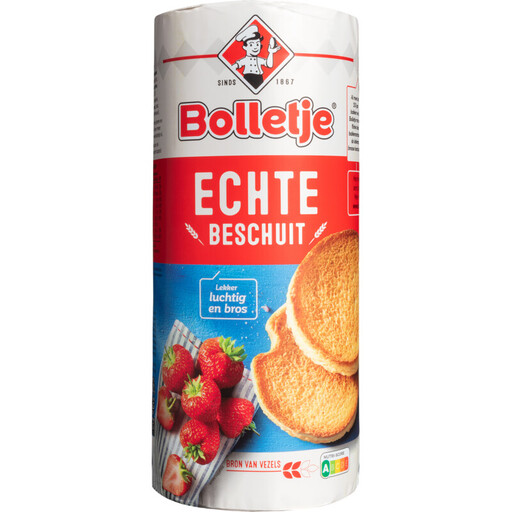 Image unavailable
A plain rusk variety to compare with the wholemeal and multiseed options. The pack contains 13 pieces; as always, check the current label against any allergy and nursery arrangements.
Not without checking the specific product and the arrangements for that child. PLUS plain rusks list wheat and wheat gluten, so check the current ingredients and allergen information and discuss your choice with the nursery.
Yes. Ask your nursery what its arrangements are for packed lunches and allergens. The Dutch government lists food as a matter covered by childcare policies; you’ll need to ask your own nursery about its specific arrangements.
Choose a wholemeal variety if it suits your preference for wholegrain foods, what the child eats and the nursery’s arrangements. The Voedingscentrum includes wholemeal rusks on its list for school lunches; that doesn’t mean plain rusks are automatically unsuitable for every nursery lunch.
No, don’t assume every rusk contains bakers’ salt. According to the Voedingscentrum, bakers aren’t required to use it; if bakers’ salt matters to your choice, check the packaging of the product you’ve chosen.
First compare the same type of rusk, then check the weight or number of pieces on the packaging. This keeps differences between, for example, plain and wholemeal varieties separate.