
Anyone organising a birth celebration or a visit to celebrate a new arrival
You want to serve the familiar rusk topped with muisjes. Your choice mainly comes down to the type of muisjes, the rusk base and any ingredients that matter to your guests.


For a birth or a visit to celebrate a new arrival, rusks with muisjes are part of Dutch tradition; chocolate sprinkles are a separate option for anyone who would like to serve a different flavour too. Choose your rusks based on their size, ingredients and allergens. If baker’s salt matters to you, check the label rather than assuming that all rusks contain it.
You want to serve the familiar rusk topped with muisjes. Your choice mainly comes down to the type of muisjes, the rusk base and any ingredients that matter to your guests.
You want to offer a chocolate flavour alongside muisjes or as a deliberate alternative. In that case, the type of sprinkles and the ingredient and allergen information matter more than the association with a birth celebration.
You’ve already chosen the topping but are unsure whether to go for regular or wholemeal rusks. Compare the size, nutritional information per 100 g and allergens for the exact product.
First decide whether the occasion calls for muisjes or whether you’d like to offer a chocolate option. Then compare the rusks you’ll serve the topping on. Wholemeal is a choice of base, not a replacement for the topping.
Choose these if: you want to serve the traditional rusk at a birth celebration or when visiting a new arrival; De Ruijter associates muisjes with this tradition.
Bear in mind: muisjes are sugar-coated aniseed, not a chocolate topping. If you have allergies, check the ingredients of the variety you choose.
Choose these if: you’d like to offer a chocolate flavour, perhaps as an additional option alongside muisjes.
Bear in mind: chocolate sprinkles don’t have the same role in the birth tradition. The Netherlands Nutrition Centre describes chocolate sprinkles as a topping high in sugar and saturated fat.
| What to consider | What to check when buying | Who is this important to? |
|---|---|---|
| Topping for the occasion | Choose between aniseed-flavoured muisjes and chocolate-flavoured sprinkles; with muisjes, also check which variety you want. | When I serve rusks for a birth celebration, I want the topping to feel right for the occasion. For around 45% of consumers, choosing a topping that suits the occasion comes first. |
| The rusk base | Compare the size, ingredients and fibre per 100 g of the exact rusk product. | When preparing several rusks, I want to know what size and type of base I’m using. Around 33% of consumers give the rusk itself top priority. |
| Chocolate variety | For chocolate sprinkles, compare the type of chocolate, nutritional information per 100 g and allergens. | I want to serve something chocolate-flavoured alongside the traditional topping. For around 22% of consumers, flavour is the main reason for choosing. |
Chocolate sprinkles taste different from the aniseed muisjes that De Ruijter associates with rusks at a birth celebration. So it’s not just the colour of the topping that differs.
Choose muisjes if you want to serve the familiar rusk for a birth celebration, and offer chocolate sprinkles separately as another flavour option if you like.
Ingredients vary between rusk and topping products. Wholemeal rusks and chocolate sprinkles each need their own checks for ingredients, allergens and nutritional information.
Compare the exact products, especially if you’re taking allergies or the amount of sugar in the topping into account.
According to the Netherlands Nutrition Centre, using baker’s salt in bread isn’t compulsory. So the name of a bakery product won’t tell you whether baker’s salt has been used in it.
Check the ingredients on the packaging or ask the baker about the specific product if this matters to you.
For a Venz variety with shapes described by Albert Heijn, the product information says it’s less suitable for children under three because of the size of the shapes. This warning applies to that variety, not automatically to all chocolate sprinkles.
If you’re choosing sprinkles with larger shapes, read the guidance and allergen information on the packaging.
De Ruijter links its muisjes with rusks served at a birth celebration. The brand is therefore relevant when this particular topping is the focus.
Bolletje is worth considering for the rusk base, with both Echte Beschuit and a wholemeal variety available.
Venz is worth considering if you specifically want to serve chocolate sprinkles. For the milk chocolate sprinkles described, Albert Heijn lists at least 20% cocoa solids.
Albert Heijn’s wholemeal rusks are another base to compare with regular rusks.
These products offer a choice of the traditional rusk with muisjes, a wholemeal rusk base and a separate chocolate option. Chocolate flakes are a different type of topping from chocolate sprinkles.
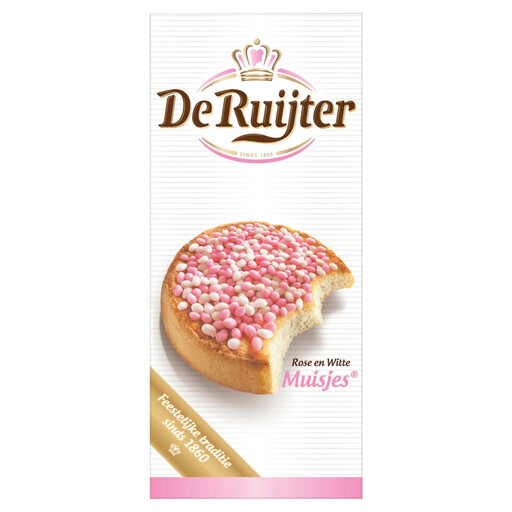 Image unavailable
For a traditional rusk topped with muisjes to celebrate a birth. If you have a wheat or gluten allergy, check the ingredients on the packaging.
 Image unavailable
A wholemeal base for muisjes or a chocolate topping. If you have allergies, check the packaging, including for wheat, egg and possible traces of sesame.
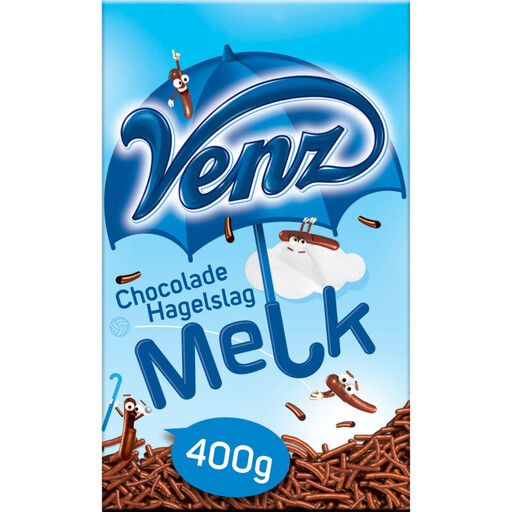 Image unavailable
For anyone who’d like to serve a chocolate option on rusks, rather than as a replacement for the birth tradition. If you have allergies, check the packaging for information about milk and soya.
 Image unavailable
Another wholemeal base to pair with your chosen topping. Before serving, check the portion size and allergens on the packaging, including cereals and sesame.
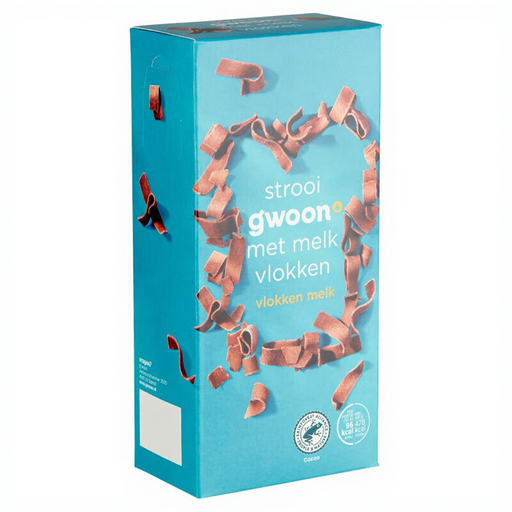 Image unavailable
For anyone who prefers chocolate flakes to chocolate sprinkles or muisjes. If you have allergies, check the packaging for milk and possible traces of wheat.
No. Muisjes are sugar-coated aniseed that De Ruijter associates with rusks served at a birth celebration; chocolate sprinkles are a chocolate topping. You can offer both, but present chocolate sprinkles as a separate flavour option.
No, you can’t tell from the product category. The Netherlands Nutrition Centre says that using baker’s salt in bread isn’t compulsory. Check the label on the rusks you choose or ask the baker about the ingredients if this matters to you.
Check both the muisjes and the exact variety of rusks. The product information for the muisjes and rusks mentioned here highlights wheat and cereals containing gluten; egg or sesame may also be worth checking in rusks.
Follow the storage instructions and use-by information on both packs. Keep opened rusks sealed and dry to help them stay crisp.