What should you look for when choosing?
First, decide whether a familiar taste, nutritional information or the ingredients matter most for your lunch. Then compare specific varieties on a like-for-like basis.
| What to consider |
What to check when buying |
Who it's mainly for |
| Switching to wholemeal |
Look for the word ‘wholemeal’ and check the ingredients and fibre per 100 g. |
If someone sharing my lunch is used to plain rusks, I don't want to serve rusks with lots of seeds straight away. For around 40% of shoppers, an easy switch to wholemeal is the most important factor. |
| Fibre and texture |
Compare fibre per 100 g and check whether oats or seeds are listed in the ingredients. |
Fibre content matters to me at lunchtime, and I'm happy with a coarser rusk. Around 30% of shoppers prioritise this combination of fibre and texture. |
| Ingredients and allergens |
Read the latest allergen information, including warnings about possible traces. |
I need to be able to check whether the rusks contain ingredients I avoid; the type of rusk alone doesn't tell me that. For around 20% of shoppers, this check comes first. |
| Pack size and availability |
Check the weight, the number of rusks and current availability. |
I want to know how many rusks are in a pack before choosing it for several lunches. For around 10% of shoppers, this practical consideration comes first. |
Rusks for different preferences
These rusks suit three choices for lunch while working from home: plain wholemeal rusks, dark wholemeal rusks and plain rusks. Compare the variety you like with the latest packaging, especially if ingredients or allergens are a deciding factor.
 Image unavailable
Bolletje Wholemeal Rusks, 13 pieces
A plain wholemeal option for switching from plain rusks at lunchtime while working from home. The pack contains 13 pieces. Compare the fibre per 100 g on the label and, if you have an allergy, check the latest ingredients information.
View at Joybuy
 Image unavailable
Bolletje Dark Wholemeal Rusks, 10 pieces
A dark wholemeal variety for anyone who likes oats and seeds in their rusks. The product information reviewed lists 10 g of fibre per 100 g; the pack contains 10 pieces. If you have allergies, check the latest information for wheat, oats, barley and sesame, among other ingredients.
View at Joybuy
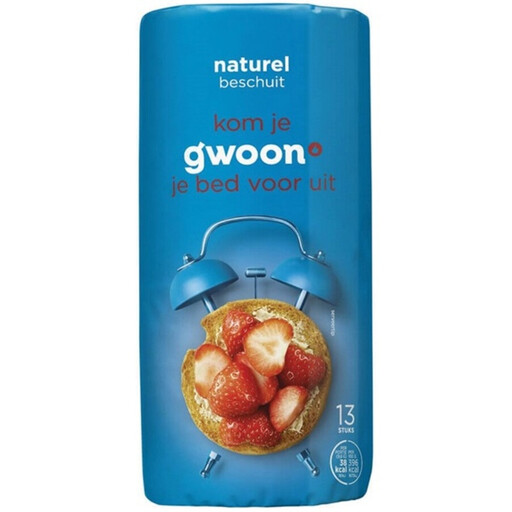 Image unavailable
g'woon Plain Rusks, 125 g
A plain variety for anyone who would rather stick with familiar rusks than choose wholemeal or seeded ones. The pack contains 125 g. If you have an allergy, check the latest packaging carefully.
View at Joybuy
Frequently asked questions
Are wholemeal rusks always a better choice for lunch while working from home?
No, your choice also depends on the taste and texture you prefer. According to the Voedingscentrum, wholegrain products generally contain more fibre than white grain products, but plain rusks may suit you better if you prefer a more neutral taste. Compare the nutritional information for each variety per 100 g.
Do Dutch rusks automatically contain iodine from baker's salt?
No, you shouldn't assume they do. The Voedingscentrum says bakers aren't required to use baker's salt. Check the label for the specific rusks or ask the manufacturer which salt was used.
How can I keep an opened pack of rusks crisp?
Keep the opened pack somewhere dry and seal it tightly. Product information from Albert Heijn and Bolletje recommends using a sealed tin or closing the packaging securely after opening.
Can I choose wholemeal or seeded rusks if I have a food allergy?
Decide by checking the latest allergen information for the specific product, not by relying on the words ‘wholemeal’ or ‘high in fibre’. The varieties reviewed differ in ingredients such as wheat, egg, oats, barley and sesame; also read any warnings about possible traces.


