Choose wholemeal rusks if wholegrain and fibre are your priorities, plain rusks if you want a simple base flavour, or a seeded variety if your child enjoys the taste and texture. The Netherlands Nutrition Centre says wholegrain cereal products contain more fibre than white products made with flour. Check the nutritional information, ingredients and allergens on the current packaging for the rusks you choose.
Who might each option suit?
Families prioritising fibre
For carers looking for a wholegrain base and wanting to compare the fibre content on the packaging. According to the Netherlands Nutrition Centre, wholegrain cereal products contain more fibre than white products made with flour.
Families looking for an easy holiday lunch
For anyone who wants to use rusks as a base for different toppings. Albert Heijn lists plain, wholemeal and multiseed rusks as separate varieties; the variety name is no substitute for checking the nutritional information.
Families with fussy eaters
For anyone wanting to match the taste and texture to what their child enjoys. A familiar plain variety may be a better choice than seeded rusks; the Netherlands Nutrition Centre also emphasises the importance of variety at lunchtime.
What should you look for when choosing?
First decide whether wholegrain, a simple base flavour or your child’s preference matters most. If you’re specifically looking for ‘medium sliced’, check the product format on the packaging rather than using the term to describe a type of rusk.
Wholemeal rusks
Choose these when: a wholegrain base and fibre are your main priorities.
Bear in mind: wholemeal alone tells you nothing about the topping or the ingredients in a specific pack.
Wholemeal rusks with seeds
Choose these when: your child enjoys seeded rusks and their different texture.
Bear in mind: the amount of seeds and nutritional value vary by product; check the allergen information too.
Plain rusks
Choose these when: a simple base flavour is your priority for the toppings you have planned.
Bear in mind: plain doesn’t automatically mean wholemeal or high in fibre.
| What to consider |
What to check |
Who it matters to |
| Fibre and wholegrain |
Look for the wholegrain label and compare fibre per 100 g or using the same serving size. |
If I want a wholegrain base for lunch, fibre content matters more to me than the variety name. An estimated 42% of consumers prioritise wholegrain and fibre. |
| Easy to top |
Choose the variety that suits your planned toppings and check the current ingredients and nutritional information. |
When I want to serve different toppings, I’m mainly looking for a simple base flavour. An estimated 33% of consumers prioritise ease of adding toppings. |
| Taste and texture |
Choose plain or seeded rusks to suit what your child enjoys; check the allergens too. |
If my child turns down a strong flavour or texture, I start with what they do enjoy. An estimated 25% of consumers say this preference is the deciding factor. |
Common mistakes
-
Assuming all rusks are wholemeal or high in fibre
Plain, wholemeal and multiseed are different varieties. The colour or variety name doesn’t tell you how much fibre a particular rusk contains.
Read the ingredients and compare the fibre content per 100 g or using the same serving size.
-
Assuming all rusks contain baker’s salt
You can’t tell from the word ‘rusk’ which type of salt was used in the product you’ve chosen.
Check the ingredients list if the use of baker’s salt is important to your choice.
-
Relying on outdated product information
Albert Heijn and PLUS point out that product ingredients, nutritional values and allergen information can change.
Check the current packaging when you buy, especially if you need to take allergens into account.
-
Choosing only the rusks for lunch
Your choice of rusks doesn’t determine how varied the whole lunch is. The Netherlands Nutrition Centre emphasises offering children variety at lunchtime.
Consider the toppings and the other parts of the lunch too.
Brands and own-label options to compare
Bolletje
Albert Heijn and PLUS list several Bolletje rusk products, including an original variety and wholemeal varieties.
- You can compare different variety names within the brand.
- The nutritional value and ingredients of one variety don’t necessarily apply to another; read the label of the product you choose.
Albert Heijn
The AH range includes own-label rusks in plain, wholemeal and multiseed varieties.
- The different varieties give you a useful way to compare base flavour and nutritional information.
- Albert Heijn says that ingredients and nutritional or allergen information can change; check the packaging when you buy.
PLUS
PLUS lists own-label wholemeal rusks as well as a separate wholemeal variety with seeds.
- The product names make it clear which variety contains seeds.
- Compare the nutritional information and allergens on the specific pack; the varieties aren’t interchangeable.
Lidl
Lidl Netherlands lists wholemeal rusks in its range.
- The wholemeal label gives you a clear starting point when comparing varieties.
- Check the label on the product you choose for its ingredients, nutritional information and allergens.
Rusks for a school-holiday lunch at Joybuy
This selection includes two wholemeal varieties and one plain variety. Choose the one that suits your lunch plans, and check the current packaging if nutritional information or allergens are important to you.
 Image unavailable
Bolletje wholemeal rusks, 13 pieces
For anyone looking for a wholemeal variety as the base for a school-holiday lunch. The pack contains 13 pieces. Check the current packaging if the ingredients or allergens are important to your choice.
View at Joybuy
 Image unavailable
Bolletje dark wholemeal rusks, 10 pieces
For anyone wanting to compare a dark wholemeal variety with other rusks for lunch. The pack contains 10 pieces. Choose according to your child’s taste and texture preferences.
View at Joybuy
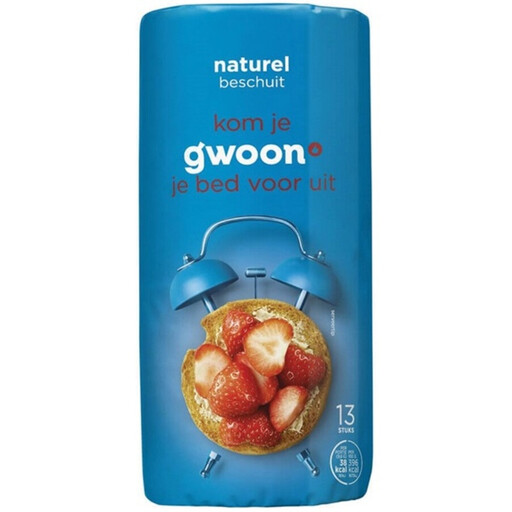 Image unavailable
g'woon plain rusks, 125 g
For anyone looking for a plain variety to go with their planned lunch toppings. The pack contains 125 g. If fibre matters to you, compare the nutritional information on the label.
View at Joybuy
Frequently asked questions
When should I choose wholemeal rusks for a child’s lunch?
Wholemeal rusks are a good option when a wholegrain base and fibre are your priorities. The Netherlands Nutrition Centre lists 0.8 g of fibre per 10 g wholemeal rusk; check the nutritional information on the pack you buy and consider the rest of the lunch too.
Are seeded rusks automatically high in fibre?
No. The words ‘with seeds’ don’t tell you how much fibre the rusks contain. PLUS lists more than 25% seeds and kernels for a specific wholemeal variety; check the nutritional information, ingredients and allergens separately for other varieties.
Do all rusks contain iodine-fortified baker’s salt?
You can’t tell from the product category. Check the ingredients on the pack you choose if baker’s salt is important to your purchasing decision.
Why should I check the label again if I’m buying the same rusks?
Because product information can change. Albert Heijn and PLUS point out that ingredients, nutritional values and allergen information, among other details, may be updated. So check the packaging of the product you’re actually buying.


