
Budget-conscious cook with simple toppings
You’re looking for a crisp base for simple bites and want to work out how many rusks you’ll need for your guests. Check the ingredients of the variety you choose, too.


For simple toppings, plain rusks are a sensible starting point: compare the pack size with the number of bites you want to make. Choose wholemeal if that matters more to you, or consider a separate toast product if round rusks aren’t the right shape for your toppings.
You’re looking for a crisp base for simple bites and want to work out how many rusks you’ll need for your guests. Check the ingredients of the variety you choose, too.
You want to compare plain and wholemeal rusks by ingredients and fibre per 100 g, without assuming that every variety from a brand is the same.
You’re planning generous or moist toppings and want to decide whether round rusks are the right size, or whether you’d prefer separate Melba toast.
First, decide how many bites you’re making and what you’ll serve on them. Then compare the pack size, nutritional information and ingredients of the varieties that suit your plans.
| What to consider | What to check when buying | Who it matters to |
|---|---|---|
| Budget and quantity | Compare the weight and number of pieces per pack with the number of bites you’re planning to make. | When I’m making simple bites, I want enough rusks for everyone without opening more packs than necessary; around 36% of consumers prioritise this consideration. |
| Wholemeal and fibre | Read the ingredients list and compare the fibre per 100 g in the exact varieties you’re considering. | For bites on wholemeal rusks, I want to know what’s in the variety I choose. This preference comes first for around 29% of consumers. |
| Size for toppings | Decide whether you want to serve round rusks or a separate toast option, and match the number of pieces to your bites. | With generous or moist toppings, I want to choose the shape that works best for my sharing board first; around 21% of consumers prioritise the size of the base. |
| Ingredients and storage | Check the allergens in the variety you’ve chosen and read the storage instructions for after opening. | When I’m checking ingredients for my guests, I want to be able to check the exact pack and store any leftovers properly. This matters most to around 14% of consumers. |
Packs can vary in weight and in the number of rusks they contain. So the size of a roll doesn’t tell you much about how many bites you can make with it.
Check the weight and number of pieces, then work out how much you’ll need for the amount you plan to serve.
Melba toast is sold separately as toasted bread. The shape you want and the toppings you’re serving may determine which type of product is right for your sharing board.
Decide which base you want to use before choosing how much you need.
Ingredients vary between rusk varieties. The products described here include ingredients such as wheat and egg, and some varieties also contain sesame.
Before serving, check the current allergen information on the exact pack you’re using.
According to the risk assessment by RIVM and the Netherlands Food and Consumer Product Safety Authority, adding iodised salt to food is not compulsory. So the product category alone won’t tell you whether a variety of rusks contains it.
Check the information on the specific pack or ask the manufacturer if this matters to your choice.
A good option if you want to compare plain and wholemeal rusks from the same brand.
An own-brand range with plain and wholemeal rusks to compare side by side.
An own-brand range that includes a wholemeal rusk variety alongside other types of rusk.
A supermarket option if you’re looking for plain rusks in a basic pack.
Worth considering if you want to compare Goud Gebakken rusks with a separate toast product as different options.
An own-brand range with plain, wholemeal and seeded varieties to compare by ingredients.
These two products offer a choice between wholemeal and plain rusks for simple bites. If you’re serving generous or moist toppings, first decide whether round rusks are the base you want to use.
 Image unavailable
For anyone looking for a wholemeal option and wanting to compare the nutritional information. The pack contains 13 pieces; Joybuy lists 11 g of fibre per 100 g for this variety. If you have allergies, check the current label for ingredients such as wheat, egg and sesame.
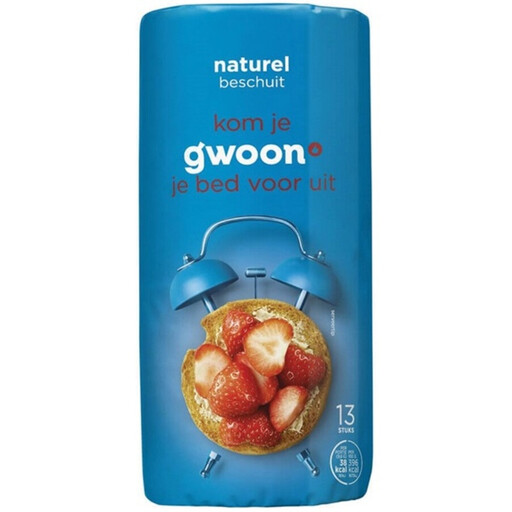 Image unavailable
A plain option for simple toppings. The pack contains 125 g; check the number of pieces if that matters for your bites. If you have allergies, read the current label for ingredients such as milk, egg and cereals containing gluten.
No. Round rusks are not the same product as Melba toast or other toast for sharing. Choose the shape that works for the toppings and presentation you have planned.
Don’t assume they are: the plain and wholemeal varieties described list wheat and egg. Always check the current allergen information on the exact pack, as other ingredients can vary between varieties too.
Store opened rusks in a dry, airtight container and follow the instructions on the pack. Albert Heijn recommends a sealed tin; PLUS advises protecting them from moisture and heat.
No, you can’t tell from the product category alone. The risk assessment by RIVM and the Netherlands Food and Consumer Product Safety Authority states that adding iodised salt to food is not compulsory. If this matters to your choice, check the information for the specific variety.