
Small holiday households that don’t eat many rusks
On a short stay, you may not finish a pack. A pack of 8 or 10 is worth considering; if you only eat rusks occasionally, also look at whether they’re individually wrapped and how to store the rest.


For a short stay, choose a pack of rusks based on how many you’re likely to eat: a pack of 8 or 10 means less leftover stock than a pack of 13. If you’ll be eating them over several days, Bolletje Echte Beschuit Mono, with individually wrapped rusks, could be an option, although Bolletje says it isn’t available in supermarkets. Check the latest ingredients and allergen information on the pack for each variety.
On a short stay, you may not finish a pack. A pack of 8 or 10 is worth considering; if you only eat rusks occasionally, also look at whether they’re individually wrapped and how to store the rest.
If you’re looking for a wholemeal or seeded variety, compare the fibre per 100 g and the number of rusks in the pack. A larger pack may not be the best fit for a short stay. Check the ingredients and allergens in your chosen variety too.
If you eat rusks regularly during your stay, a pack of 13 could be a good fit. Work out in advance whether you’re likely to use them all, and seal the pack carefully after each breakfast.
First, work out how many rusks you expect to eat during your stay. Then consider the packaging, ingredients and anything else that matters to your group.
| What to consider | What to check when buying | Who is this important for? |
|---|---|---|
| Leftovers and storage | Compare the number of rusks and check whether they’re individually wrapped. Find out how to store an opened pack. | If I only eat rusks a few times, I don’t want to be left with an opened pack. For around 40% of consumers, a small pack or individually wrapped portions are the top priority. |
| Fibre and wholemeal | Read the nutritional information per 100 g and check the pack size of the variety you’ve chosen. | I prefer wholemeal rusks for breakfast and want to know how much fibre my chosen variety contains. Around 30% of consumers prioritise these ingredients. |
| Ingredients and allergens | Read the latest ingredients and allergen information on the pack; this can vary between varieties. | If someone in my group needs to avoid certain ingredients, I check whether these rusks are suitable before looking at the number in the pack. Around 20% of consumers put this check first. |
| Enough for several breakfasts | Estimate how many rusks you’ll use and compare this with the number in the pack. | We’ll be having breakfast at the holiday cottage several times, and I want to bring enough rusks without having to open another pack. For around 10% of consumers, this is the first thing they consider. |
Rusks are usually sold by the pack, weight or number of pieces. The term ‘half loaf’ won’t tell you how many rusks you’ll have for your stay.
Compare the stated number of pieces and check whether the pack contains individually wrapped portions.
Wholemeal and seeded varieties may contain ingredients such as wheat and sesame. A label on the front of the pack doesn’t replace the allergen information.
Read the latest label for the exact variety you’re buying, even if you’ve had rusks from the same brand before.
The Voedingscentrum (Netherlands Nutrition Centre) says that bakers aren’t required to use iodised baker’s salt. So you can’t tell which type of salt has been used just from the product category.
If the type of salt matters to your choice, check the ingredients on the pack or ask the manufacturer.
The number of rusks and ingredients vary between varieties from these brands. Compare the specific pack rather than choosing on brand name alone.
Bolletje offers regular, wholemeal and high-fibre rusks, as well as Echte Beschuit Mono.
The own-brand range includes plain and wholemeal rusks.
The own-brand range includes plain and wholemeal rusks.
PLUS lists 125 g packs of plain and wholemeal rusks, as well as a 230 g wholemeal seeded variety.
ALDI lists Goud Gebakken wholemeal rusks in a pack of 13.
These packs contain 8, 10 or 13 rusks. Choose based on how many you plan to eat; the number shown doesn’t mean the rusks are individually wrapped.
 No image available
An option if you’re looking for a pack of 10 rusks with a variety of seeds for your stay.
The pack contains 10 pieces. If allergens are a concern for anyone in your group, check the latest label, paying particular attention to wheat and sesame.
 No image available
This wholemeal variety is a good option if you want to take a pack of 10 with you.
The pack contains 10 pieces. When checking the ingredients, also look out for wheat, oats, barley and sesame.
 No image available
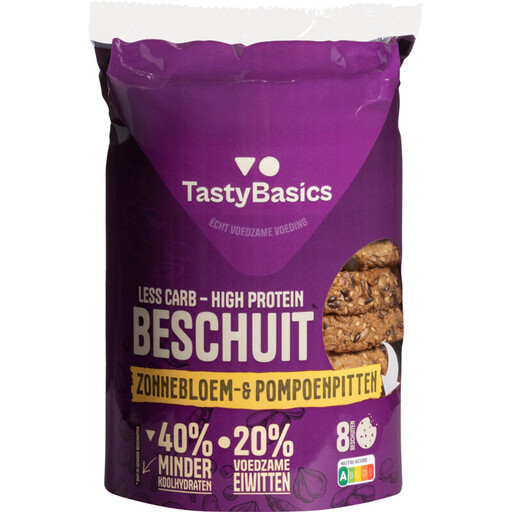
A pack of 8 may suit you if you only expect to eat a few rusks during your stay.
The product name indicates that this variety contains sunflower seeds. Check the pack for the full ingredients and allergen information.
 No image available
This wholemeal pack is worth considering if you’re likely to eat all 13 rusks during your stay.
The pack contains 13 pieces. Check the label for wheat and egg, and look out for information about possible traces of sesame.
 No image available
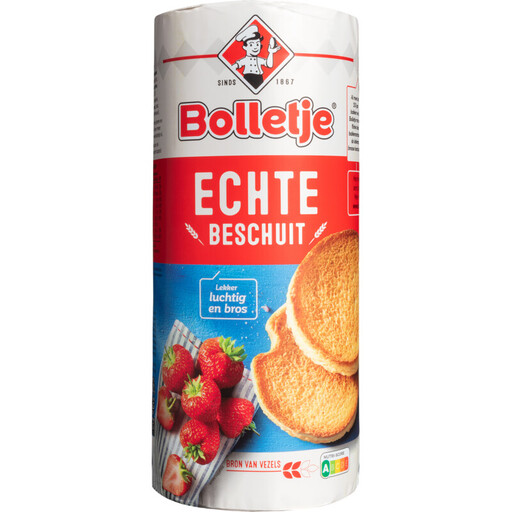
This pack could be suitable for several breakfasts if you expect to use all 13 rusks.
The pack contains 13 pieces. Check the latest label for allergens, including wheat, egg and rye.
Don’t use ‘half loaf’ as a measure for a pack of rusks: check the number of pieces or the weight on the pack. Dutch product listings from retailers including Albert Heijn and Jumbo use quantities such as 10 and 13 pieces.
Keep opened rusks dry and sealed tightly, following the storage advice on the pack you’ve chosen. PLUS also recommends protecting the packs it has reviewed from moisture and heat; check the best-before date on your own pack too.
No. The word ‘wholemeal’ doesn’t tell you which allergens a particular rusk contains. Check the latest pack for ingredients and allergens that matter to your group.
You can’t tell from the product name. The Voedingscentrum (Netherlands Nutrition Centre) says that bakers aren’t required to use iodised baker’s salt. Check the ingredients or ask the manufacturer which type of salt is used in your chosen rusks.
According to Bolletje, Echte Beschuit Mono isn’t available in supermarkets. The manufacturer does say that the rusks are individually wrapped; check where you can buy this variety before your stay.