
Host with fussy eaters
You want to serve something crisp without offering everyone the same strongly flavoured wholemeal or seeded option. Putting plain rusks alongside a wholemeal option lets everyone at the table choose for themselves.


For a Sunday meal with different tastes, serve plain rusks alongside a wholemeal option rather than expecting everyone to choose the same kind. Plain rusks offer a milder choice, while anyone who prefers a wholemeal base or seeds can choose an option whose ingredients and nutritional information suit them. Check the allergens on each pack for everyone at the table, and only add toppings just before serving if you want the rusks to stay crisp.
You want to serve something crisp without offering everyone the same strongly flavoured wholemeal or seeded option. Putting plain rusks alongside a wholemeal option lets everyone at the table choose for themselves.
You want to compare the grain base and fibre content on the nutritional information, without automatically choosing rusks with seeds.
You check the ingredients and allergens for each option. The products described contain egg and various gluten-containing cereals; sesame is also listed for some options.
First, decide whether you need plain rusks, a wholemeal option you can check, or an option with seeds. Then check whether the ingredients and allergens in each pack suit the people at your table.
| What to consider | What to check before buying | Who it matters to |
|---|---|---|
| Milder option | Check whether wheat flour or wholemeal flour is the base, and check the allergens too. | If I prefer a simple rusk, I don’t want to be limited to strongly flavoured wholemeal or seeded options. This milder choice is the top priority for around 22% of consumers. |
| Wholemeal base and fibre | Read the grain ingredients and compare the fibre content per 100 g. | Anyone deliberately choosing a wholemeal option will want to check its ingredients and nutritional value rather than judging by its colour. This is the main priority for around 45% of consumers. |
| Seeds and ingredients | Read the full ingredients list and allergen information, paying particular attention to sesame in seeded options. | If I want to serve rusks with a bit more texture, I also need to know whether the ingredients suit everyone at my table. This is the top consideration for around 33% of consumers. |
Dark wholemeal rusks and rusks with seeds may contain ingredients such as wheat, barley, oats, sesame or egg. Their colour and a label such as ‘wholemeal’ don’t tell you whether they’re suitable for everyone’s allergies.
Check the current allergen information on every pack. If you’re unsure about an ingredient for someone at the table, only choose an alternative after checking its packaging too.
According to the Voedingscentrum, using baker’s salt when baking isn’t compulsory. So the word ‘salt’ in the ingredients list doesn’t tell you which type of salt has been used.
If you want to know whether a particular rusk contains baker’s salt, check the packaging or ask the manufacturer. Don’t assume based on the product category.
Rusks are crisp, twice-baked products. Moist toppings or gravy aren’t the best choice if you want to keep that texture.
Put the rusks on the table plain and add toppings just before eating. If you mainly want something to soak up gravy, choose soft bread rather than rusks.
Bolletje offers plain, wholemeal and dark wholemeal rusks. This makes it easy to compare ingredients and nutritional values across different options from the same brand.
AH Organic Wholemeal Rusks show that a rusk with ‘wholemeal’ in its name may also contain wheat flour.
Jumbo’s range of rusks includes plain, wholemeal and options with grains or seeds.
PLUS offers both plain wholemeal rusks and a wholemeal option with seeds and kernels.
These rusk options cover three choices for a Sunday meal: wholemeal, dark wholemeal with seeds, and plain. If you want to offer both a milder and a wholemeal option, you can compare them side by side; just remember to check the packaging for each pack.
 Image unavailable
An option for anyone at the table who wants wholemeal rusks alongside a milder choice. The pack contains 13 pieces; before serving, check the current information for wheat, gluten-containing cereals, egg and possible sesame.
 Image unavailable
For anyone at the table who prefers dark wholemeal rusks with seeds. The pack contains 10 pieces; before serving, check the current allergen information, including for wheat, oats, barley and sesame.
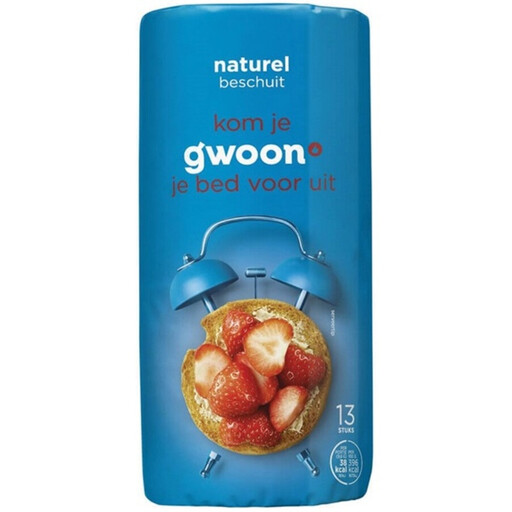 Image unavailable
A plain option for anyone at the table who doesn’t want a strongly flavoured seeded variety. The pack contains 125 g. Check the current allergen information carefully: milk is listed as an allergen alongside egg and wheat, even though it doesn’t appear in the ingredients list shown.
Offer both if people at the table have clearly different preferences: plain rusks for anyone who wants a milder option, and wholemeal rusks for anyone who prefers a wholemeal base. Check the allergens on each pack separately.
No. You can’t tell from the name ‘rusks’ or the word ‘salt’. According to the Voedingscentrum, using baker’s salt when baking isn’t compulsory. Check the packaging or ask the manufacturer if you want to know which salt is used in a particular rusk.
Check the full allergen information for each option you choose. The rusk products described include ingredients such as wheat and egg; depending on the option, barley, oats, rye, soya or sesame may also be listed. Use the current packaging to decide whether a product is suitable for the person concerned.
Keep the rusks dry and seal the pack well once opened. Serve moist toppings separately or add them just before eating if you want to keep the rusks crisp.