
Eaters who prefer familiar flavours
In households where a simple base matters, plain rusks let you choose the topping yourself. Whether a fussy eater accepts a particular rusk is a personal choice.


Choose plain rusks if a familiar flavour and simple texture are your priorities. If you want plenty of room for toppings, you could try a variety described as large, but that description doesn’t prove the rusks are thicker or can hold more topping. Compare wholemeal and seeded varieties separately, looking at their texture, ingredients and nutritional information.
In households where a simple base matters, plain rusks let you choose the topping yourself. Whether a fussy eater accepts a particular rusk is a personal choice.
If you’re looking for more room for cheese, spreads or fruit, you could look for rusks described as large. That description doesn’t tell you how much weight a crisp rusk can hold.
If fibre is a factor in your purchase, compare the nutritional information per 100 g. Also consider whether the flavour and texture of wholemeal or seeded rusks will suit the person eating them.
First decide whether a familiar base, room for toppings or comparing fibre content matters most. Then check the ingredients and try the rusks with the topping you plan to use.
| What to consider | What to check when buying | Who it matters to |
|---|---|---|
| Size and toppings | Check the product description and size; try the crisp rusks with the topping you have in mind. | I want to add plenty of topping without assuming the rusk will be sturdy. For around 42% of consumers, size or sturdiness is the main factor in this choice. |
| Familiar flavour | Choose plain if you prefer, and check the ingredients for grains, kernels and seeds. | If an eater mainly wants a familiar base, I want to be able to choose the topping separately. Familiarity comes first for around 33% of consumers. |
| Fibre and texture | Compare fibre per 100 g and see whether wholemeal or seeded rusks have the texture you’re looking for. | I want to compare the nutritional information, while also knowing whether the eater will enjoy a different texture. Fibre is the main consideration for around 25% of consumers. |
PLUS calls its luxury seeded rusks ‘large crisp rusks’, while Jumbo uses ‘Robust’ in a product name. These aren’t comparable measurements or tests of how much weight the rusks can hold.
Check the size and first try the rusks with the topping you plan to use.
Kernels and seeds change the ingredients and texture of rusks. Sesame is also a relevant allergen in the PLUS and Jumbo varieties mentioned.
Compare a seeded variety with familiar plain rusks, and always check the label if you have an allergy.
According to the Voedingscentrum, bakers aren’t required to use baker’s salt. So a Dutch product name doesn’t tell you whether the rusks contain iodised salt.
Check the ingredients list if the presence of baker’s salt or iodised salt matters to your choice.
Bolletje offers Bakkers Beschuit Origineel, among other products, as well as a high-fibre range of rusks. The brand suggests a thick slice of mature cheese as a topping for Bakkers Beschuit.
AH Plain Rusks and AH Wholemeal Rusks offer a choice between plain and wholemeal.
Jumbo offers Plain Rusks and Robust Spelt Rusks with kernels and seeds.
PLUS offers plain rusks and a 230 g luxury seeded variety, which the brand describes as ‘large crisp rusks’.
ALDI stocks plain and wholemeal rusks from Goud Gebakken, both in packs of 13.
This selection includes plain and Original rusks, as well as wholemeal and seeded varieties. Choose according to the flavour, texture and toppings you prefer; the product names don’t indicate any measured difference in thickness or how much the rusks can hold.
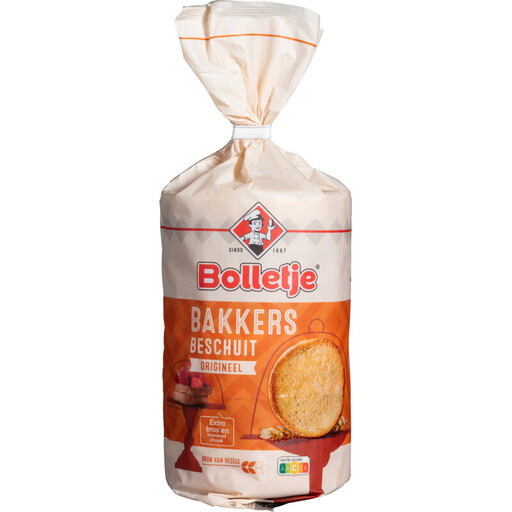 Image unavailable
An Original variety for anyone who wants to choose a familiar topping.
Try them with your chosen topping to see whether the size and crispness suit you; check the latest packaging if you have an allergy.
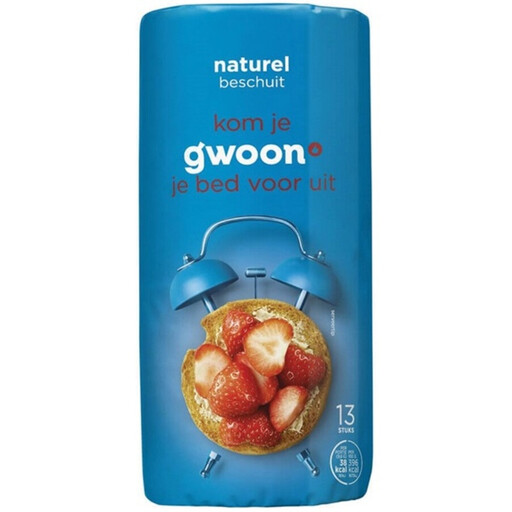 Image unavailable
A plain variety for anyone who wants to choose their own topping.
The product description mentions a sweet flavour. Check the latest packaging carefully if milk is a relevant allergen for you.
 Image unavailable
A wholemeal variety for anyone who wants to try a different texture from plain rusks.
If fibre is a factor in your choice, compare the nutritional information per 100 g on the latest packaging. Wholemeal says nothing about how much a rusk can hold.
 Image unavailable
A seeded variety to consider if you’d enjoy a more pronounced texture.
Check the ingredients and allergen information on the packaging. The variety name doesn’t prove that these rusks can hold more topping.
 Image unavailable
A Whole Wheat variety for anyone who wants to try a different grain texture from plain rusks.
If you’re choosing based on nutritional value, compare the information per 100 g and check the latest ingredients. There’s no evidence that this variety can hold plenty of topping either.
No. According to the Voedingscentrum, bakers aren’t required to use baker’s salt. The Netherlands Food and Consumer Product Safety Authority explains that iodine compounds may be present in bakery products. Check the ingredients list if you want to know whether a particular rusk contains baker’s salt or iodised salt.
Don’t choose ordinary rusks without checking the specific ingredients and allergen information. The Voedingscentrum lists rusks as a product that may contain gluten. If you have coeliac disease, look for a suitable gluten-free label; if you have a wheat allergy, you’ll also need to check separately whether the product contains wheat.
Seal the rusks well after opening and keep them away from moisture and heat. Albert Heijn recommends storing its rusks in a sealed tin, while PLUS advises keeping its rusks away from moisture and heat.