What should you look for when choosing?
First decide which feature matters most for your single-serving meal. Then compare only products that suit the way you plan to use them, using the same unit for nutritional values.
| What to consider | What to check when buying | Who is this important for? |
|---|
| Grains and fibre |
Look for an explicit wholegrain claim and compare fibre per 100 g; a dark colour or mixed seeds doesn’t automatically mean wholegrain. |
If rusks are often the base of my breakfast, I want to know which grain they contain and how much fibre is in a portion. For around 36% of consumers, the grain base comes first. |
| Size and texture |
Check the size, weight per rusk and any seeds listed; consider whether you want a light or sturdier base. |
When I add generous toppings, I want the size and texture to suit what I put on them. This combination is the main deciding factor for around 29% of consumers. |
| Portion and storage |
Compare the number of rusks and net weight per pack, and read the storage instructions. |
If I only eat a few rusks at a time, I want a pack that suits how I use them. For around 21% of consumers, portion size and practicality matter most. |
| Specific labelling requirement |
Read the ingredients, allergens and nutritional information; check the specific product for any feature you’re looking for. |
If I have a particular requirement, such as organic ingredients or a certain nutritional profile, the product name alone isn’t enough. Around 14% of consumers put a requirement like this first. |
Rusks to suit different preferences
These rusks offer different options for a meal for one: a clearly labelled wholegrain product, a seeded variety or a pack you can compare by portion size. For nutritional choices, always check the current packaging.
 No image available
Bolletje dark wholegrain rusks, 10 pieces
An option to consider if a wholegrain base is your priority for a meal for one.
The pack is labelled as containing 10 pieces. Check the ingredients and allergens on the current label.
View at Joybuy
 No image available
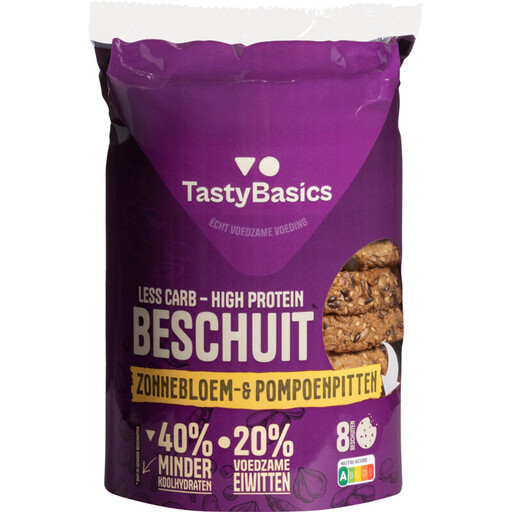
TastyBasics rusks with sunflower seeds, 8 pieces
For anyone looking for rusks with sunflower seeds who wants to compare the nutritional profile of their chosen portion.
The pack is labelled as containing 8 pieces. Check the current nutritional information and allergen details before taking any product-specific nutritional claims into account.
View at Joybuy
 No image available
Bolletje wholegrain rusks, 13 pieces
A wholegrain option for anyone who wants to choose their grain when having breakfast for one.
The pack is labelled as containing 13 pieces. Check the current ingredients and allergens if they’re relevant to your choice.
View at Joybuy
 No image available
Bolletje multiseed rusks, 10 pieces
For anyone who wants seeds to be a factor when choosing rusks for toppings.
The pack is labelled as containing 10 pieces. Multiseed doesn’t mean the grain base is wholegrain; check the ingredients to find out.
View at Joybuy
 No image available
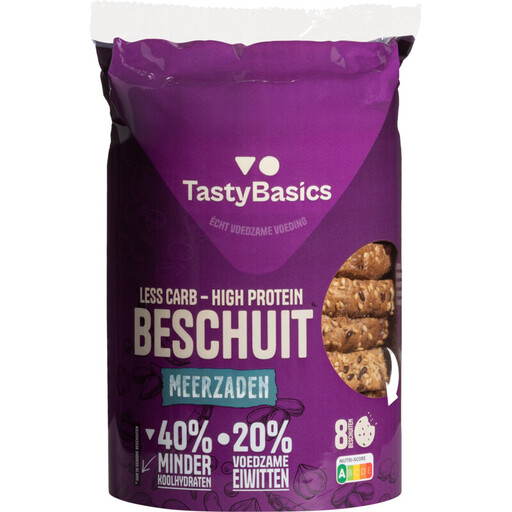
TastyBasics multiseed rusks, 184 g
For anyone who wants to compare a seeded variety with other rusks by weight and nutritional information.
The pack is labelled as 184 g. Check the number of pieces, ingredients and nutritional values on the current packaging if you’re planning portions.
View at Joybuy
Frequently asked questions
Are wholegrain rusks always the right choice for one meal?
No, it depends on what matters to you in that meal. According to the Netherlands Nutrition Centre, wholegrain cereal products contain more fibre and other nutrients than products made with white flour. If a light texture or the size of the base for your toppings matters more, compare those features for each product too.
Do rusks always contain iodine because of baker’s salt?
No, you can’t tell from the product category whether iodised baker’s salt is included. Check the ingredients of the specific rusks if this matters to your choice.
How do I compare regular and wholegrain rusks?
First compare the nutritional values per 100 g, then check the weight per rusk. As a reference, the Netherlands Nutrition Centre gives 0.6 g of fibre for a round regular rusk weighing 20 g and 0.8 g for a piece of wholegrain rusk weighing 10 g; these aren’t fixed values for every brand.
How do I choose a pack if I live alone?
Match the number of pieces to how often you eat rusks, and read the storage instructions on the packaging. If you’re looking for individually wrapped rusks, you could consider Bolletje Echte Beschuit Mono as a separate product; Bolletje states that this variety isn’t available in supermarkets.
Are multiseed rusks automatically wholegrain?
No, seeds don’t tell you whether the grain used is wholegrain. Look for an explicit wholegrain claim and check the ingredients of the variety you want to buy.


