
If you’re serving a variety of toppings
You’re looking for a classic rusk to serve with coffee, as a base for both sweet and savoury toppings, without a pronounced seed flavour.


Plain rusks are a simple choice for coffee with a variety of toppings. If fibre is your priority, compare wholemeal options per 100 g. Looking for a larger rusk with seeds? Check the weight per piece and the allergens too. Don’t use ‘medium sliced’ as a guide to rusk size; check the specific product description instead.
You’re looking for a classic rusk to serve with coffee, as a base for both sweet and savoury toppings, without a pronounced seed flavour.
You’d rather compare wholemeal and high-fibre rusks using their nutritional information than rely on the product name alone, and don’t mind a less neutral flavour.
Before serving, check the label on your chosen pack for relevant ingredients such as wheat, egg or sesame. Seeded and multigrain varieties in particular are worth checking carefully.
For coffee, first choose a type of rusk that suits the toppings and your guests. Then compare the serving size, nutritional information and ingredients on the specific pack.
| What to consider | What to check when buying | Who it matters to |
|---|---|---|
| Classic option | Check whether it’s a plain rusk and compare the number of pieces and the weight per piece. | If I want to offer guests a variety of toppings, I’m mainly looking for a plain rusk that goes well with them. This flexibility is the top priority for around 36% of consumers. |
| Fibre and wholemeal | Compare the fibre per 100 g and read the ingredients list; colour alone doesn’t tell you how much fibre a rusk contains. | If fibre matters more to me than a classic rusk, I want to be able to compare the nutritional values. Around 27% of consumers say this is their top priority. |
| Allergens | Read the current ingredients list for the exact variety you’ve chosen, paying particular attention to wheat, egg and sesame. | If I’m serving rusks to someone with a relevant allergy, I need to know what’s in them first. For around 19% of consumers, checking this is their main concern. |
| Portion size and seeds | For a multiseed variety, check the weight per piece, the nutritional values per 100 g and the ingredients. | If I want to offer one generously topped rusk, I’m more concerned about its size and seed profile than a neutral flavour. This matters most to around 18% of consumers. |
These terms don’t describe the same ingredients. According to Albert Heijn’s product information, AH Wholemeal Rusks contain 9 g of fibre per 100 g, while Bolletje Wholemeal Rusks contain 11 g per 100 g.
Compare the nutritional information for the varieties you’re actually considering, using the same per-100 g basis each time.
When sharing coffee, the rusks you choose also need to be suitable for your guests’ allergies. The varieties reviewed list ingredients including wheat, egg and sesame.
Ask about any relevant allergies and check the current ingredients list on the pack you’re serving.
According to the Netherlands Nutrition Centre, bakers aren’t required to use baker’s salt. So the fact that rusks contain salt doesn’t, by itself, tell you whether it’s iodised.
Don’t base your choice of rusks on an assumed iodine content. Contact the manufacturer if this is important to your decision.
The range discussed includes both classic and wholemeal rusks.
The own-brand range includes plain, wholemeal and wholemeal multiseed rusks.
The own-brand range includes plain and wholemeal rusks.
The multiseed rusks discussed are an option if you specifically want to compare the portion size and nutritional values of a seeded variety.
These products include wholemeal and seeded rusks for coffee. Compare the number of pieces and, if portion size is a deciding factor, the weight per rusk shown on the pack.
 Image unavailable
A wholemeal option if you’re mainly comparing fibre content for coffee.
According to Albert Heijn’s product information, Bolletje Wholemeal Rusks contain 11 g of fibre per 100 g. Check the nutritional information on the pack if the amount per serving matters to your choice.
 Image unavailable
A good choice if you’d rather serve seeded than plain rusks with coffee.
The pack contains 10 pieces. Check the weight per piece if portion size matters, and read the ingredients list if you have any allergies.
 Image unavailable
For anyone looking to compare a dark wholemeal variety with standard wholemeal rusks.
The pack contains 10 pieces. Use the nutritional information to compare fibre per 100 g; don’t judge the nutritional value by the dark colour alone.
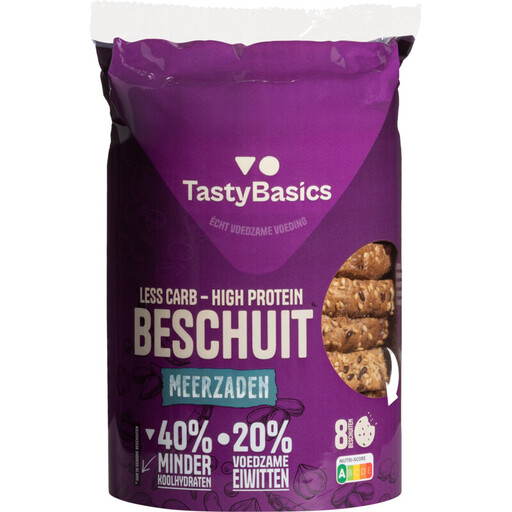 Image unavailable
A multiseed option if you’re looking for a specific nutritional profile to go with your coffee.
The pack contains 184 g. Compare the nutritional values per 100 g and check the ingredients if you have any allergies. If the number of pieces matters when serving, check the pack too.
It’s better to choose rusks by type, number of pieces and weight per piece, rather than by that description. Jumbo explains that a rusk loaf is sliced and baked again; this doesn’t give you a size for the individual rusks.
No. Don’t assume that a particular type of rusk does. The Netherlands Nutrition Centre says bakers aren’t required to use baker’s salt; if the type of salt matters to your choice, ask the manufacturer which one they use.
Read the current ingredients list on the pack you’re going to serve. The Netherlands Food and Consumer Product Safety Authority says allergens must be clearly identifiable in the list. Depending on the variety, check for ingredients such as wheat, egg and sesame in the rusks discussed here.
After opening, store rusks in a dry place in a tightly sealed container. Albert Heijn recommends keeping its plain rusks in a sealed tin. Add toppings just before serving to stop them making the rusks soggy.