
Hosts serving light toppings
You want to make small, crunchy bites and add the toppings just before serving. Rusks offer a different base from a sturdy roll or toast for heavier toppings.


For small bites with light toppings at a barbecue, you can choose plain rusks and add the toppings just before serving. If you’d prefer wholegrain or seeded rusks, choose the corresponding variety and check the ingredients and allergens on the pack. A larger size or extra seeds don’t prove that rusks can hold heavy or moist toppings.
You want to make small, crunchy bites and add the toppings just before serving. Rusks offer a different base from a sturdy roll or toast for heavier toppings.
You’re looking for wholegrain or seeded rusks for a drinks-and-nibbles occasion, rather than plain rusks. Compare the ingredients of the specific varieties: the names don’t mean the same thing.
You want to check the ingredients, allergens and salt content before serving rusks. Jumbo lists wheat, gluten and egg in its plain rusks; a seeded variety may contain other allergens, including sesame.
Choose rusks for barbecue bites based first on the topping and when you’ll serve them. Then compare the variety you want and the label on the pack you plan to use.
| What to consider | What to check when buying | Who it matters to |
|---|---|---|
| Serving them crunchy | Choose a size that suits your bites and plan to add the toppings just before serving. | If I top the rusks in advance, I want to know whether they’ll stay crunchy until guests eat them. That’s why serving crunchy bites comes first for around 40% of consumers. |
| Simplicity and packaging | Compare the number of rusks and the pack weight of the varieties you’re considering. | For a platter of simple bites, I want to have enough rusks without choosing a different variety than I need. An estimated 30% of consumers put this practical consideration first. |
| Wholegrain and seeds | Read the product name and ingredients list; wholegrain and multiseed are different qualities. | I specifically want to serve a variety with wholegrains or seeds, rather than automatically choosing plain rusks. That’s the main priority for around 20% of consumers. |
| Ingredients and nutrition information | Check the latest allergen information and compare the salt per 100 g on the packaging. | If not everyone can eat the same things, I want to be able to check the exact pack before serving. For an estimated 10% of consumers, this check matters most. |
According to Jumbo, rusks are baked again after being sliced, which makes them brittle. A larger size on its own doesn’t prove that they can hold heavy or moist toppings.
Make small bites with toppings that aren’t too wet, and add them just before serving. If you’re looking for a sturdier base for lots of toppings, compare other types of product too.
Ingredients vary from product to product. Jumbo lists wheat, gluten and egg in its plain rusks; a seeded variety may also contain sesame.
Check the ingredients and allergens on the pack of the exact variety every time you buy it, even if you’ve bought rusks from the same brand before.
A name that refers to grains or seeds won’t tell you how much salt a variety of rusks contains.
Compare the amount of salt per 100 g in the nutrition information for the products you’re considering, and pay attention to the serving size too.
Jumbo and Albert Heijn stock Bolletje’s Echte, wholegrain and other varieties of rusks.
The online range features AH plain and wholegrain rusks, alongside Bolletje and other grain varieties.
Jumbo lists plain, wholegrain and other grain varieties, as well as rusks from Bolletje.
PLUS lists plain rusks and a larger, crisp seeded variety.
Lidl Netherlands lists plain, wholegrain and artisan multigrain rusks.
ALDI Netherlands lists Goud Gebakken rusks in plain and wholegrain varieties.
These four Bolletje varieties let you compare plain, wholegrain and multiseed options for small barbecue bites. The number of rusks in a pack doesn’t tell you how well they’ll hold toppings.
 Image unavailable
A wholegrain option for small bites that you top just before serving. The pack contains 13 rusks; check the latest ingredients and allergen information on the pack.
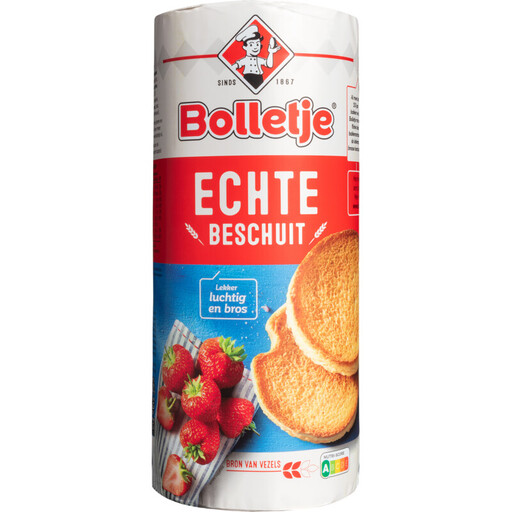 Image unavailable
Plain rusks make a simple base for bites with light toppings. The pack contains 13 rusks; add toppings just before serving, and read the label if allergens are a concern.
 Image unavailable
A dark wholegrain option if you prefer it to plain rusks. The pack contains 10 rusks; check the size on the pack if you’re planning to make small bites.
 Image unavailable
A multiseed option for anyone who wants seeds in their rusks. The pack contains 10 rusks; before serving, check the label for the seeds and allergens listed.
No. Jumbo explains that a rusk loaf is sliced after baking and then baked again; ‘medium-sliced’ isn’t a useful measure of slice thickness for comparing these rusk varieties for a barbecue. Instead, consider the size, variety and toppings you plan to use.
Add toppings just before serving if you want a crunchy bite. Store the pack in a dry place as directed, and don’t choose heavy or very moist toppings without first considering whether this brittle base is suitable.
Check the allergens on the exact pack, as the ingredients vary between varieties. Jumbo lists wheat, gluten and egg in its plain rusks; sesame may also be relevant in rusks with seeds.
No, you can’t tell from the product category. Check the information on the specific pack if the presence of iodine matters to your choice.
Compare the salt per 100 g in the nutrition information for the exact varieties. Voedingscentrum lists 0.1 g of salt for one 20 g rusk, but this isn’t a fixed amount for every product.